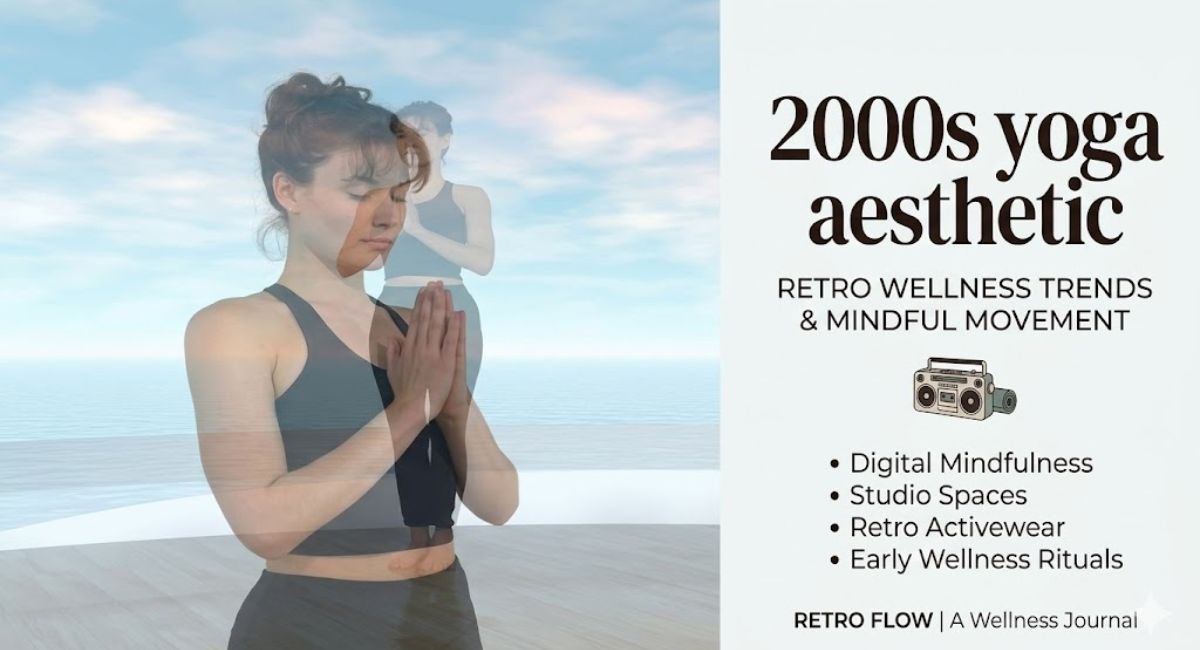
The 2000s yoga aesthetic had a very specific wellness vibe. Think low-rise flares, a Lululemon drawstring bag, a cork-stoppered water bottle, and a rolled bamboo mat tucked under one arm. Paris Hilton wore velour tracksuits to Pilates. Madonna was doing Ashtanga. Gwyneth Paltrow hadn’t yet launched Goop, but she was already making kale look spiritual.
That aesthetic, earthy, slightly luxe, unpretentiously healthy, is making a full comeback, and it’s worth understanding what actually defined it before you try to recreate it.
What Actually Defined the 2000s Yoga Aesthetic
The 2000s yoga aesthetic wasn’t about being the most athletic person in the room. It was softer than that. It borrowed from Bohemian fashion, SoCal beach culture, and the slow creep of Eastern spirituality into Western wellness spaces.
Key visual elements included earth tones and muted greens, moss, terracotta, and sand dominated. Bright neons were gym culture, not yoga culture. Flared or wide-leg yoga pants defined the silhouette, the straight-cut or slightly flared leg was everywhere before the tight legging took over post-2010. Natural materials like cotton, bamboo, and hemp were marketed aggressively as both ethical and breathable. Minimalist studio spaces with wooden floors, lots of natural light, maybe a Ganesh figurine near the front desk, no LED screens, no DJ booth. The oversized hoodie or wrap top was worn to and from class, sometimes during Savasana.
What made the 2000s yoga aesthetic distinct from today is that it wasn’t really activewear. It was more like casual spiritual-adjacent clothing that happened to be functional.

The Studios That Shaped the Look
If you practiced yoga in a mid-sized Western city between 2001 and 2009, you probably went to one of two types of places: a Bikram studio, hot, sparse, intense, or an independent neighborhood studio with a community board covered in flyers for sound baths and ayurvedic cooking classes.
Bikram Choudhury’s hot yoga studios, which expanded rapidly in the early 2000s, created their own aesthetic, minimal clothing, high heat, mirrored walls. The vibe was closer to a sauna than a sanctuary. The fashion there was sports bra and shorts, full stop.
The indie studios were different. These were where the full 2000s yoga aesthetic lived. Places like YogaWorks, founded in LA and expanded nationally through the 2000s, or Jivamukti Yoga in New York, opened 1984 but peak cultural influence was 2000 to 2008, set the tone. Jivamukti in particular drew musicians, artists, and celebrities, and its aesthetic, chanting, incense, music during practice, animal rights messaging on the walls, became a blueprint for what serious yoga culture looked like.
The Gear That Defined an Era
A few specific products became genuinely iconic in this period.
Lululemon Athletica launched its first standalone store in Vancouver in 2000. By 2004 it had expanded to the US, and by 2007 its IPO made it a public company worth watching. The original Lululemon groove pant, a mid-rise, slightly flared pant in a cotton-Lycra blend, became the defining garment of the era. Women wore them to yoga, to brunch, to farmers markets. The brand’s messaging at the time leaned heavily into personal development language, its bags had motivational quotes, and its stores felt more like wellness communities than retail shops.
Manduka launched its PRO yoga mat in 1997 but hit mainstream recognition through the early 2000s. The dense, black, 6mm mat became a status symbol in yoga circles, it was heavier and more expensive than standard mats, and it lasted for years. Carrying a rolled Manduka was a quiet signal that you took your practice seriously.
Gaiam dominated the budget and mid-range space. Founded in 1988, it grew significantly through the early 2000s selling everything from yoga mats to meditation cushions to instructional DVDs. The Gaiam catalog aesthetic, soft lighting, flowing clothes, people in nature, basically illustrated what the 2000s yoga aesthetic looked like in print.
Nag Champa incense from Satya Sai Baba became almost universally present in studios of this era. If you’ve smelled it, you know exactly what we’re talking about. It’s an unusual mix of sandalwood and frangipani, and it became so associated with yoga studios that smelling it today is an immediate sensory time machine.
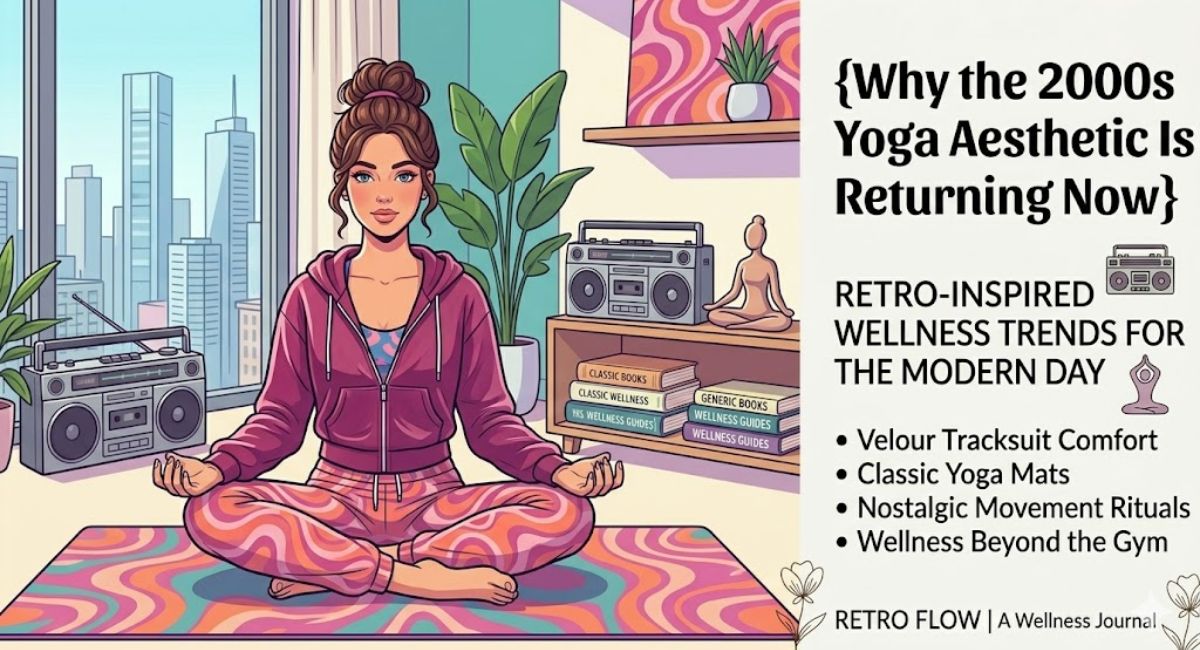
Why the 2000s Yoga Aesthetic Is Returning Now
A few things are driving the revival.
Y2K fashion nostalgia is the obvious one. Low-rise silhouettes, flare legs, and earth tones have returned broadly across fashion, and yoga wear is following. Brands like Alo Yoga and Free People Movement have been releasing styles clearly influenced by the early 2000s silhouette, wider legs, softer waistbands, less compression.
Burnout from hyper-optimized wellness culture is another real factor. The mid-2010s turned yoga into a performance, tracking calories burned, filming flows for Instagram, wearing high-compression leggings designed to look good in photographs. A lot of practitioners are quietly stepping back from that and looking for something more grounded. The 2000s yoga aesthetic, with its hand-painted studio signs and slightly chaotic community boards, represents a version of wellness that felt less curated.
Slow living content on platforms like YouTube and TikTok has reintroduced this aesthetic to people who were too young to experience it the first time. Videos tagged soft life, cottagecore, or clean girl routine frequently borrow visual elements directly from 2000s wellness culture, the herbal tea, the natural light, the wooden yoga block, the absence of visible technology.
How to Actually Recreate the 2000s Yoga Aesthetic Without Looking Like a Costume
The risk with any aesthetic revival is ending up in a costume rather than a style. Here’s what actually works.
Start with the silhouette, not the accessories. A wide-leg or flared yoga pant in a neutral color reads as current while pulling from the 2000s. Brands making genuine versions right now include Alo Yoga’s Accolade Flare, around $98, Girlfriend Collective’s Paloma Pants, and older Lululemon Groove Pants that still surface secondhand on Poshmark or Depop.
Choose natural textures where possible. A cotton or bamboo wrap top, worn open over a simple bra, recreates the layered, slightly underdone look of the era without being costumey. Avoid anything that looks too technical or aerodynamic.
Be selective about gear aesthetics. A cork yoga block, a natural rubber mat, a cotton bolster in a terracotta cover, these small decisions shift the visual register of your practice space significantly. You don’t need all of it at once.
Skip the synthetic fragrance but consider the sensory environment. A quality incense stick or a beeswax candle does something to a home practice space that a spray diffuser doesn’t quite replicate. It slows things down.
What Most Articles About the 2000s Yoga Aesthetic Miss
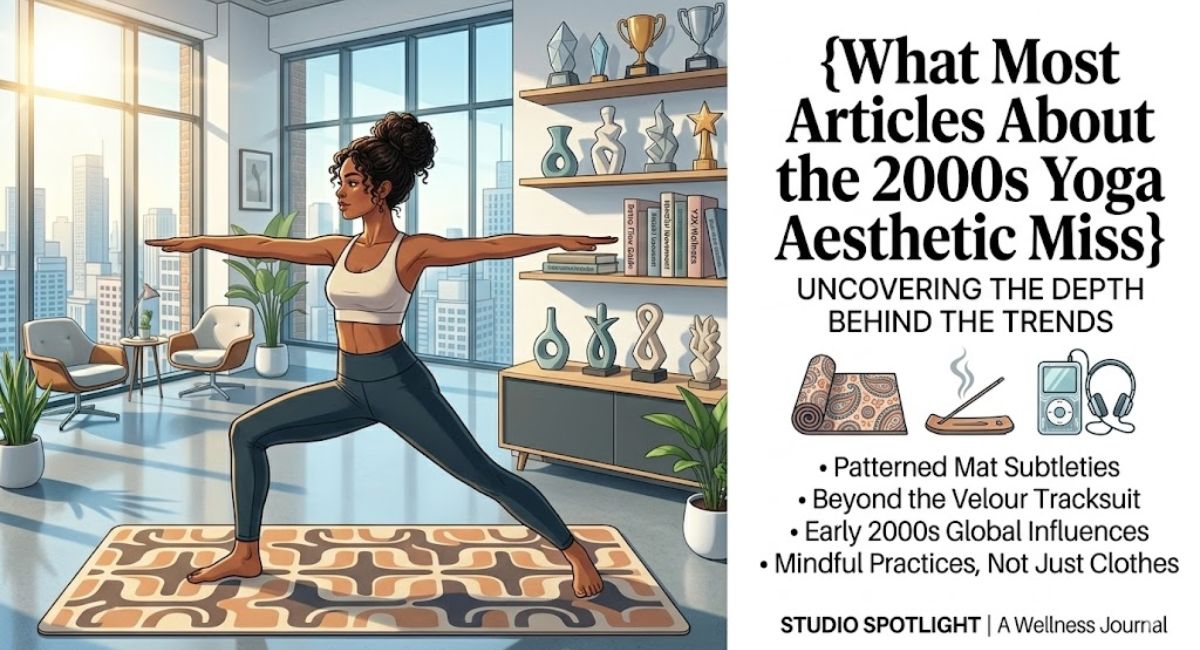
Most content about the 2000s yoga aesthetic focuses heavily on clothing and ignores the broader sensory and cultural context, the music like Krishna Das, Deva Premal, early DJ Drez, the reading material including The Yoga Sutras of Patanjali, Autobiography of a Yogi, anything from Pema Chödrön, and the social rituals like post-class tea, community notice boards, teachers who knew your name. The clothes were an expression of a value system, not just a trend. Understanding that is what makes a revival feel authentic rather than surface-level.
FAQs
What is the 2000s aesthetic? The 2000s aesthetic combines low-rise silhouettes, earth tones, velour tracksuits, and minimalist wellness culture. It blends Y2K pop influences with bohemian, SoCal-inspired fashion and a laid-back spiritual sensibility.
What are the 7 basic yogas? The 7 basic yogas are Hatha, Raja, Karma, Bhakti, Jnana, Tantra, and Mantra yoga. Each path approaches spiritual growth differently, whether through physical postures, devotion, selfless action, or meditation and breathwork.
Why do men like hot yoga? Men are drawn to hot yoga for the physical intensity, deep muscle flexibility, and mental focus it demands. The heat pushes endurance limits similarly to athletic training, making it appealing to men who prefer challenging, sweat-heavy workouts.
What is yoga aesthetic? Yoga aesthetic refers to the visual and lifestyle identity built around yoga practice, including earthy clothing, natural materials, minimal studio spaces, and a calm, grounded personal style. It reflects a broader commitment to mindful, intentional living beyond just the physical practice.
Why did the 2000s yoga aesthetic fade in the first place? The rise of high-performance activewear from brands like Nike, Athleta, and later Vuori shifted the aesthetic toward compression, technical fabric, and sport-adjacent styling around 2010 to 2014. Instagram culture accelerated that shift by rewarding visually intense, athletic-looking content over the quieter wellness imagery that had defined the earlier era.
Conclusion
The 2000s yoga aesthetic was never really about fashion. It was about a specific relationship with the body, with community, and with a kind of spiritual curiosity that felt accessible rather than elite. The clothes and gear were just the visual language of that relationship. What’s making it resonate again is that same underlying need, for something slower, less optimized, and more genuinely human. If you’re drawn to the look, it’s worth asking what you’re actually drawn to, because the answer is probably more interesting than the flare pants.
