Cybersecurity teams are drowning in alerts. A typical enterprise Security Operations Center (SOC) processes between 10,000 and 200,000 security events daily, and human analysts can realistically investigate maybe 50-100 of them thoroughly. This is where cybersecurity AI models have moved from experimental tools to essential infrastructure not because they’re trendy, but because the volume of threats has made human-only analysis mathematically impossible. These AI models now handle the initial triage, pattern recognition, and threat correlation that would require dozens of additional analysts to perform manually.
I’ve watched security teams transition from skepticism about AI to depending on it for their daily operations. The shift happened around 2022-2023, when models became accurate enough to reduce false positives rather than add to the noise. Here’s what’s actually working in the field today.
What Makes Cybersecurity AI Different From General AI Models
Most people think of ChatGPT or image generators when they hear “AI models.” Cybersecurity AI operates under completely different constraints and requirements.
Speed matters more than perfection. A general AI model can take 30 seconds to generate a response. A cybersecurity model detecting a network intrusion needs to flag it in milliseconds—often under 100ms or the attacker’s lateral movement continues unchecked. I’ve seen breaches succeed simply because detection lagged 2-3 minutes behind the attack.
False positives destroy trust. If ChatGPT gives you a wrong answer, you might be annoyed. If your security AI flags 1,000 legitimate employee actions as threats daily, your SOC team starts ignoring alerts entirely. The industry standard aims for 95%+ accuracy, but in practice, teams won’t tolerate anything below 90% precision on high-priority alerts.
Training data is sensitive and scarce. You can’t just scrape the internet to train cybersecurity models. Real attack data is confidential, varies wildly between organizations, and sharing it raises legal and competitive concerns. Most effective models use synthetic attack simulation combined with anonymized telemetry from security vendors.
Adversarial adaptation is constant. Attackers actively study defensive AI models and craft their malware to evade them. A model trained in January 2024 might miss 30% of threats by June 2024 if it’s not continuously retrained. This cat-and-mouse game doesn’t exist with consumer AI applications.
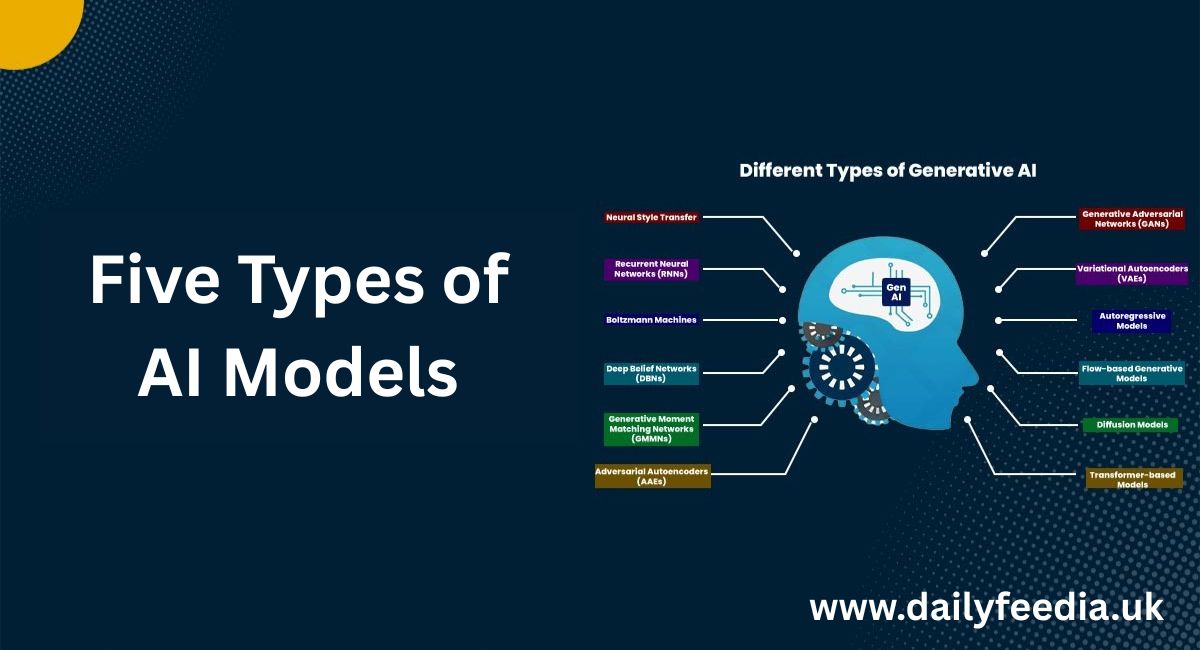
The Five Types of AI Models Actually Deployed in Enterprise Security
1. Behavioral Anomaly Detection Models
These models learn what “normal” looks like in your environment typical login times, data access patterns, network traffic flows then flag deviations. They’re particularly effective against insider threats and account compromises.
Example: Darktrace’s Enterprise Immune System (launched 2013, major updates in 2023-2024) uses unsupervised machine learning to create a “pattern of life” for every user and device. When a marketing employee who normally accesses Google Workspace suddenly starts downloading database schemas at 3 AM, the system catches it.
Real-world challenge I’ve observed: The first 30-60 days are brutal. The model flags dozens of legitimate but unusual behaviors someone working from a new location, a department reorganization, a contractor with different access patterns. Security teams spend this period training the model by confirming which anomalies are benign. Organizations that skip this tuning period often abandon the tool within six months.
2. Malware Classification and Detection Models
Traditional antivirus relies on signature databases known patterns of malicious code. Modern AI models analyze file behavior, code structure, and execution patterns to identify previously unseen malware variants.
Example: CrowdStrike Falcon (cloud platform launched 2013, AI capabilities significantly enhanced 2020-2024) uses a random forest machine learning model with over 1 trillion security events feeding its training data. It catches “fileless” malware that lives entirely in memory and leaves no traditional signature.
Common mistake: Teams expect these models to work perfectly out-of-the-box. In reality, you need to fine-tune based on your software environment. A manufacturing company running specialized industrial control software will have different “normal executable behavior” than a software development firm. Without customization, you get either too many false positives or missed detections.
3. Phishing and Social Engineering Detection Models
Email security has evolved from simple spam filters to sophisticated natural language processing models that analyze sender behavior, content patterns, urgency indicators, and link authenticity.
Example: Proofpoint’s Email Fraud Defense (ETD), released 2017 with major ML enhancements in 2023, uses machine learning to detect business email compromise (BEC) attacks. It analyzes writing style, typical communication partners, and subtle domain spoofing that humans often miss.
What beginners misunderstand: These models don’t just scan for keywords like “urgent” or “click here.” Modern phishing uses legitimate-looking language. The AI detects that your supposed “CEO” is requesting an unusual wire transfer using slightly different phrasing than their historical emails, from an email address one character different from the real domain (exarnple.com vs example.com).
4. Network Traffic Analysis Models
These analyze data flows across your network to detect command-and-control (C2) communications, data exfiltration, and lateral movement by attackers already inside your perimeter.
Example: Vectra AI’s Network Detection and Response platform (NDR, launched 2013, latest version 8.0 released October 2023) uses deep learning models trained on network packets. It identifies attackers moving between systems even when they’re using legitimate credentials something traditional firewalls completely miss.
Learning curve observation: Network engineers and security analysts think differently. Engineers focus on performance and availability; security analysts focus on threats. I’ve seen these AI deployments fail when only one team owns them. Successful implementations require both teams interpreting the alerts together, especially in the first 90 days.
5. Security Operations Automation and Response Models
The newest category involves AI that doesn’t just detect but actually responds isolating infected machines, killing malicious processes, or blocking traffic automatically.
Example: Microsoft Sentinel (rebranded from Azure Sentinel in 2021, with Copilot for Security integration in March 2024) uses GPT-4 based models to automatically investigate alerts, pull related logs, correlate events across systems, and even draft incident response recommendations in natural language.
Critical reality check: Auto-remediation sounds great until the model makes a mistake and shuts down your email server during business hours. Most organizations start with “auto-suggest” mode where the AI recommends actions that humans approve. Only after 6-12 months of validation do they enable autonomous responses, and even then, only for low-risk actions like password resets or quarantining suspicious files.
How Security Teams Are Actually Using AI Models Today
| Use Case | Typical AI Approach | Time Savings | Accuracy Challenge |
| Alert Triage | Classification models prioritize which alerts need human review | 60-70% reduction in analyst time | High initial false positive rate in first month |
| Threat Hunting | Anomaly detection suggests where to investigate | Finds 3-5x more threats than manual hunting | Requires analyst expertise to interpret findings |
| Incident Response | NLP models pull relevant logs and summarize timelines | 40-50% faster investigation | May miss context that experienced analysts catch |
| Vulnerability Prioritization | Models predict which vulnerabilities attackers will actually exploit | Focus on 10% of vulns that matter most | Prediction accuracy around 75-80% |
| User Behavior Analysis | Supervised learning detects compromised accounts | Catches insider threats 2-3 weeks earlier on average | Struggles with legitimate unusual behavior (travel, role changes) |
The Gap Most Articles Miss: Implementation Actually Takes 3-6 Months
Every vendor promises their AI works “out of the box.” In practice, here’s what actually happens:
Weeks 1-2: Installation and data integration. The model needs access to your logs, network data, endpoint telemetry, and identity systems. Getting all these data feeds working reliably takes longer than expected.
Weeks 3-6: Baseline learning. The AI observes your normal operations without taking action. It’s building its understanding of what “normal” means in your specific environment.
Weeks 7-12: Tuning and validation. You’re marking alerts as true/false positives, adjusting sensitivity thresholds, and creating exceptions for legitimate edge cases. This is tedious but absolutely necessary.
Month 4+: Production operation. The model is now useful, but it still requires ongoing tuning as your environment changes.
I’ve watched multiple organizations skip the tuning phase because executives expected immediate ROI. Within three months, the SOC team had disabled the system because it created more work than it saved. The successful deployments all invested in proper training and tuning.
Real-World Performance: What the Marketing Doesn’t Tell You
CrowdStrike Falcon (as of Q4 2024 testing): Detects approximately 96% of malware samples in independent testing, with a false positive rate around 0.1%. However, that 4% of misses includes some advanced persistent threat (APT) tools specifically designed to evade it.
Darktrace’s Antigena (autonomous response feature, 2024 version): In organizations that enable full autonomous mode, it takes an average of 3.2 actions per day. About 15% require human review afterward because they affected legitimate operations. Most teams keep it in “suggest” mode for critical systems.
Microsoft Sentinel with Copilot (March 2024 release): Reduces incident investigation time by an average of 42% according to Microsoft’s case studies. Independent tests show closer to 30-35% for organizations with complex hybrid environments. It’s genuinely helpful but not the revolutionary 90% time savings some marketing implies.
What Security Teams Wish They’d Known Before Adopting AI
Your data quality matters more than the AI model. If your logs are incomplete, your timestamps are inconsistent, or your asset inventory is outdated, even the best AI will produce garbage results. I’ve seen a $300,000 AI investment fail because the organization hadn’t cleaned up their basic logging infrastructure.
You still need skilled analysts. AI changes what analysts do less time on repetitive triage, more time on complex investigations but it doesn’t eliminate the need for human expertise. The best results come when experienced analysts work with AI tools, not when organizations try to replace analysts with AI.
Attackers have AI too. By late 2024, we’re seeing AI-generated phishing emails that adapt based on target responses, malware that modifies its behavior to avoid detection patterns, and automated vulnerability scanning that’s 10x faster than human-driven attacks. AI cybersecurity isn’t a destination; it’s an arms race.
Integration is harder than selection. Choosing an AI security tool takes weeks. Getting it to work properly with your existing SIEM, firewall rules, identity provider, and incident response playbooks takes months. Budget time and resources for integration, not just licensing.

Emerging Trends: What’s Coming in 2025-2026
Large Language Models (LLMs) for security documentation: Tools like Google’s Sec-PaLM (announced 2023, evolving in 2024-2025) are starting to translate threat intelligence reports into actionable detections automatically. Instead of an analyst reading a 40-page threat report and manually creating detection rules, the AI does it in minutes.
Federated learning for privacy-preserving threat intelligence: Models train on collective threat data from multiple organizations without any single organization seeing others’ raw data. This solves the “I can’t share my breach data” problem that has limited cybersecurity AI training sets.
AI-powered deception technology: Honeypots and decoy systems that use AI to interact convincingly with attackers, wasting their time and gathering intelligence about their techniques. Early versions from vendors like Attivo Networks (now part of SentinelOne) are already deployed.
Quantum-resistant cryptography preparation: While true quantum computers capable of breaking current encryption are likely still 5-10 years away, AI models are helping organizations inventory their cryptographic dependencies and plan migration strategies now.
Frequently Asked Questions
Which AI is best for cyber security?
There’s no single “best” AI for cybersecurity as different tools excel at specific tasks. CrowdStrike Falcon leads in endpoint protection with 96% detection rates, Darktrace excels at network anomaly detection, and Microsoft Sentinel (with Copilot) is strongest for unified threat intelligence and automated investigation. The best choice depends on your organization’s size, infrastructure, and primary threat concerns.
What types of AI are used in cyber security?
Cybersecurity primarily uses machine learning (supervised and unsupervised learning for threat detection), deep learning (neural networks for malware analysis), natural language processing (NLP for phishing detection and threat intelligence analysis), and behavioral analytics (anomaly detection for user and network activity). These AI types work together in modern security platforms to identify, analyze, and respond to threats across different attack vectors.
What are the 4 models of AI?
The four main AI model categories are reactive machines (respond to specific inputs without memory, like basic spam filters), limited memory (learn from recent data, used in most cybersecurity tools today), theory of mind (understand human intentions, still largely theoretical), and self-aware AI (conscious machines, purely hypothetical). Current cybersecurity solutions operate primarily in the limited memory category, continuously learning from new threat patterns.
What are the top 5 AI models?
In cybersecurity specifically, the top 5 AI-powered platforms are CrowdStrike Falcon (endpoint detection and response), Darktrace (autonomous network defense), Microsoft Sentinel with Copilot for Security (cloud-native SIEM), Vectra AI (network detection and response), and Palo Alto Networks Cortex XDR (extended detection and response). Each uses ensemble machine learning models combining multiple AI techniques for comprehensive threat detection and response across different security domains.
Are there open-source AI cybersecurity tools worth considering?
Yes, particularly for organizations with development resources. Zeek (formerly Bro, network security monitoring with ML plugins), OSSEC (host-based intrusion detection), and Wazuh (security monitoring platform with ML capabilities) all offer AI-powered features. They require more technical expertise to deploy and tune compared to commercial products, but provide full transparency and customization. Many organizations use them to supplement commercial tools rather than replace them entirely.
Conclusion
AI has become essential infrastructure in cybersecurity, not because it’s perfect, but because the scale of threats has made human-only approaches unsustainable. The models work best when they augment skilled analysts rather than replace them, and when organizations invest the time to tune them properly for their specific environments.
The gap between vendor marketing and field reality remains significant. A 96% detection rate sounds amazing until you realize that the 4% of missed threats includes the most sophisticated attacks targeting your organization specifically. False positives, even at 0.1%, still mean dozens of irrelevant alerts weekly in enterprise environments.
The most successful implementations I’ve observed share three characteristics: strong baseline security hygiene before adding AI, dedicated resources for tuning and validation, and realistic expectations about what AI can and cannot do. Cybersecurity AI is powerful, increasingly necessary, and imperfect understanding all three aspects is essential for using it effectively.