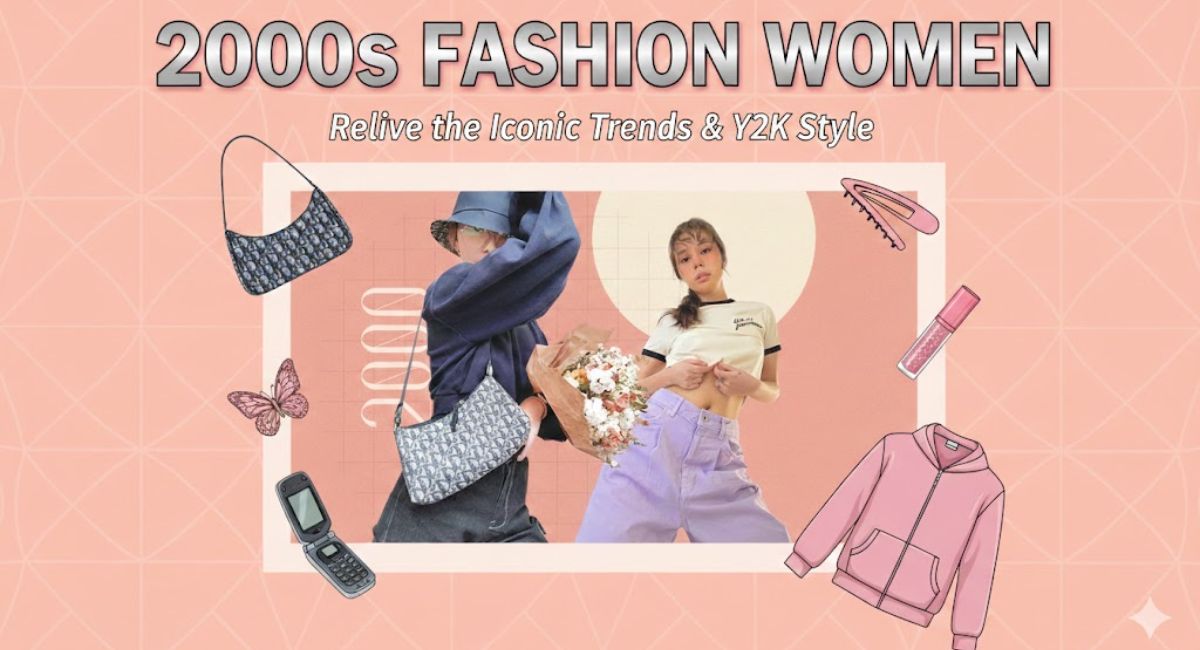
2000s fashion women will never let you forget what it felt like to live through an era that dressed with zero apologies. The early 2000s had a fashion identity unlike any other era, equal parts chaotic, confident, and surprisingly influential. If you lived through it, you remember the exact moment you saw Paris Hilton in a velour tracksuit and thought that was peak sophistication. If you’re discovering it now through TikTok or thrift stores, you’re finding out why this decade refuses to stay buried.
This guide breaks down what women actually wore in the 2000s, why it worked culturally, and how those looks are showing up again today, practically, not just as costume.
The Cultural Context Behind 2000s Women’s Fashion
Before jumping into specific trends, it helps to understand why the 2000s dressed the way it did. The decade opened with Y2K anxiety turning into Y2K optimism, technology felt futuristic, celebrities had become a new kind of royalty, and reality TV was rewriting what aspirational dressing looked like.
Fashion wasn’t driven by runways the way previous decades were. It was driven by Us Weekly, MTV, and early celebrity gossip blogs. If Lindsay Lohan wore low-rise jeans, every mall in America stocked them within months. That celebrity-to-consumer pipeline was tighter and faster than anything before it.
This is also the decade when fast fashion truly scaled. H&M and Zara expanded aggressively in the US, making trend pieces accessible and disposable. That accessibility shaped what got popular, bold, easily identifiable silhouettes that photographed well.
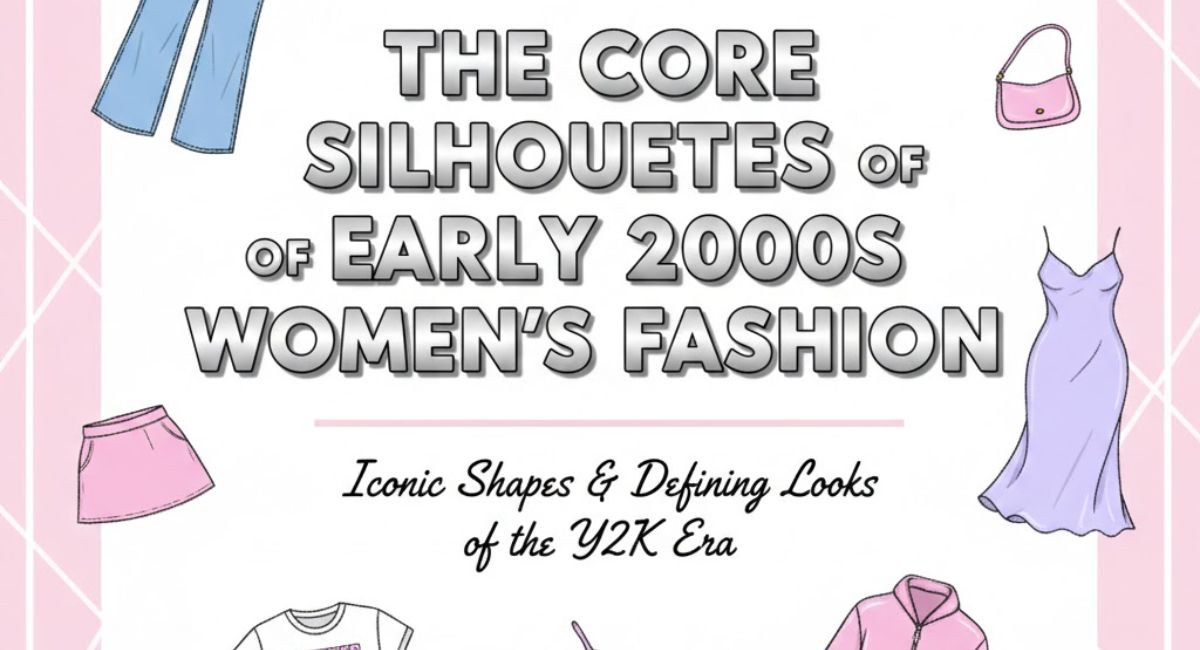
The Core Silhouettes of Early 2000s Women’s Fashion
Low-Rise Everything
No trend defines 2000s fashion women more than the low-rise waistband. Jeans, skirts, and trousers all sat at or below the hip bone. Paired with cropped tops that left a strip of midriff visible, this silhouette was everywhere from 2001 to 2007.
The practical reality: low-rise jeans required a specific body confidence that wasn’t always easy to maintain. Many women who lived through this era remember the constant pulling up, the discomfort of sitting down, and the visible waistband of underwear becoming not just accepted but stylized, think whale tail.
Brands like True Religion, Seven for All Mankind, and Citizens of Humanity dominated the premium denim space. A pair of Seven jeans with embroidered back pockets was a genuine status symbol in 2003 to 2005.
The Babydoll Silhouette (Mid-2000s Shift)
By 2005 to 2007, a counter-movement started emerging alongside low-rise dominance. Empire-waist tops and babydoll dresses, fitted under the bust, then flaring out, offered an alternative silhouette. Boho-chic, popularized heavily by Sienna Miller and Kate Moss around 2005, brought in floaty fabrics, peasant tops, and layered looks.
This is a gap most 2000s fashion articles miss: the decade wasn’t one monolithic aesthetic. It had at least two distinct phases, the early Y2K/pop-princess era from 2000 to 2004 and the boho-chic/indie era from 2005 to 2009.
Key Clothing Items That Defined the Era
Velour Tracksuits: Juicy Couture’s matching velour sets became the unofficial uniform of celebrity airport travel. The hoodie-and-pants combo in pink, baby blue, or cream was everywhere from 2002 to 2006. What made them work culturally was the paradox: they were technically loungewear worn as public fashion statements.
Denim on Denim: Before it became a style joke, double denim was genuinely aspirational. The key was matching washes, which most people got wrong. Mismatched denim reads as accident while matched reads as intentional.
Micro-Mini Skirts: Often paired with over-the-knee boots or platform sandals, mini skirts in plaid, denim, or pleather were a staple from 2001 to 2005. Von Dutch trucker hats were frequently photographed alongside them, creating one of the most visually specific cultural moments of the decade.
Peasant Tops and Boho Blouses: With the boho shift around 2005, embroidered peasant blouses, tiered maxi skirts, and flowing tunics took over from the tighter Y2K aesthetic. This look heavily referenced 1970s Bohemian style and was accessible at every price point.
Tube Tops and Halter Necks: Strapless and halter-style tops were summer staples throughout the decade. The tube top in particular required specific undergarment solutions that weren’t always elegant.
Accessories: Where 2000s Fashion Got Really Specific
Accessories in the 2000s were maximalist and brand-visible in ways that fashion later reacted against.
Logo Handbags: Coach, Louis Vuitton monogram canvas, and Dooney and Burke were carried conspicuously. The logo wasn’t subtle, it was the entire point. A Coach bucket bag or LV Speedy wasn’t just functional; it was a legible social signal.
Oversized Sunglasses: Starting around 2003 to 2004, sunglasses got dramatically larger. Oval, square, and butterfly-frame silhouettes dominated, with tinted lenses in amber, pink, or gradient shades. Nicole Richie and Mary-Kate Olsen became specific reference points for this look.
Layered Jewelry: Thin chain necklaces at multiple lengths, charm bracelets, Tiffany’s sterling silver toggle bracelet was a gift-giving staple from 2001 to 2006, and hoop earrings in medium to large sizes completed most outfits.
Scarves as Accessories: Not worn for warmth, but tied around handbags, worn as headbands, or looped through belt loops of jeans. Silk-print scarves on bags were particularly associated with the boho aesthetic.
Platform Sandals and Wedges: Steve Madden dominated the footwear market for young women throughout the decade. Chunky platform sandals, kitten heels in unexpected materials, and wedge espadrilles were all mainstream choices.
What the 2000s Got Right and Wrong About Dressing
The honest observation from women who dressed through this era is that the early 2000s were surprisingly unforgiving in some ways and liberating in others.
The low-rise silhouette, while culturally dominant, worked best for a narrow range of body types, and the fashion media of the time didn’t acknowledge this at all. Women either adapted the trend to their comfort level or felt the specific pressure of an era that had very little body diversity in its style coverage.
What the decade did well was color confidence and mixing and matching that later quiet luxury aesthetics completely abandoned. A 2003 outfit might include turquoise jeans, a printed halter top, a quilted Chanel-style bag from a fast-fashion brand, platform sandals, and a butterfly clip. It was a lot, but it was committed.
There’s also something worth noting about the self-expression element: 2000s fashion was readable. You could look at an outfit and place it within a specific social context, the prep look, the boho look, the club-ready look, the skater-girl-adjacent look. The silhouettes were distinct enough to communicate clearly.
How 2000s Women’s Fashion Is Coming Back
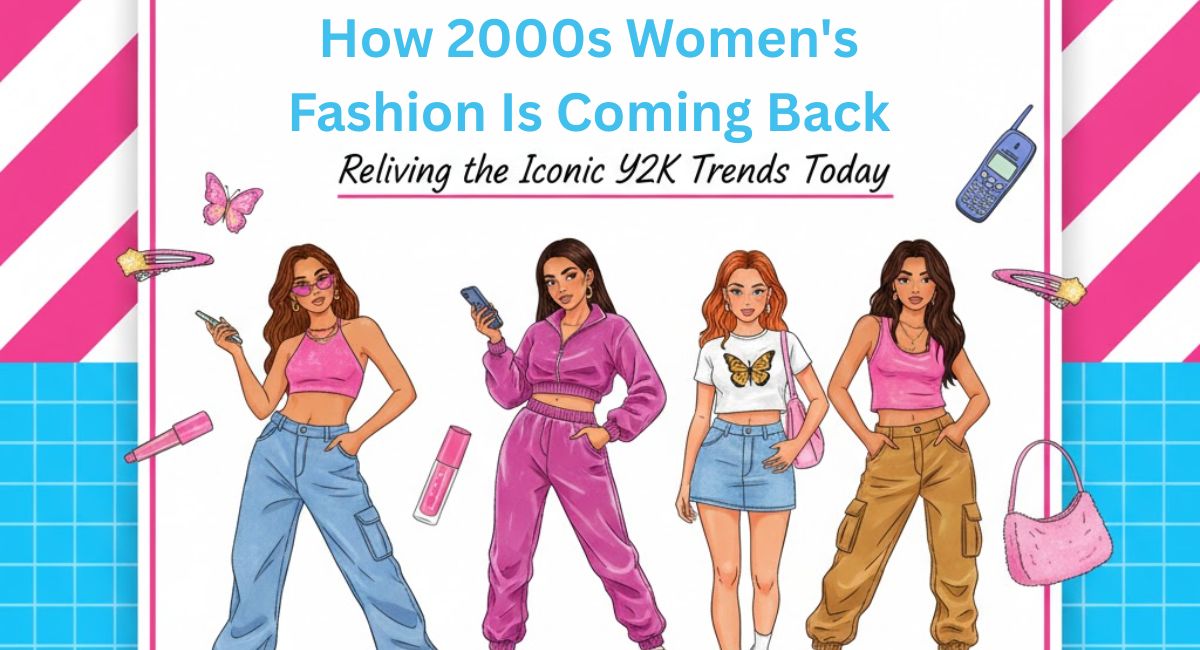
The Y2K revival started becoming noticeable around 2020 to 2021 and peaked in mainstream retail by 2022 to 2023. But the comeback isn’t a photocopy of the original.
Low-rise jeans returned, but with more variety in rise heights. The fashion industry learned from the 2000s that strict one-silhouette trends are commercially limiting. Brands like Reformation, Madewell, and even Zara offered low-rise options that sat closer to mid-hip than the original below-the-hip-bone placement.
Juicy Couture tracksuits had a literal revival, with the brand relaunching with updated colorways targeting both nostalgia buyers and younger customers. Velour as a fabric material reappeared in loungewear from multiple brands.
The butterfly clip, once a late-90s and early-2000s staple, came back through Gen Z’s rediscovery of small decorative hair accessories. Cargo pants with low rises and wide legs became a hybrid of 2000s silhouettes and contemporary fits.
What hasn’t come back cleanly is the logo maximalism. The 2010s had a brief quiet logo period, then a limited logo revival around 2017 to 2019, but the specific visibility-as-the-point approach from early 2000s luxury branding hasn’t fully returned.
FAQs About 2000s Women’s Fashion
What did women wear in the 2000s? Women in the 2000s wore low-rise jeans, velour tracksuits, babydoll tops, micro-mini skirts, and halter necks. Accessories like oversized sunglasses, logo handbags, and layered jewelry completed most looks. The early decade leaned toward Y2K pop-princess style, while 2005 onward shifted into boho-chic territory.
Why is Gen Z so obsessed with Y2K fashion? Gen Z discovered Y2K aesthetics through TikTok, vintage thrifting, and nostalgia content created by millennials who actually lived through it. The bold silhouettes, visible logos, and unapologetic maximalism feel like a direct contrast to the minimalist aesthetic Gen Z grew up seeing dominate fashion. It’s also genuinely fun to wear, which matters more than people admit.
What do I wear to a 2000s party? Go for low-rise jeans or a micro-mini skirt paired with a cropped halter top or baby tee. Add a Von Dutch-style trucker hat, chunky platform sandals, and a small logo bag to nail the era. If you want the boho angle, try a peasant top with wide-leg jeans and layered necklaces instead.
Why is Y2K so popular? Y2K fashion is popular because it represents a specific cultural moment that feels both distant enough to be nostalgic and recent enough to still be wearable. The maximalist, logo-heavy, color-confident aesthetic is a direct reaction to years of minimalist quiet luxury dominating style conversations. People are simply tired of beige, and Y2K is the loudest possible antidote.
How do you wear 2000s trends without looking like a costume? The key is mixing one decade-specific piece with contemporary basics. Low-rise jeans with a modern-fit top, a velour hoodie with wide-leg trousers, or a mini skirt with a fitted knit. Anchoring the nostalgic element with something current keeps the look intentional rather than ironic.
Conclusion
2000s fashion women proved that an era could dress boldly, brand-consciously, and with more internal diversity than most retrospective coverage gives it credit for. The decade had at least two distinct aesthetic phases, was shaped by celebrity culture in ways no previous era experienced, and produced some specific silhouettes and accessories that are genuinely difficult to replicate without context.
What’s worth taking from it now is the confidence in color, the willingness to commit fully to a look, and the understanding that fashion communicates something specific about where you want to place yourself in culture. The parts worth leaving behind are the body-specific rigidity and the pressure to perform aspirational dressing at any cost.