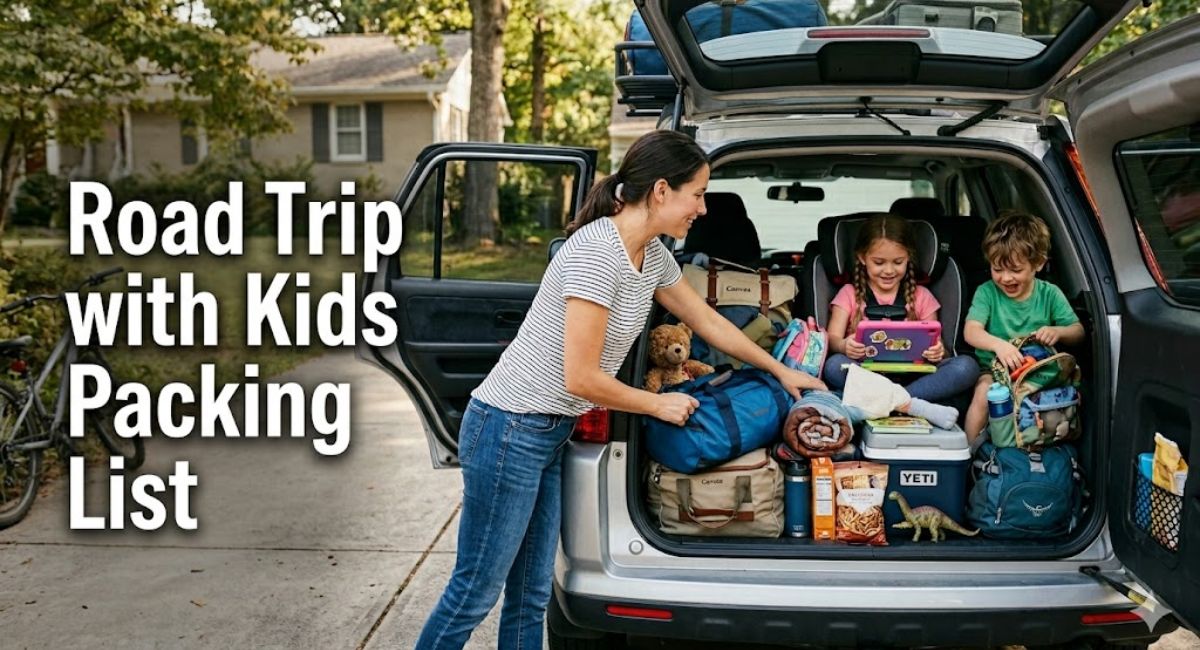
A road trip with kids packing list is something every parent needs before hitting the road. Planning a road trip with kids is a completely different experience from any trip you took before children. What used to be a spontaneous “grab the keys and go” adventure now involves a level of planning that rivals a military operation. After going through dozens of family trips and learning from the messy, chaotic ones, this guide pulls together everything you genuinely need, organized the way your brain actually works when you’re loading a car at 5 AM.
This isn’t a list of every conceivable item. It’s a list of what matters, with the reasoning behind each pick.
Road Trip with Kids Packing List: Two Things Most Parents Skip Before You Pack
Most road trip with kids packing lists dive straight into snacks and entertainment. That’s fine, but two things get overlooked that quietly ruin otherwise great trips.
Car prep first. Clean out the cupholders, glove box, and back-seat pockets before you add anything. A clean car at the start means a calmer ride because clutter becomes chaos fast with kids involved. Also check tire pressure, oil, and brakes. If you’re heading somewhere remote, verify your spare tire situation while you’re at it.
A last-minute list. Keep a sticky note or phone note of things that can’t be packed the night before like phone chargers, the bathroom bag, cold snacks from the fridge, and kids’ lovies or stuffed animals. These are always the things you end up turning the car around for.
Setting Up the Car: Your Mobile Base Camp
Getting the car organized before departure saves enormous mental energy on the road.
Backseat organizer hangs from the front headrest and gives kids their own zone for snacks, books, and small toys. Non-negotiable for trips over two hours.
Car trash system needs to be decided before you leave. A roll of small bags clipped to the console works well. Without a plan, the car becomes a landfill by lunchtime.
Window shades keep sun off little faces without freezing the front seats. The clip-on kind for rear windows work perfectly.
Portable potty is not optional if you’re traveling with a potty-training toddler. Highways offer zero warning between rest stops.
Cupcake liners in cupholders is seriously underrated. Pop them in before the trip, snack crumbs come out with the liner. Takes thirty seconds and saves twenty minutes of vacuuming later.
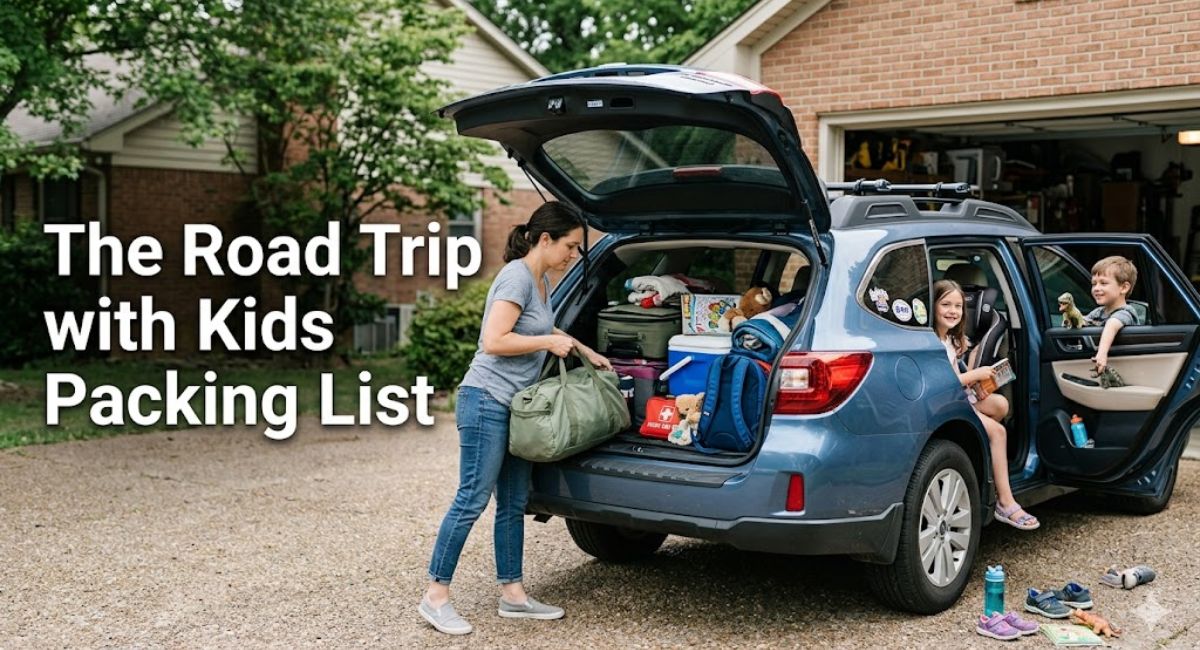
The Road Trip with Kids Packing List
Safety and Car Essentials
These live in the car regardless but check them before each trip rather than assuming they’re still current.
Age and weight-appropriate car seat or booster with verified laws if you’re crossing state or country lines. First aid kit including tweezers, Benadryl, Tylenol or Motrin, and any prescription medications. Roadside emergency kit with jumper cables, reflective triangles, and basic tools. Spare tire in working condition. Printed or downloaded offline maps since cell service drops in more places than you’d expect. Insurance, registration, and any travel documents needed.
Snacks — The Real MVP
Snacks deserve a strategy, not just a bag tossed in the back.
What actually works in a moving car:
Pre-cut fruit in sealed containers like apples, grapes, and melon. Cheese cubes and crackers in bento-style boxes. Carrot sticks, celery, and cucumber since crunchy snacks keep kids occupied longer than soft ones. Trail mix, pretzels, and popcorn. Individual nut butter packs with crackers. String cheese.
What to avoid: Juice cartons are sticky disasters. Yogurt pouches cause the same problem. Anything that melts in summer heat is a bad idea, and snacks kids can’t open themselves create constant interruptions.
Keep a dedicated snack bag in the front or center console, not buried in the trunk. Stopping every forty minutes to retrieve crackers gets old fast.
For coolers, load them the night before and place them last in the car so they stay accessible. Separate drinks from food. The drink cooler gets opened constantly, and keeping food in a separate one actually keeps it cold longer.
Entertainment — Organized by Age
The mistake most parents make is overpacking entertainment. Too many options overwhelm kids. Curate it by age instead.
Babies and toddlers (0–3):
One or two familiar comfort toys. Soft books with textures or flaps. Magnetic drawing board with no loose crayons rolling under seats. Pacifiers with clips and bring multiple. A small activity mirror for rear-facing infants.
Preschoolers (3–6):
Sticker books that are mess-free and surprisingly absorbing. A tablet loaded with downloaded shows and apps since airplane mode saves data. Dollar store wrapped surprises to pull out every hour because the novelty alone buys real time. Simple audiobooks or kids’ podcasts.
School-age kids (6–12):
Activity books including word searches, travel bingo, Mad Libs, and coloring pages. Audiobooks via Libby which is free with a library card , put holds on titles a few weeks ahead. Compact card games like Uno or Go Fish. License plate spotting sheets or road trip bingo cards.
Tweens and teens:
Headphones matter more than whatever content they bring. Their own downloaded playlist, podcasts, or shows. A journal or sketchbook. Handheld games or a tablet.
For the whole family: An audiobook everyone listens to together is consistently one of the best road trip investments. It keeps everyone engaged and naturally sparks conversation. Pick something just above the youngest child’s level.
Tech and Screens
Tablet per child, fully charged, with content downloaded offline. Multi-port car charger with enough ports for all devices. Portable battery pack for when outlets aren’t available. Bluetooth headphones per child to prevent audio wars. Car phone mount for GPS.
Comfort and Sleep
Long drives work best when kids can nap. Make it easy.
Travel pillow per child since the wrap-around neck style works well in car seats. Lightweight blanket or fleece because cars get cold with A/C running. Lovies and stuffed animals which feel obvious yet are always almost forgotten. Sunglasses for kids since glare causes crankiness faster than most parents realize.
Clothing and Changes
You’ll need more than you think, and you’ll need them accessible, not buried at the bottom of a suitcase in the trunk.
One full change of clothes per person in the cabin, kept in a resealable bag so soiled clothes go back into the same bag. Swimsuits even if you’re not planning to swim since spontaneous lake stops and hotel pools happen. A light jacket or hoodie per person regardless of season. Extra socks because you will always need extra socks.
Hygiene and Cleanup
Wet wipes and bring more than you think you’ll need. Hand sanitizer. Microfiber towels for spills. Motion sickness bags within reach, especially for kids prone to car sickness. Tissues. Travel-size dish soap if you’re doing any camping or cooking along the way.
First Aid and Health
Children’s pain reliever in liquid or chewable form. Antihistamine. Antiseptic wipes and assorted bandages. Cortisone cream for bug bites or rashes. Motion sickness medication if your kids are prone and ask your pediatrician about the right option before the trip. Sunscreen which is the one everyone forgets and then pays gas station prices for. Bug spray. Any prescription medications with backups.
Meals and Eating Gear
Reusable utensils with one fork and spoon per person. Paper plates and napkins for roadside picnics. A small cutting board and paring knife which sounds fussy but gets used at nearly every stop for fruit and cheese. Ziplock bags in multiple sizes. Small Tupperware for restaurant leftovers since kids rarely finish full plates and leftovers become tomorrow’s snacks.
A Car Organization System Worth Stealing
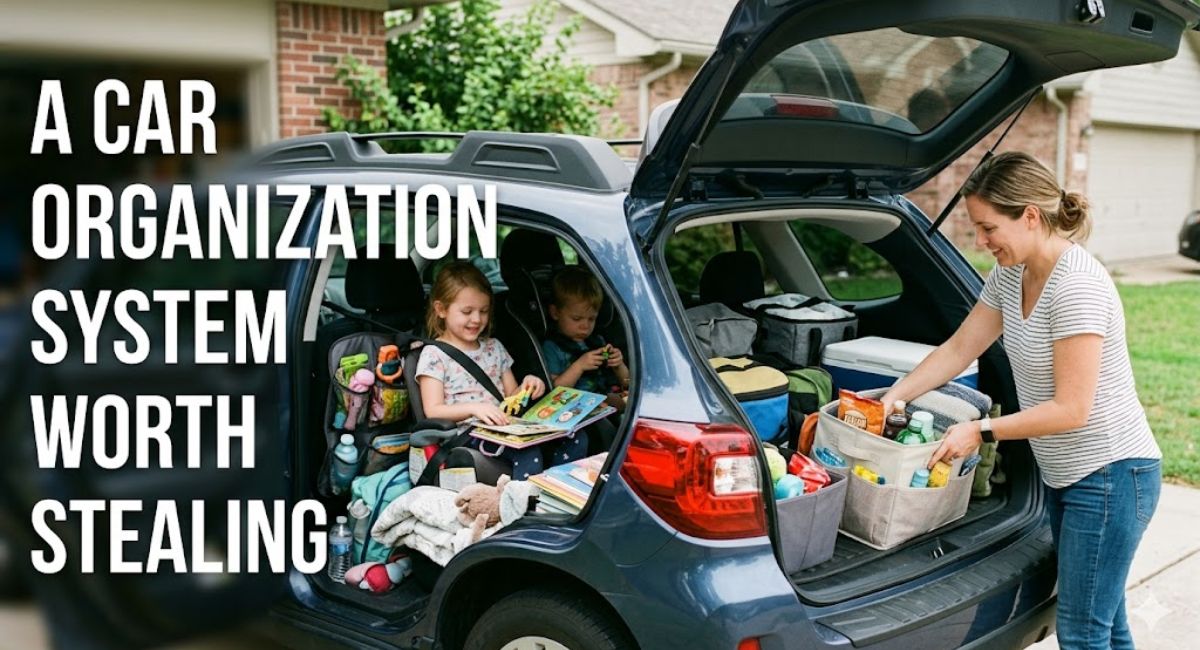
Instead of one giant bag, divide everything into four small bins that stay in the car permanently.
The activity bin holds all entertainment items. The snack bin holds dry snacks, utensils, and napkins. The comfort bin holds pillows, blankets, and extra layers. The cleanup bin holds wipes, trash bags, first aid supplies, and sanitizer.
This way you can restock each box quickly before the next trip without starting from scratch. Kids also know exactly where to look for things, which cuts the “Mom, where is my…?” frequency down significantly.
Apps Worth Downloading Before You Leave
Libby gives you free audiobooks and ebooks through your local library. Roadside America finds quirky stops that make the best unexpected breaks. GasBuddy tracks cheapest fuel along your route. iExit shows what’s available at upcoming highway exits before you pass them. Playground Buddy locates playgrounds near your route for leg-stretching stops with young kids.
Download everything in offline mode before leaving. Cell coverage along major highways is still surprisingly patchy in a lot of regions.
What to Leave Behind
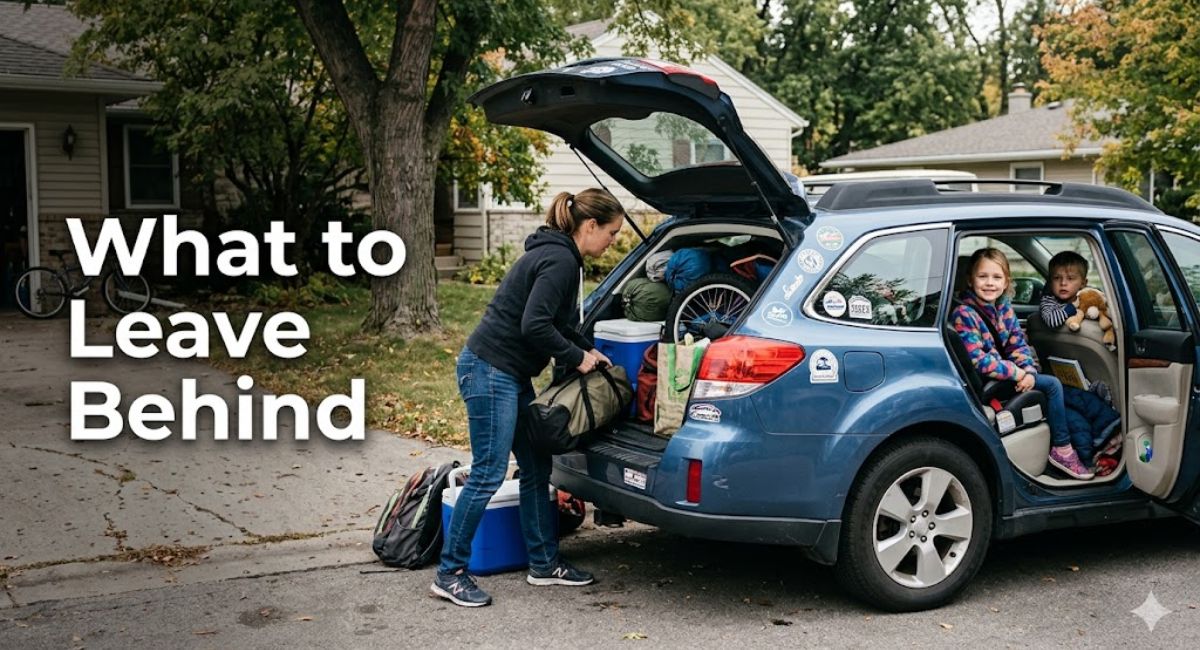
Every road trip with kids packing list should have a “don’t bother” section.
Juice boxes are too messy and not worth it in the car. Play-Doh and kinetic sand are self-explanatory. Books with lots of small loose pieces end up under the seat and stay there forever. Overly ambitious craft kits sound great at home but are terrible in a moving vehicle.
The best road trips aren’t the ones where you packed everything. They’re the ones where you were prepared enough to enjoy the unexpected. Pack the essentials, leave a little room for spontaneity, and let the drive itself be part of the adventure.
FAQs
What can kids do on a road trip? Kids can listen to audiobooks, play travel bingo, watch downloaded shows, do sticker books, and play simple card games. Surprise wrapped activities pulled out every hour or so keep things fresh throughout the drive.
Where is best to travel with kids? National parks, beach destinations, and cities with hands-on children’s museums tend to work best. Places with open spaces, short walking distances between attractions, and kid-friendly food options make the trip smoother for everyone.
What is the meaning of road trip for kids? For kids, a road trip is an adventure in itself, not just a way to reach a destination. The highway stops, snacks, games, and new scenery along the way become memories just as much as the place you’re headed to.
What is the hardest age to travel with a child? Most parents agree that toddlers between 18 months and 3 years are the toughest age group. They’re too active to sit still, too young to understand waiting, and not yet old enough to engage with most entertainment options that make long drives manageable.
Do I need a portable potty for a road trip with a toddler? If your child is potty training, yes. Highways have long gaps between rest stops, and toddlers do not negotiate urgency.
What’s the best way to organize the car for a family road trip? Use a backseat organizer per child and divide supplies into four labeled bins covering activity, snack, comfort, and cleanup. Decide on a trash system before you leave because without one the car becomes a mess within hours.
Should I drive at night or during the day with kids? Many families swear by leaving at 4–5 AM so kids sleep through the first few hours. Others prefer daytime driving with planned activity breaks. Both work and it comes down to how your kids actually sleep in the car.
What apps are most useful for family road trips? Libby for free audiobooks, GasBuddy for fuel prices, iExit for exit previews, Roadside America for interesting stops, and Playground Buddy for finding parks along your route.