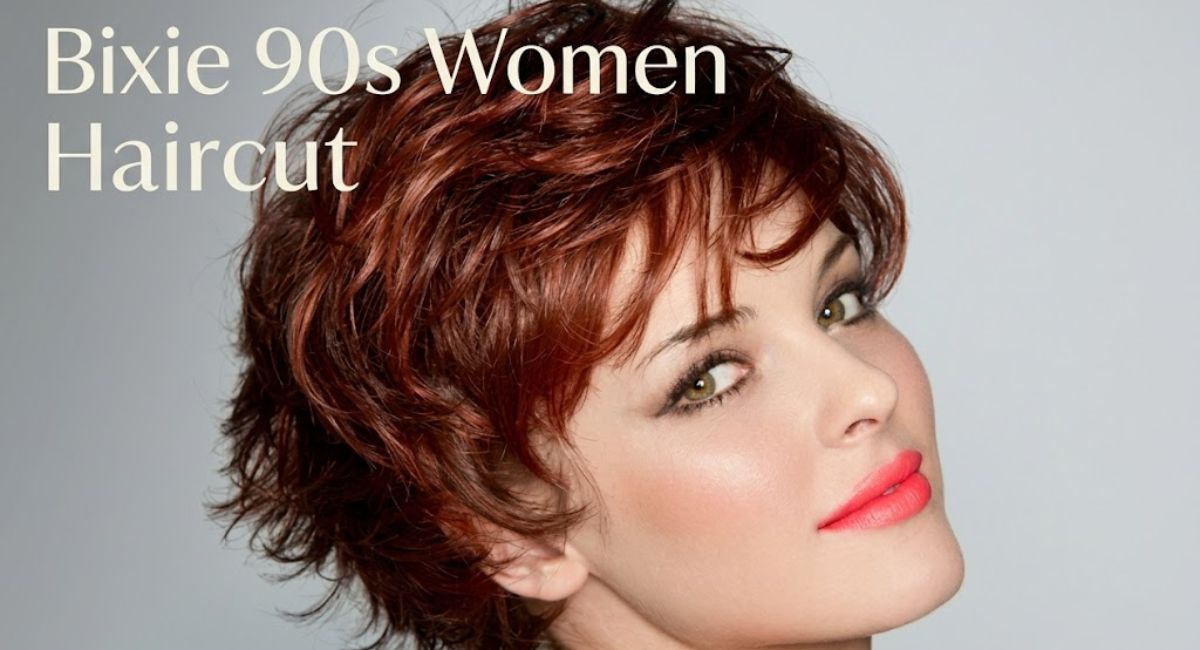
The bixie 90s women haircut is one of those rare cuts that never actually disappeared. It just waited. While balayage and beach waves dominated the 2010s, the bixie sat quietly in old issues of Vogue and on the heads of women who never stopped loving it. Now it’s back, and this time it has context, technique, and a whole new generation of women ready to commit to the chop.
Before you book that appointment, here’s everything worth knowing about this cut, told straight.
What Makes a Bixie a Bixie
Not every short cut is a bixie. The name itself is a blend of bob and pixie, which tells you exactly where it lives. It’s too long to be a pixie and too short and textured to be a proper bob. The length usually lands somewhere between the ear and the jaw, with layers that create softness and movement rather than a clean, blunt edge.
The cut works because of what it doesn’t do. It doesn’t try to look polished. It doesn’t demand a blowout every morning. It has a built-in casualness that comes from the way the layers are cut, not from how much product you use after.

The Real 90s Story Behind This Cut
Women in the 90s weren’t asking for bixies by name. They were walking into salons with magazine cutouts of Winona Ryder, Halle Berry, and Linda Evangelista and saying some version of “I want that.” What they were pointing at was a reaction to the previous decade. The 80s had volume, hairspray, and very deliberate styling. The 90s pushed back hard against all of that.
The cuts that came out of that era were shorter, less structured, and intentionally undone. Stylists were using techniques like point cutting and razor work to remove weight and add lived-in texture. The result was hair that looked like you woke up with it rather than spent an hour on it. That was the entire point.
Winona Ryder’s mid-90s cuts are probably the clearest reference most people have. Choppy around the face, tapered at the back, always slightly imperfect in the best way. Halle Berry wore her short cuts with more precision, but the same principle applied. These women made looking effortless look intentional, which is a harder trick than it sounds.
90s Bixie vs. What Salons Are Cutting Today
Here is where things get genuinely interesting, and where most people searching for this cut get confused by what they see online.
The bixie being cut today is not identical to its 90s version. Stylists have updated it.
| Element | 90s Version | Current Version |
| Layering technique | Choppy, disconnected | Blended, more considered |
| Fringe | Often absent or minimal | Curtain bangs frequently added |
| Styling finish | Air dried, low effort | Soft waves or intentional texture |
| Color | Mostly natural | Often includes highlights or a money piece |
| Overall feel | Grunge-adjacent | Polished casualness |
The modern version has taken the spirit of the original and applied better cutting technology to it. If you’re going into a salon with a 90s photo as your reference, a good stylist will meet you somewhere between then and now. That middle ground is usually exactly right.
Face Shape Honestly Explained
Every hair article tells you the same face shape information. Oval works with everything. Round needs height. You’ve read it. What actually helps is understanding why certain things work rather than just following the rules.
The bixie works well on oval and heart shaped faces because the length at the jaw creates a visual frame. It draws the eye down and outward in a way that feels balanced rather than top heavy.
On round faces, the bixie can absolutely work. The mistake people make is assuming it won’t. The adjustment is in the layers. You want volume at the crown and clean lines at the sides rather than width. Tell your stylist exactly that.
On square jaw lines, blunt ends at the jaw emphasize the angle. Soft, textured ends that fall slightly unevenly are far more flattering. Again, not a reason to avoid the cut, just a reason to communicate clearly.
The more honest variable is your hair’s natural texture and density. A bixie on fine straight hair is a completely different animal from a bixie on thick waves. Both can look excellent. They just need to be cut differently, and that conversation has to happen before scissors come out.
What Your Hair Type Will Actually Do
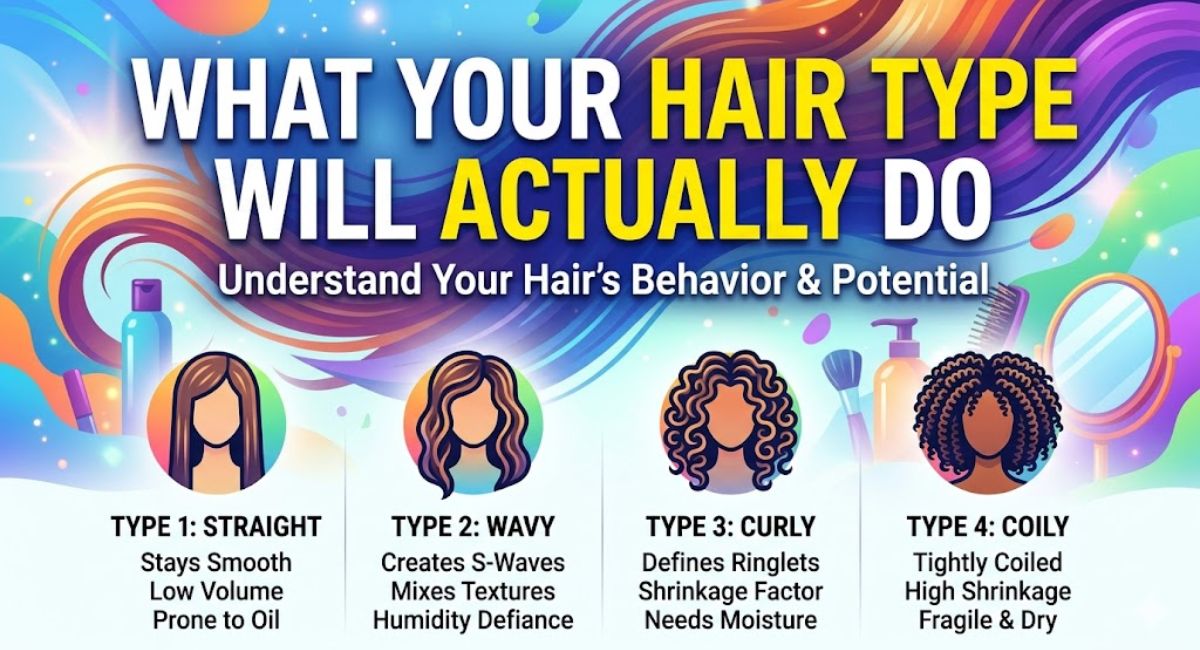
Fine and straight hair will look sleek and precise in a bixie, which some people love. If you want more texture, point cut ends and a texturizing spray will get you there. The cut itself can mimic thickness when the layers are done correctly.
Thick and straight hair is arguably the most ideal texture for this cut. There’s enough natural weight to keep it from going flat but enough body for layers to move properly. The main thing to watch is removing bulk without accidentally going too thin, which creates a different set of problems.
Wavy and curly hair gets the most dramatic results from a bixie, often in a good way. Curls create their own texture and volume, so the cut works with what you already have. The critical thing here is shrinkage. Your hair looks significantly longer wet than dry, and a stylist who doesn’t account for that will cut you shorter than you intended. Be specific about how much your hair springs up when it dries.
Thin or thinning hair actually benefits from shorter cuts more than most people expect. Longer hair pulls down under its own weight, which makes thin hair look flatter. A bixie removes that weight and gives the hair more apparent volume. Interior layers work better here than surface ones.
How to Actually Talk to Your Stylist
Bring three photos, not one. One reference photo locks a stylist into a single interpretation. Three photos showing slightly different variations communicate what you actually want, the length, the texture level, the overall shape.
Be honest about your morning routine. If you air dry every day, say so. If you own a blow dryer but never use it, say that too. A stylist who knows your real habits can cut accordingly. A bixie designed for someone who styles daily will look rough on someone who doesn’t.
Mention any hair quirks upfront. Cowlicks, fast-growing sections, areas that get puffy or flat. These things change where layers should sit and how the cut needs to be shaped to behave properly day to day.
If a stylist listens to all of this and then suggests a modification, take the note seriously. They’re seeing your actual hair in real lighting and thinking about how it behaves. That’s more useful than any photo.
Styling Without Overcomplicating It
The 90s bixie required almost nothing. The modern version is similarly low maintenance if you set it up right.
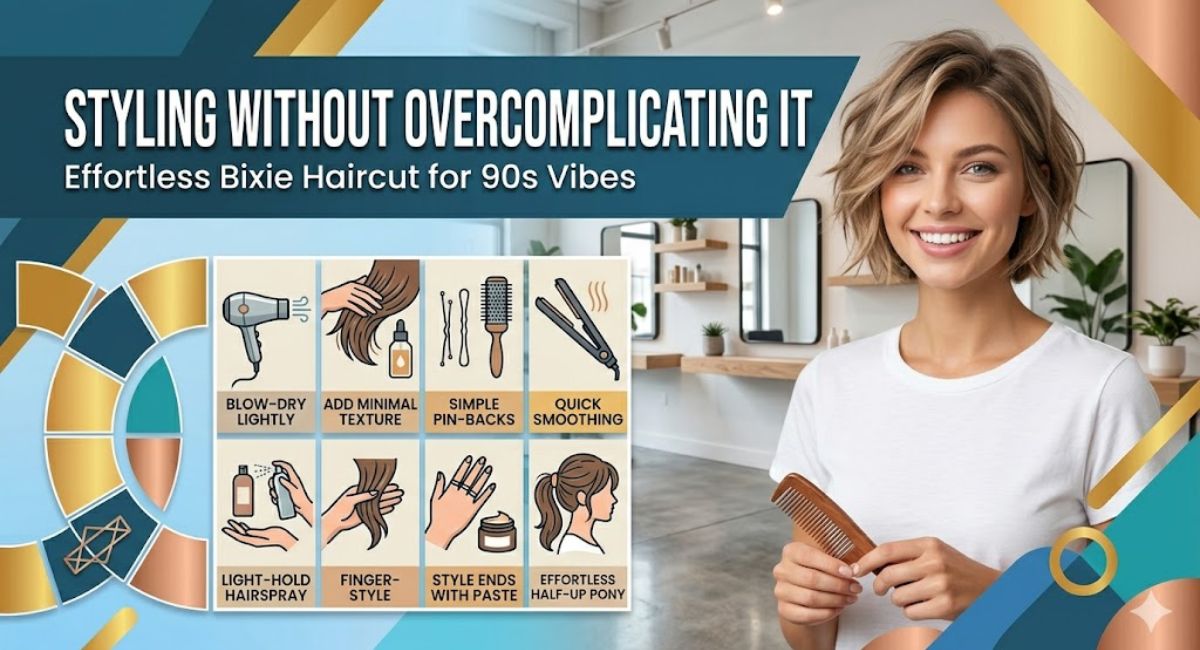
For a textured, natural finish, work a small amount of texturizing paste or light pomade through damp hair, scrunch gently, and leave it alone. Air drying does the rest. This gives you the effortless result that made the original cut so popular.
For something more polished, a small round brush and a blow dryer gives you control over where the ends fall. You can roll them under, push them out, or keep them straight depending on the mood.
For soft waves, a one inch curling iron or wand works well on this length. Wrap sections loosely and release without clamping the ends. You want a relaxed wave, not a rigid curl. Finish with a light hold spray rather than anything stiff.
The first two to three weeks after getting this cut feel unfamiliar to most people. You’ll reach for a ponytail that no longer exists. The styling instincts you built for longer hair don’t apply. Most women who end up loving their bixie will admit those first weeks tested them. Give it a full month before deciding anything.
Growing It Out Without Looking Like You Gave Up
Bixies grow out unevenly if you let them go completely. The back moves faster than the sides in most cases, and within a few months you can end up with a shape that reads as neglected rather than in transition.
Regular trims every six to eight weeks during the grow out keep everything moving in the same direction. You’re not cutting length, just maintaining the shape while it extends. A stylist can guide you through which sections to trim and which to leave alone based on where you want to land eventually.
The grow out is genuinely manageable. It just requires more intentional maintenance than growing out longer cuts where unevenness hides more easily.
FAQs
How is the bixie different from a regular pixie cut? A pixie is much shorter overall, sitting close to the head with minimal length on top. The bixie has significantly more length, usually reaching the jaw or just below the ears, with more layering and volume throughout. The two cuts feel completely different to wear and to style.
Can women with curly hair pull off a bixie? Yes, and curly bixies often look exceptional because the natural texture does the visual work for you. The main requirement is a stylist who understands how curly hair shrinks when dry. Communication about your specific curl pattern and shrinkage percentage matters a lot here.
Is the bixie a practical cut for older women? It works well at any age. For women over 45, softer layers tend to be more flattering than very choppy or disconnected ones, as they frame the face gently without emphasizing jaw or neck changes. The cut can actually look sharper and more modern than many longer styles.
How often does a bixie need to be trimmed? Every six to eight weeks keeps the shape looking intentional. Around ten weeks, most bixies start to lose their structure noticeably. If you’re someone who hates frequent salon visits, this is worth factoring into your decision before committing.
What’s the best way to add texture to a bixie on fine hair? Point cut ends during the haircut itself create the most texture without product. After that, a light texturizing spray or sea salt spray on damp hair before air drying adds movement. Avoid heavy products, which weigh fine hair down and defeat the purpose of the cut.
Conclusion
The bixie 90s women haircut has lasted this long because it solves a real problem. It’s short enough to feel like a change, long enough to retain flexibility, and textured enough to look like you put in effort even when you didn’t. The 90s gave it the right attitude. Modern cutting techniques gave it better bones. What you do with it from there depends entirely on your hair, your stylist, and how honest you are with both.
