Blood sugar balancing meals are one of the most practical and underrated ways to take control of your energy, mood, and long-term health. You’ve probably felt it before that mid-afternoon crash, the foggy brain after a heavy lunch, or the shakiness that hits when you haven’t eaten in a few hours. That’s your blood sugar talking. And the good news is, your next meal is one of the most powerful tools you have to fix it.
Whether you have diabetes, prediabetes, or you’re just tired of energy dips controlling your day, building blood sugar balancing meals doesn’t require a dietitian’s degree or a complicated meal plan. It just takes understanding a few key principles and then making them work for your real life.
Why Blood Sugar Balancing Meals Matter More Than You Think
Most people only start thinking about blood sugar after a diagnosis. Butblood sugar swings affect everyone your mood, your focus, your hunger, even your sleep.
When you eat a large meal, especially one high in carbohydrates, blood sugar can spike temporarily, leaving you feeling sluggish, tired, or sleepy afterward. In a healthy body, the pancreas produces enough insulin to bring levels back to normal. But over time, repeated spikes can wear that system down.
The goal isn’t to eliminate carbs or live on salads. It’s to build meals that slow down the release of sugar into your bloodstream so your energy stays steady, your cravings quiet down, and your body isn’t constantly playing catch-up.
The Concept Behind Every Blood Sugar Balancing Meal
Think of every meal as a team. Carbohydrates are the fast runners they hit your blood sugar quickly. Protein, fat, and fiber are the slow ones they hold the carbs back, pace the glucose release, and keep things stable.
The key is balance mixing sugars and carbohydrates with protein, fiber, and healthy fats. Choosing the right combination of foods can help lower blood sugar naturally.
This is why eating a bowl of white rice on its own hits your blood sugar like a freight train but that same rice with grilled chicken, avocado, and a handful of greens? Completely different response.
The Plate Method: Simplest Framework That Actually Works
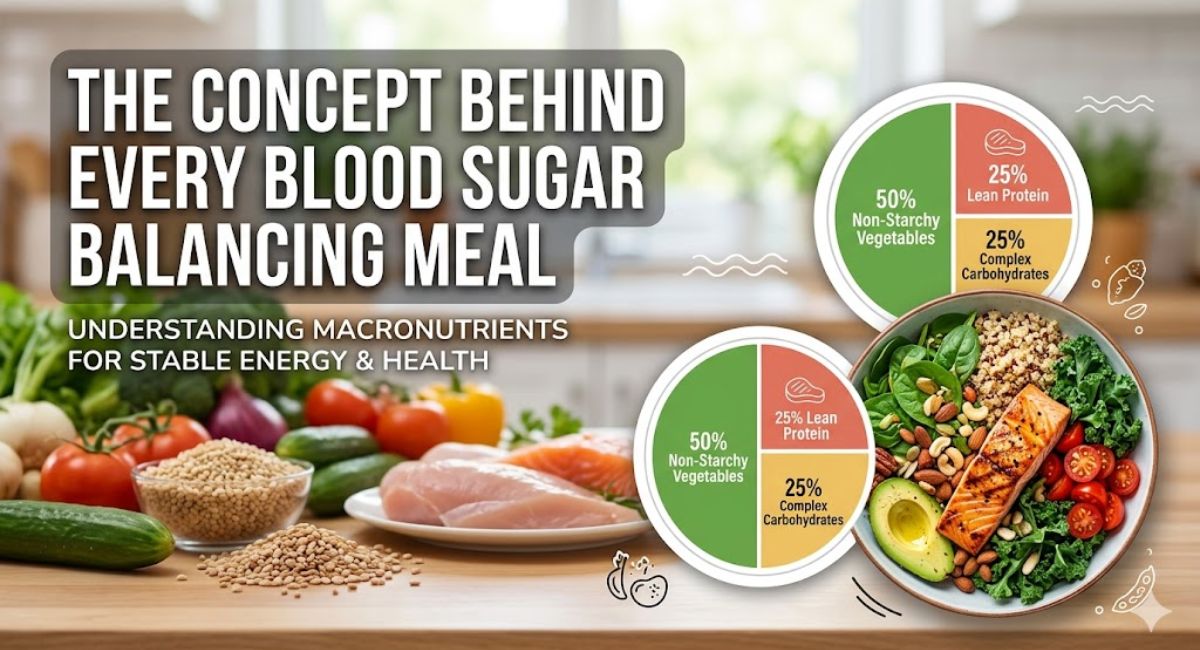
If you don’t want to count macros or calories, the plate method is your best friend. Using a 9-inch dinner plate, fill half with nonstarchy vegetables like salad, green beans, or broccoli. Fill one quarter with a lean protein like chicken, beans, tofu, or eggs. Fill the remaining quarter with carb foods grains, starchy vegetables, rice, pasta, beans, or fruit.
That’s it. No apps, no calculator, no weighing food.
This approach works because carbohydrates are the quickest source of energy if you eat a meal high in refined carbs, your blood sugar spikes. Your body also gets energy from protein and fats, just more slowly. Pairing carbs with slow-release sources of energy helps avoid a blood glucose spike after meals.

Best Foods for Blood Sugar Balancing Meals
Non-Starchy Vegetables (Fill Half Your Plate)
These are your foundation. They’re packed with fiber and nutrients but have almost no impact on blood sugar.
Broccoli, spinach, kale, and green beans are excellent choices. So are zucchini, cauliflower, bell peppers, cucumber, cabbage, asparagus, and Brussels sprouts. You can rotate these freely depending on what’s in season or what you enjoy most.
Filling at least half your plate with vegetables and eating them early in the meal helps you feel full faster so you don’t overeat carbs.
Protein (A Quarter of Your Plate)
Protein is arguably the most underrated blood sugar tool. It barely raises glucose and keeps you satisfied for hours. Good options include eggs, chicken breast, turkey, salmon, tuna, sardines, Greek yogurt, cottage cheese, lentils, chickpeas, black beans, and tofu.
Protein-rich foods like lean meats, fish, beans, and eggs help stabilize blood sugar levels and slow digestion.
Smart Carbs (The Final Quarter)
Not all carbs are the same. The ones with more fiber and less processing raise blood sugar more slowly.
Low-GI foods include oatmeal, pasta, sweet potatoes, corn, carrots, peas, most fruits, and non-starchy vegetables. Medium-GI options include whole-wheat or rye bread, pita, and brown, wild, or basmati rice.
These are far better choices than white bread, white rice, or sugary cereals.
Healthy Fats (Don’t Skip Them)
Healthy fats slow your digestive system and the rush of sugar from your gut to the bloodstream. Nuts are high in protein and healthy fats opt for no-salt or low-salt varieties, as well as nut butters without added sugar. Seeds like chia, flax, pumpkin, and sunflower are another great option.
Specific Foods Worth Highlighting
Berries — Berries contain fiber, vitamins, minerals, and antioxidants, making them an excellent choice for blood sugar management. Studies have found that eating red raspberries with a high-carb meal significantly reduced post-meal insulin and blood sugar in adults with prediabetes. Eat them with Greek yogurt or a handful of nuts for best effect.
Legumes — Adding black beans or chickpeas to a rice meal has been shown to significantly reduce post-meal blood sugar levels compared with eating rice alone. This is a small swap with a big payoff.
Avocados — Avocados are rich in healthy fats, fiber, vitamins, and minerals. Adding them to meals may improve blood sugar management and help reduce blood sugar levels.
Oats — Oats and oat bran contain high soluble fiber content, which has been shown to have significant blood sugar-reducing properties. Go for rolled or steel-cut oats over instant varieties.
Fermented Foods — Fermented foods such as kimchi and sauerkraut contain probiotics, minerals, and antioxidants. Research associates these compounds with improved blood sugar and insulin sensitivity.
A Day of Blood Sugar Balancing Meals (Real Examples)
Breakfast: Overnight oats made with rolled oats, unsweetened almond milk, blueberries, chia seeds, and a spoonful of almond butter. Takes 5 minutes the night before and stabilizes blood sugar for hours.
Lunch: A plate following the half-vegetables, quarter-protein, quarter-carb split for example, a large salad base with grilled chicken, half a cup of brown rice, and olive oil dressing.
Dinner: Baked salmon with roasted broccoli, cauliflower, and a small serving of sweet potato. Simple, satisfying, and exactly what your blood sugar needs at the end of the day.
Snack: Sliced apple with almond butter, or a piece of string cheese with whole-grain crackers a mix of fiber, healthy fats, and protein that stabilizes blood sugar without causing spikes.

Common Mistakes That Sabotage Blood Sugar Balance
Skipping breakfast is more damaging than most people realize. Running out the door without breakfast can set the wrong tone for the day and make you crave high-calorie foods later, making glucose management harder.
Eating one big meal is another common trap. Having one large meal at the end of the day or spacing meals unevenly can negatively affect blood sugar and medication effectiveness.
Ignoring starch is easy to do. Most people know to avoid sugar but miss the starch hiding in crackers and cereals. Starch turns into sugar about 15 minutes after eating, and it can rush into the bloodstream quickly. To find net carbs from a food label, subtract fiber from total carbohydrates.
Eating carbs alone is a habit worth breaking. A banana by itself hits your blood sugar fast. The same banana with peanut butter? A much gentler curve.
Meal Timing and Eating Patterns
What you eat matters. But when you eat matters too.
Aim to eat at the same times every day and keep the amount of food roughly consistent. This helps your body use insulin more effectively, whether it’s produced naturally or taken as medication.
A short walk after meals is also surprisingly effective. Exercise helps in two ways: consistent activity boosts metabolism to burn off sugars, and a walk immediately after a high-carb meal can burn off excess glucose in the bloodstream.
What to Drink
Water is the MVP. Staying well hydrated helps stabilize blood sugar levels.
Avoid sugary drinks, fruit juices, and sodas these cause sharp spikes with no fiber to slow them down. Unsweetened green tea, black coffee in moderation, and sparkling water are all solid options.
A Note on Portion Size
Portion size and serving size aren’t always the same. A portion is the amount you choose to eat; a serving is a specific measured amount. Studies show that people tend to eat more when served more food so use measuring tools at home until you develop a reliable eye for amounts.
When eating out, ask for half the meal boxed before you start. Restaurant portions are often two to three times what one person needs.

Should You Track Blood Sugar?
If you have diabetes or prediabetes, yes regular monitoring gives you real feedback on how your body responds to specific meals. Check blood sugar levels at different times throughout the day to be aware of your baseline. Nutrition, exercise, and medication are the three most important factors for keeping levels in a safe range.
Apps like Levels Health or MySugr can help you log meals alongside glucose readings, so you start seeing patterns which foods work for your body and which ones don’t.
Building the Habit Without Burning Out
The biggest mistake people make is trying to overhaul everything at once. Start with one meal. Master the plate method for dinner. Then apply it to lunch. Then breakfast.
Keeping a list of your favorite easy recipes means you don’t have to think about what to cook. Using frozen or pre-chopped ingredients saves time, and cooking once for leftovers means a ready-made balanced meal is already waiting for you.
Small, consistent shifts compound over time. You don’t need a perfect diet you need a reliable one.
FAQs
What food is good for balancing blood sugar? Non-starchy vegetables, lean proteins like eggs and chicken, low-GI carbs like oats and sweet potatoes, and healthy fats like avocado and nuts are the best choices. Berries, legumes, and fermented foods like kimchi also help keep glucose levels steady.
What is the 3 3 3 rule for eating? The 3 3 3 rule means eating every 3 hours, keeping meals to 3 food groups (protein, fat, and carbs), and stopping at 3 out of 5 on a hunger scale. It helps maintain steady energy and prevents blood sugar from dropping too low between meals.
What is the 3-hour rule in diabetes? The 3-hour rule suggests waiting at least 3 hours between meals before eating again. This gives your body enough time to process glucose properly and prevents insulin from constantly spiking throughout the day.
How to reduce HbA1c? Eating balanced meals with fiber, protein, and healthy fats at consistent times every day is one of the most effective ways to lower HbA1c over time. Regular physical activity, staying hydrated, and reducing processed carbs and sugary drinks also make a measurable difference within 2 to 3 months.
5. How many carbs should I eat per meal to balance blood sugar? A general guideline is 30 to 45 grams of carbohydrates per meal, but this varies based on age, activity level, and health status. A registered dietitian can help you find your ideal range.
