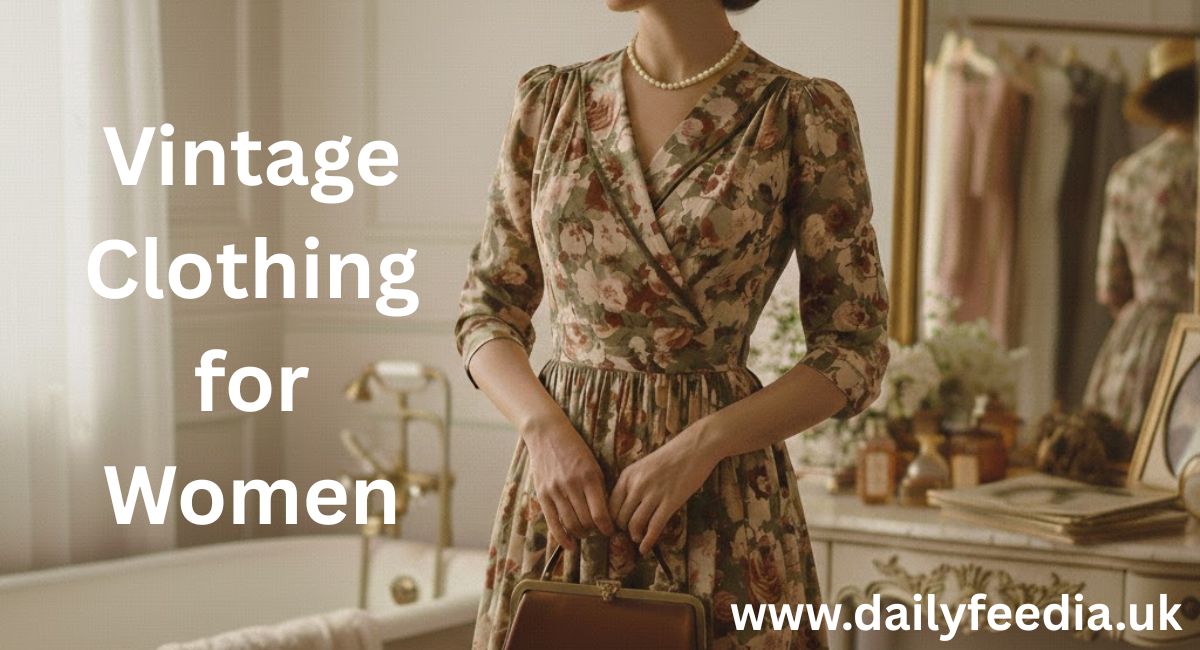
Vintage clothing for women isn’t just about owning something old it’s about finding pieces with history, quality craftsmanship, and a style that modern fast fashion simply can’t replicate. After years of hunting through estate sales, thrift stores, and online vintage shops, I’ve learned that buying vintage clothing for women requires a completely different approach than shopping at contemporary retailers. The sizing doesn’t match today’s standards, fabric care is more demanding, and authenticity can be tricky to verify. But when you find the right piece, it becomes a wardrobe staple that literally no one else will be wearing.
This guide covers the practical realities of shopping for vintage women’s clothing what to look for, how to avoid common mistakes, and which eras offer the best options for modern wearability.
Understanding Vintage Clothing Eras and Their Defining Characteristics
The term “vintage” technically refers to clothing that’s 20-100 years old, though most wearable vintage pieces you’ll find date from the 1950s through the 1990s. Each decade has distinct silhouettes, fabric choices, and construction methods that affect both style and durability.
1950s clothing features fitted bodices, full skirts, and an emphasis on the waistline. You’ll find lots of cotton day dresses, wool suits, and the beginning of synthetic fabrics like early polyester. The quality is generally excellent seams are properly finished, zippers are metal, and buttonholes are reinforced. However, the bust and waist measurements run extremely small by today’s standards. A labeled size 12 from 1955 typically measures closer to a modern size 2-4.
1960s pieces shift toward more youthful, mod styles shift dresses, A-line cuts, and bold geometric patterns. Early 60s pieces still maintain 50s construction quality, but by mid-decade you see more synthetic blends and simpler finishing. The advantage here is that many 60s dresses have looser, more forgiving fits that translate better to modern body types.
1970s vintage offers incredible variety from bohemian maxi dresses to polyester disco wear to early punk influences. This era heavily features polyester, which has earned a bad reputation but actually wears incredibly well if it’s the heavier, higher-quality version used in the 70s. The biggest issue with 70s pieces is lingering odors; polyester holds onto smoke and perfume smells that are nearly impossible to remove even after multiple washings.
1980s clothing is experiencing a major resurgence right now. The oversized blazers, high-waisted jeans, and dramatic shoulders are back in style, making 80s vintage highly wearable. The construction quality varies widely designer pieces from this era are exceptional, while mall brands often used cheap fabrics and simple construction that hasn’t aged well. Power suits from this decade are particularly valuable finds; the wool is usually high-quality and the tailoring is sharp.
1990s pieces are now firmly in the vintage category (which makes many of us feel old). Slip dresses, minimalist cuts, denim everything, and grunge flannels define this era. The advantage of 90s vintage is that sizing is much closer to modern standards, and most people have a better sense of the decade’s aesthetics since it’s more recent. The downside is that some 90s fabrics particularly cheap rayon and modal blends haven’t aged as gracefully as older textiles.
How to Identify Authentic Vintage vs. Modern Reproduction
One of the biggest frustrations in vintage shopping is discovering that a “vintage” piece is actually a modern reproduction. Reproductions aren’t inherently bad some companies make excellent vintage-inspired clothing but they shouldn’t be sold at authentic vintage prices.
Check the label first. Genuine vintage labels often show the manufacturer’s location in a way that dates the piece. “Made in USA” labels from before the 1990s typically include a union label (ILGWU or UNITE). Pre-1960s labels often have elaborate graphics or cursive fonts. Modern reproduction labels usually look too clean and use contemporary fonts.
Examine the zipper. Metal zippers were standard until the 1970s, and they should show signs of age—slight discoloration, wear on the teeth, or tarnishing on the pull. Talon, Conmar, and Gripper were major zipper manufacturers in the US. If you see a perfect, shiny plastic zipper in a dress that’s supposedly from the 1950s, it’s either been replaced or it’s not authentic. Japanese YKK zippers became dominant in the 1970s, so their presence helps date a piece.
Look at construction details. Vintage garments typically have finished seams either pinked edges, bound seams, or French seams. Modern fast fashion and some reproductions use serged edges (that stretchy, looped stitch you see on the inside of contemporary clothes). Button placement and hand-stitching are also tells. Before the 1970s, buttons were often sewn with visible hand stitching, and buttonholes have thick, tight stitching. Reproductions usually have machine-perfect buttonholes that look too uniform.
Fabric content tells a story. Pre-1950s clothing is almost entirely natural fibers cotton, wool, silk, rayon. Polyester entered the market in the late 1950s but wasn’t widely used in women’s clothing until the mid-60s. Spandex/Lycra wasn’t common in everyday clothing until the 1980s. If a “1950s” dress has spandex in the fabric content, something’s wrong. Also check how the fabric feels and drapes vintage textiles often have more weight and body than modern equivalents.
Sizing labels can be deceptive but informative. Pre-1980s sizing ran much smaller, and the label format differed. A 1960s dress might have a label that says “Bust 36” or “Junior 11” rather than modern size numbers. Many 1940s-50s pieces don’t have size labels at all. If you see modern sizing (XS, S, M, L) on a supposedly vintage item, verify other authenticity markers carefully.
The Reality of Vintage Sizing and Fit
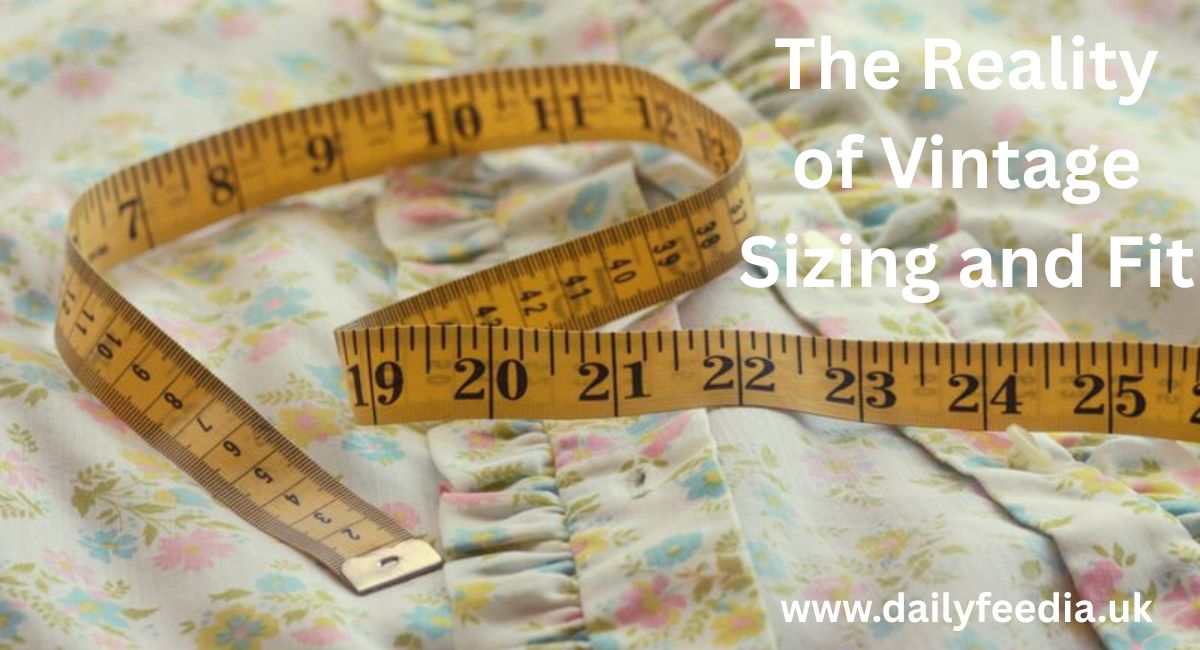
This is where many first-time vintage shoppers get discouraged. You cannot rely on the size on the label. Period. A vintage size 14 might fit a modern size 6. A 1950s “large” could be smaller than a current size small.
Always check actual measurements. Reputable vintage sellers provide bust, waist, hip, and length measurements. Compare these to a similar item in your closet that fits well. For dresses, you need all four measurements. For skirts and pants, focus on waist and hip measurements plus the rise (how high or low the waistband sits).
The waist is usually the problem area. Most vintage pieces from the 1940s-60s were designed for women who wore foundation garments girdles and garter belts that compressed and shaped the natural waist. A dress from this era might have a 24-25 inch waist measurement on a size labeled “medium.” Many modern wearers assume they can size up, but often the bust and shoulders also run small, so sizing up leaves you with a saggy, ill-fitting garment.
Consider alteration potential when you shop. Seams can be let out if there’s extra fabric in the seam allowance (usually there is in quality vintage pieces often 1-2 inches). Hemlines can be adjusted easily. Taking in garments is simpler than letting them out. But some structural changes—like significantly altering shoulder width or completely restyling a bodice—cost more than the garment is worth and change its vintage character.
Certain styles work better across size ranges. Wrap dresses, full skirts with elastic waists, loose-fit blouses, and oversized blazers offer more flexibility. A perfectly fitted 1950s wiggle dress is harder to pull off unless the measurements align almost exactly. This is why many experienced vintage collectors focus on specific eras or styles that work with their body type rather than trying to wear every decade.
Where to Shop for Vintage Clothing and What to Expect
Local thrift stores and Goodwill can yield amazing finds, but you’re competing with resellers who know what to look for. The best strategy is going frequently (weekly if possible) and checking the racks methodically. Most valuable pieces are mislabeled or overlooked. I’ve found 1940s gabardine suits in the men’s section and designer 80s dresses crammed in with modern polyester blouses. Don’t trust the rack section check everything.
Estate sales offer higher quality but require more effort. You need to arrive early (often before the official start time) because serious vintage buyers will be lined up. The advantage is seeing how clothes were stored and finding complete outfits shoes, accessories, and clothing together. The disadvantage is that estate sale prices have increased significantly as vintage has become more mainstream. Still, you’ll find better quality than at thrift stores, and items are less picked-over.
Online platforms like Etsy, eBay, and specialized vintage shops offer enormous selection and detailed measurements. The risk is that photos can be misleading lighting affects how colors appear, and it’s hard to assess fabric condition from images. Read seller reviews carefully. Look for shops that provide measurements for every item, show close-ups of any flaws, and have reasonable return policies. Poshmark and Depop also have vintage sections, but authenticity verification is limited.
Vintage clothing fairs and markets happen in most major cities several times a year. These bring together multiple vendors, so you can see a large volume of pieces in person. Prices tend to be higher than thrift stores but more negotiable than established shops. The major advantage is touching fabrics, checking construction, and trying things on. Bring cash—many vendors prefer it and might offer discounts for cash purchases.

Common Problems with Vintage Clothing and How to Address Them
Odor is the most frequent issue. Vintage pieces often smell like mothballs, old perfume, cigarette smoke, or just general mustiness. Airing items outside in sunlight helps with mild odors. For stronger smells, vodka in a spray bottle (yes, really) or white vinegar solutions can neutralize odors without damaging delicate fabrics. Some sellers list items as “needs airing” which is code for “definitely smells.”
Missing buttons, broken zippers, and small tears are common. Factor in repair costs before purchasing. A vintage-looking button replacement might cost $15-20 for a full set. Zipper replacement by a tailor runs $20-40 depending on garment type. Small moth holes in wool can sometimes be rewoven, but it’s expensive ($30+ per hole). Large tears or stains in visible areas usually make a piece unwearable unless you’re skilled at mending.
Color fading and fabric weakening happen with age. Sun exposure causes fading, particularly on shoulders and necklines where garments hung near windows. Silk especially deteriorates—1920s-40s silk often “shatters” with a sound like crinkling paper when you handle it. Underarm areas on vintage clothing frequently show weakening from deodorant and sweat, which chemically breaks down fabrics over decades. Check these areas carefully before buying.
Stains might not be immediately visible. Yellowing on white or light-colored fabrics often only shows up in certain lighting. Underarm discoloration, perfume stains at necklines, and mystery spots are common. Some can be treated, but set-in stains on vintage fabrics often don’t respond to modern stain removers. Never put a vintage garment with an unknown stain into hot water—it will set permanently.
Caring for Vintage Clothing to Make It Last
Most vintage pieces cannot go in a modern washing machine. The agitation and heat will damage fabrics that are already 40-70 years old. Hand washing in cool water with gentle detergent is safest for most items. I use Woolite or Eucalan for nearly everything. Hang or lay flat to dry never use a dryer.
For sturdy cotton pieces from the 1950s-60s (like casual day dresses or work shirts), you can sometimes machine wash on delicate cycle in a mesh bag, but test on less valuable items first. Wool should be dry cleaned or hand washed in cool water, then laid flat to dry. Never hang wet wool it will stretch out of shape.
Storage matters more than you’d think. Vintage clothing should be stored in a cool, dark, dry space. Sunlight fades colors and weakens fibers. Humidity encourages mildew. I store my most delicate pieces flat in acid-free tissue paper in boxes. Hanging works for sturdier items, but use padded hangers to prevent shoulder distortion. Cedar blocks or lavender sachets deter moths without the harsh chemical smell of mothballs.
Before wearing a vintage piece for the first time, check all stress points underarms, zippers, buttons, hem. It’s better to do preventive repairs than to have a zipper blow out while you’re wearing it. Steam or light pressing often improves the look of vintage pieces, but always use a pressing cloth and low heat. Some older fabrics (particularly synthetics) will melt or develop shine from direct iron contact.
What Vintage Pieces Are Worth the Investment
Quality designer pieces from the 1960s-80s hold value and wearability. Labels like Yves Saint Laurent, Halston, Diane von Furstenberg, and Pierre Cardin produced pieces in these decades that still look contemporary and are constructed to last. These will cost $100-500+ depending on condition, but they’re often better made than modern designer clothing at similar price points.
1950s cotton day dresses in good condition are increasingly hard to find and command higher prices ($80-200). If you find one that fits, it’s worth the investment for the quality alone. Look for full skirts, interesting prints, and details like pockets or covered buttons.
1970s denim and leather items age beautifully and are incredibly durable. A vintage Levi’s denim jacket or high-waisted jeans will outlast anything you buy new today. Leather jackets from this era are typically heavier, better-quality leather than contemporary “genuine leather” items.
Wool coats from any era are excellent investments if they fit well. The wool used in vintage coats is often heavier and more tightly woven than modern versions. A 1960s wool peacoat or 1950s swing coat can become a staple in your wardrobe for years. Expect to pay $100-300 for a quality vintage coat in excellent condition.
Avoid heavily damaged pieces unless you’re buying for craft projects. A $30 dress with major staining, tears, and sizing issues isn’t a deal it’s craft material. Only buy damaged items if you have specific plans to repurpose the fabric or you have the skills to do complex repairs.
Frequently Asked Questions
What is women’s vintage clothing?
Women’s vintage clothing refers to original garments made roughly 20–100 years ago, often valued for quality fabrics, unique design, and craftsmanship that differs from modern fashion.
What are the best vintage clothing websites?
Popular and reliable options include Etsy, eBay, and specialized vintage boutiques. Look for sellers who provide detailed measurements, clear photos, and honest condition notes.
How to dress like a vintage woman?
Start by choosing one era you like and mix one vintage piece with modern basics. Focus on fit, simple silhouettes, and accessories rather than wearing head to toe vintage.
What qualifies as vintage clothing?
Clothing is generally considered vintage if it’s at least 20 years old but not more than 100. Pieces should be original to the era, not modern reproductions or retro inspired items.
Final Thoughts on Building a Vintage Wardrobe
Starting with vintage clothing requires shifting your shopping mindset entirely. You’re not looking for the perfect item in your usual size; you’re hunting for well-made pieces in your actual measurements that happen to have decades of history. The most successful vintage wearers I know focus on one or two eras they love, learn those sizing and construction details thoroughly, and build a collection slowly rather than trying to wear every decade.
Begin with accessories vintage scarves, belts, and jewelry are easier to fit and less risky investments. Then move to sturdy, versatile pieces like denim, wool coats, or loose-fit blouses. Save the perfectly fitted cocktail dresses and tailored suits until you understand vintage sizing in your specific measurements.
The effort is worth it. A 1960s wool coat or 1970s leather jacket develops character as you wear it and carries a style that modern clothing simply can’t replicate. You’re also keeping quality garments in use rather than in landfills, which matters more as fashion consumption accelerates. Just remember: vintage shopping rewards patience, realistic expectations, and the willingness to learn as you go.