Medium blonde hair color ideas for women 2026 are everywhere right now, and honestly, it’s about time. For years, blonde trends swung between two extremes, icy platinum that needs a touch up every three weeks, or warm honey tones that can read a little dated by spring. Medium blonde sits in the sweet spot. It’s light enough to feel like a real change, dark enough to grow out without looking patchy, and flexible enough to work whether your natural hair is light brown, dark blonde, or even a deeper shade you’re lifting for the first time.
If you’ve been scrolling Pinterest for an hour and still can’t decide between honey, ash, or beige, you’re not alone. Most lists out there just throw thirty photos at you with one line of caption each. That’s not actually helpful when you’re trying to figure out what will look good on you specifically, what it’ll cost to maintain, and what to actually say to your colorist so you don’t end up with something you didn’t ask for.
This guide covers the best medium blonde shades for 2026, how to pick the right one for your skin tone and eye color, what upkeep really looks like, and the exact words to use during your salon consultation so you walk out with the color you pictured.
What Counts as “Medium Blonde” Anyway
Medium blonde sits right in the middle of the blonde spectrum. It’s darker than platinum or pale beige, but noticeably lighter than dark blonde or bronde. Think level 7 to 8 on the standard hair color chart most salons use.
It’s the shade that looks like it could be natural, which is exactly its appeal. You’re not committing to maintenance every two weeks like you would with platinum, but you’re also not stuck in that awkward “is this blonde or brown” zone that darker blondes sometimes fall into.
One thing a lot of articles skip entirely: medium blonde isn’t one shade. It’s a category that includes warm tones like honey and caramel, cool tones like ash and beige, and neutral tones like sandy and wheat. Picking “medium blonde” without picking a tone is like ordering “coffee” without saying what kind. You’ll get something, but maybe not what you wanted.
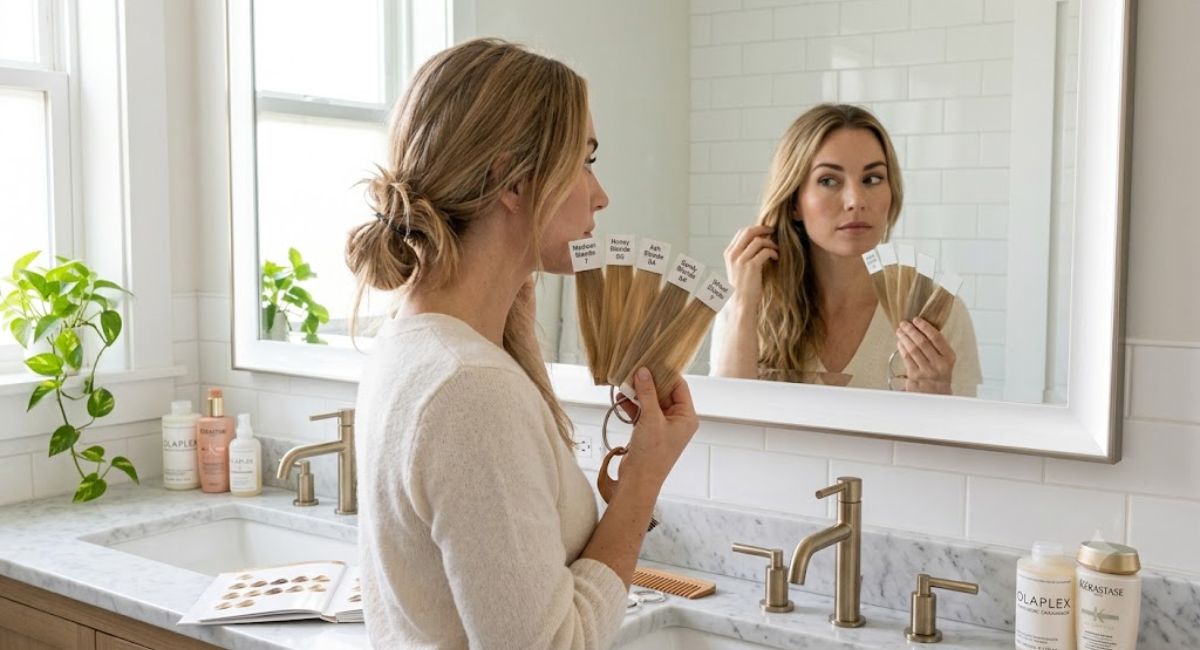
How to Find Your Best Medium Blonde Shade Before You Pick a Color
Before you fall in love with a photo on social media, figure out your undertone. This single step prevents more bad dye jobs than anything else.
Here’s the fastest way to check, no fancy consultation needed:
- Look at the veins on the inside of your wrist in natural light
- Blue or purple veins usually mean a cool undertone
- Green veins usually mean a warm undertone
- A mix of both, or you genuinely can’t tell, usually means neutral
Once you know your undertone, matching gets a lot easier.
Warm undertones generally glow with honey, golden, caramel, or buttery medium blonde shades. These add warmth and brightness without looking harsh against golden or peachy skin.
Cool undertones tend to look best with ash, beige, or champagne medium blonde. Warm golden tones can sometimes clash and bring out redness, so cooler shades balance things out.
Neutral undertones are the lucky ones here. Almost everything works, which means you can pick based on personal taste instead of worrying about clashing.
A small note from experience: a lot of people assume their undertone based on what they like wearing, not what their skin actually does. If you wear a lot of gold jewelry but always look slightly washed out in golden blonde photos, trust the wash out, not the jewelry preference.
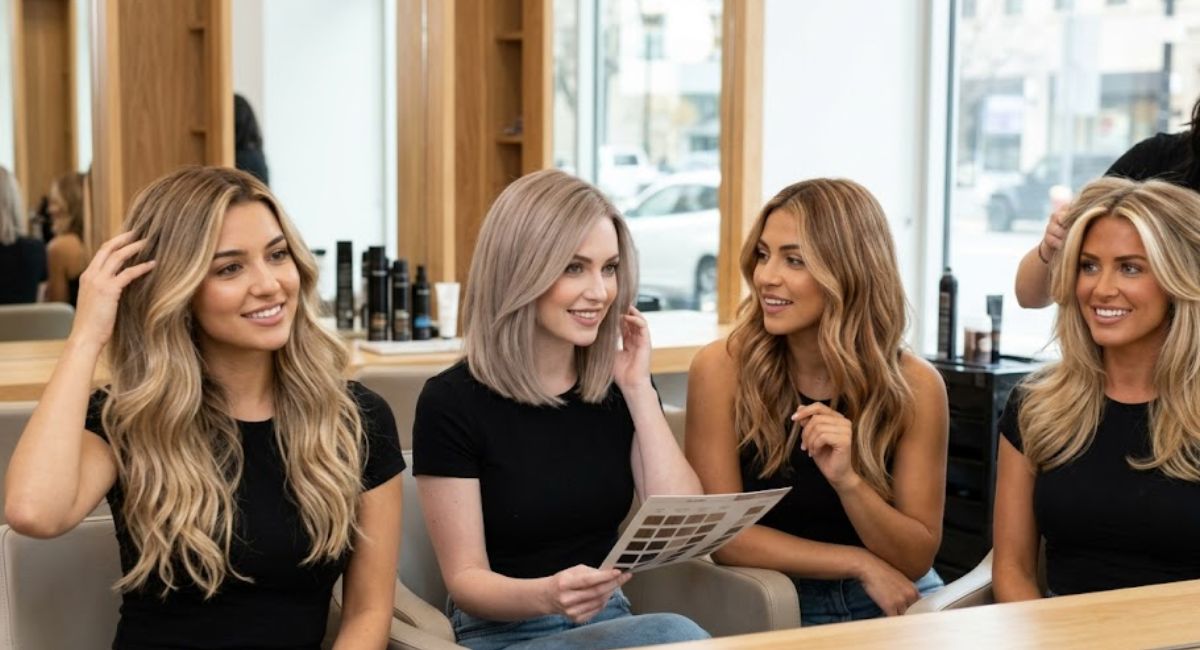
2026’s Most Requested Medium Blonde Shades
Honey Blonde
Honey blonde blends golden and light brown tones for a rich, warm finish. It’s one of the most requested shades for 2026 because it photographs well in almost any lighting and grows out gracefully. It works especially well on warm and olive skin tones.
Golden Blonde
A step warmer than honey, golden blonde leans into amber and yellow tones. It’s a strong pick if you have brown or hazel eyes, since the warmth tends to make eye color pop rather than compete with it.
Beige Blonde
Beige blonde is the neutral workhorse of medium blonde shades. It has just enough warmth to avoid looking flat, but not so much that it clashes with cool undertones. If you’re not sure what to ask for, beige is usually a safe starting point.
Ash Blonde
Ash blonde mutes out the yellow and gold tones, leaving a smoky, cooler finish. This is the shade most people mean when they say they want their blonde to look “less brassy.” It suits cool undertones particularly well and pairs nicely with gray or silver jewelry.
Sandy Blonde
Sandy blonde sits between beige and golden, with a soft, slightly muted warmth that mimics natural beach-lightened hair. It’s a favorite for low maintenance because the dimension hides regrowth fairly well.
Caramel Blonde
Caramel blonde mixes deeper golden brown with lighter blonde pieces for noticeable dimension. It’s a great transitional shade for natural brunettes easing into blonde without going too light too fast.
Champagne Blonde
Champagne blonde has a soft, slightly cool shimmer, somewhere between beige and platinum but without the high maintenance of true platinum. Pairing it with a darker root shadow, which a lot of colorists are recommending heavily this year, keeps the grow-out looking intentional rather than messy.
Strawberry Blonde
Strawberry blonde brings in warm copper and gold undertones for a softer, rosier take on blonde. This one tends to work beautifully on fair skin with warm or neutral undertones, and it’s having a noticeable comeback in 2026 alongside other soft reddish hair trends.
Buttery Blonde
Buttery blonde is creamy, warm, and slightly richer than vanilla blonde. It has a soft glow without tipping into full gold, which makes it flattering on a wide range of skin tones.
Vanilla Blonde
Vanilla blonde is pale and creamy with subtle warmth, lighter than buttery blonde but not as stark as platinum. It’s a gentler entry point if you want to go lighter without the harsh contrast some icy tones create.
Dirty Blonde
Dirty blonde mixes light brown with blonde for a natural, lived-in look. It’s extremely popular for anyone who wants color without obvious “I just dyed my hair” results. Low maintenance, easy grow-out, minimal salon visits.
Bronde
Bronde blends brown and blonde so seamlessly that it’s sometimes hard to tell where one starts and the other ends. For 2026, colorists are leaning into bronde with khaki and neutral undertones rather than the warmer caramel mixes that were popular a few years back.
Blanche Blonde
This is one of the newer names making the rounds in 2026. Blanche blonde sits right between warm and cool, giving an almost reflective, bright finish without committing fully to either side. It’s a striking option if you want something that doesn’t read as classically “warm blonde” or “cool blonde.”
Rose Gold Blonde
Rose gold mixes pink and peach tones into a blonde base for a soft, romantic finish. Cooler skin tones usually want more pink in the mix, while warmer skin tones look better with a peachier lean.
Soft Grapefruit
A newer trend for 2026 that’s softer and easier to wear than classic strawberry blonde. It carries pink and neutral undertones instead of the heavier gold and copper most strawberry shades have, making it a gentler way to add warmth without going full red.
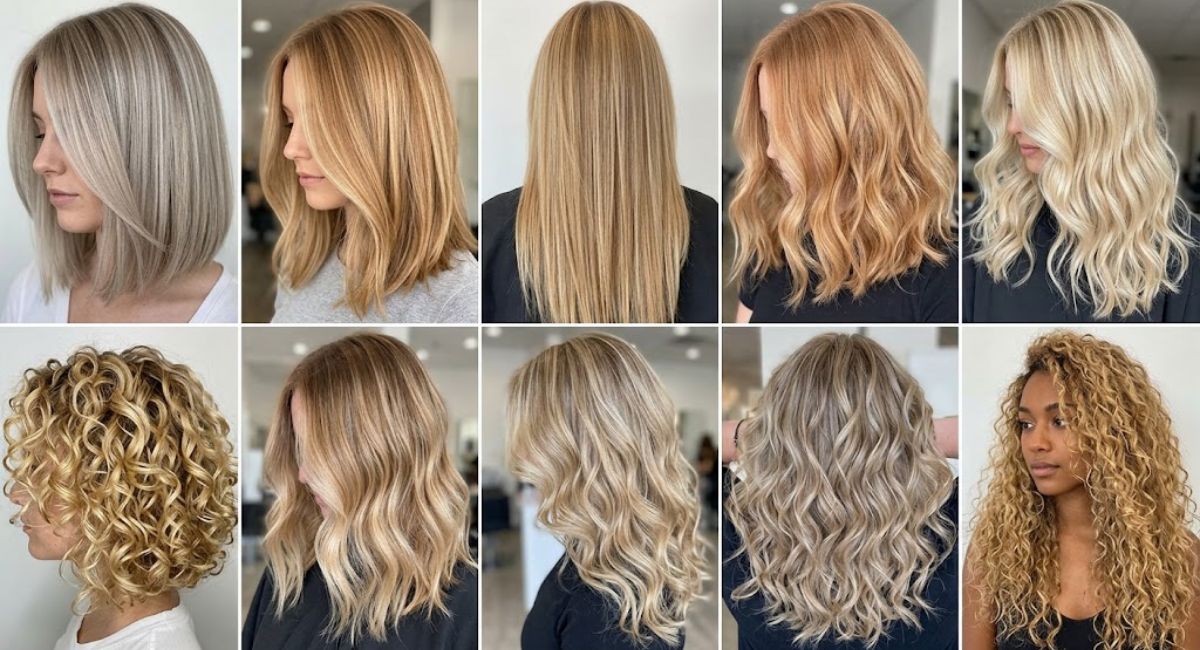
Medium Blonde Hair Color Ideas by Hair Length and Texture
Medium blonde isn’t just about the tone, the technique matters just as much for how it actually looks day to day.
For straight hair: Balayage or babylights create soft dimension that doesn’t look flat under direct light. Straight hair shows uneven color more easily, so a skilled colorist matters here.
For wavy or curly hair: Highlights placed strategically around the face catch the light as your hair moves, which curly and wavy textures naturally do more than straight hair. This is also where a root shadow earns its keep, since curls hide regrowth lines differently than straight hair does.
For shorter cuts like bobs or lobs: Lighter, brighter blondes like champagne or blanche tend to look sharper on short styles, since there’s less length for gradual color melt to show off.
For long hair: A darker root with a lighter, sun-kissed ends gradient mimics natural lightening and stretches time between salon visits.
Maintenance: What Nobody Tells You Before You Book the Appointment
This is the part most “30 stunning shades” lists skip completely, and it’s arguably the most important part.
Cost and time. Medium blonde is generally cheaper and faster to maintain than platinum or bleach-heavy blondes, because there’s less lifting involved. Most people can stretch eight to twelve weeks between full color sessions if they’re using a root shadow technique, compared to three to four weeks for high-maintenance platinum.
Purple shampoo is non-negotiable for cool tones. If you go ash, beige, or champagne, brassiness will creep in within a few weeks without it. Use it once or twice a week, not daily, since overuse can leave hair looking flat or slightly purple-tinted.
Warm tones fade differently. Honey, golden, and caramel blondes tend to fade lighter and warmer over time rather than brassy. A color-depositing conditioner with warm pigments helps maintain richness between appointments.
Heat protection matters more on lightened hair. Any blonde process involves some level of lifting, which makes hair more porous and prone to heat damage. A leave-in heat protectant isn’t optional if you’re using hot tools regularly.
Bring photos, but also bring your maintenance honesty. Tell your colorist exactly how often you’re realistically willing to come in. A colorist who knows you’re a “twice a year” person will choose a lower-maintenance shade and technique than one who assumes you’re booking monthly root touch-ups.
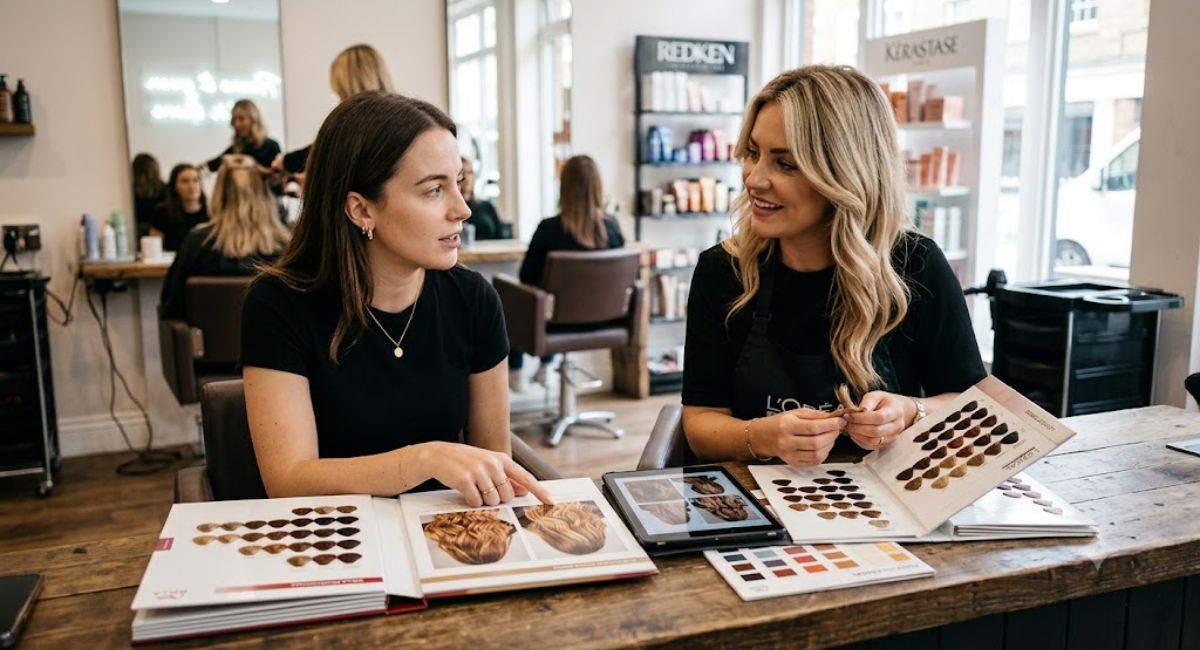
How to Talk to Your Colorist So You Get What You Pictured
A surprising number of bad color outcomes come down to communication, not skill. Try this approach during your consultation:
- Bring two or three reference photos, not fifteen. Too many options makes it harder for a colorist to nail down exactly what you want.
- Say the word, not just the vibe. “I want ash blonde” gives a colorist something concrete. “I want it to look expensive” does not.
- Mention what you want to avoid. If you specifically don’t want gold or copper undertones, say that out loud. Colorists can’t read minds, and warmth is often the default unless told otherwise.
- Ask about the root shadow option if you want to stretch time between visits. It’s become close to standard in 2026 because it buys weeks of extra wear without an obvious grow-out line.
- If you’re coming from a dark natural color, ask directly how many sessions it’ll realistically take. Going from black or dark brown to medium blonde in one sitting can seriously damage hair, and a good colorist will tell you that upfront rather than push through it.
FAQs
1. What is the most low maintenance medium blonde shade? Dirty blonde and bronde tend to need the least upkeep since they mimic natural hair growth and don’t show regrowth lines sharply.
2. How do I know if I have warm or cool undertones? Check the veins on your wrist in natural light. Green leans warm, blue or purple leans cool, and a mix usually means neutral.
3. Will medium blonde damage my hair if I have dark brown or black hair naturally? It can, especially in one session. Most colorists recommend multiple sessions spaced weeks apart to lift dark hair safely to medium blonde.
4. How often do I need root touch ups with medium blonde? With a root shadow or balayage technique, most people go eight to twelve weeks. Solid all over color usually needs touch ups closer to six weeks.
5. What’s the difference between beige blonde and ash blonde? Beige blonde has a touch of warmth and reads more neutral, while ash blonde fully cancels out warmth for a cooler, smokier finish.
6. Does medium blonde suit darker skin tones? Yes. Caramel blonde, golden blonde, and honey blonde with deeper dimension tend to look especially rich against deeper skin tones.
7. Can I go from medium blonde back to my natural color easily? Generally yes, since medium blonde involves less lifting than platinum, making it easier to deepen back down without excessive damage.
8. What shampoo should I use for warm medium blonde tones? Skip purple shampoo, which is meant for cool tones, and instead use a color-depositing conditioner formulated for warm or golden blondes.
9. Is balayage or foil better for medium blonde? Balayage usually gives a softer, more natural grow-out, while foils create more uniform, brighter color. Balayage tends to suit lower maintenance preferences better.
10. What eye colors pair best with medium blonde shades? Brown and hazel eyes often pop with warm tones like honey or golden blonde, while blue and green eyes tend to stand out more with cooler tones like ash or champagne.