Italian women’s fashion is not about owning the most expensive labels. It is about knowing exactly which five pieces to wear on repeat until they feel like a second skin. If you have ever watched a woman walk through the streets of Milan or Florence and wondered how she makes jeans and a blazer look like a runway moment, you are not imagining things. There is a real system behind it, and most of it has nothing to do with money.
I have spent years studying this style, talking to Italian friends about their closets, and testing the “rules” myself. Some of what gets repeated online is outdated or exaggerated. This guide covers what actually works, what most articles skip, and how you can build this look into your own wardrobe without moving to Rome.
What Makes Italian Women’s Fashion Different
Italian women’s fashion is built on three things: fit, fabric, and restraint. That is really the whole formula, though it takes a while to appreciate how much discipline goes into “restraint.”
Where French style leans casual and undone, and American style often chases trends, Italian style treats clothing as an investment in how a person carries themselves. Nothing looks accidental, even when it is meant to look relaxed.
A few things you will notice right away:
- Clothes almost always fit the body they are on, even basics from a regular store
- Color palettes stay controlled, usually two or three tones per outfit
- Fabric quality matters more than logos or trends
- Confidence is treated as part of the outfit, not separate from it
This is Italian women’s fashion in its simplest form. Everything else is detail.
Building The Foundation Wardrobe
Most guides list twenty items and call it a day. That is overwhelming and honestly not how Italian women shop. They build slowly, replacing pieces as older ones wear out, and they buy fewer things but better ones.
Here is what actually forms the backbone of the look.
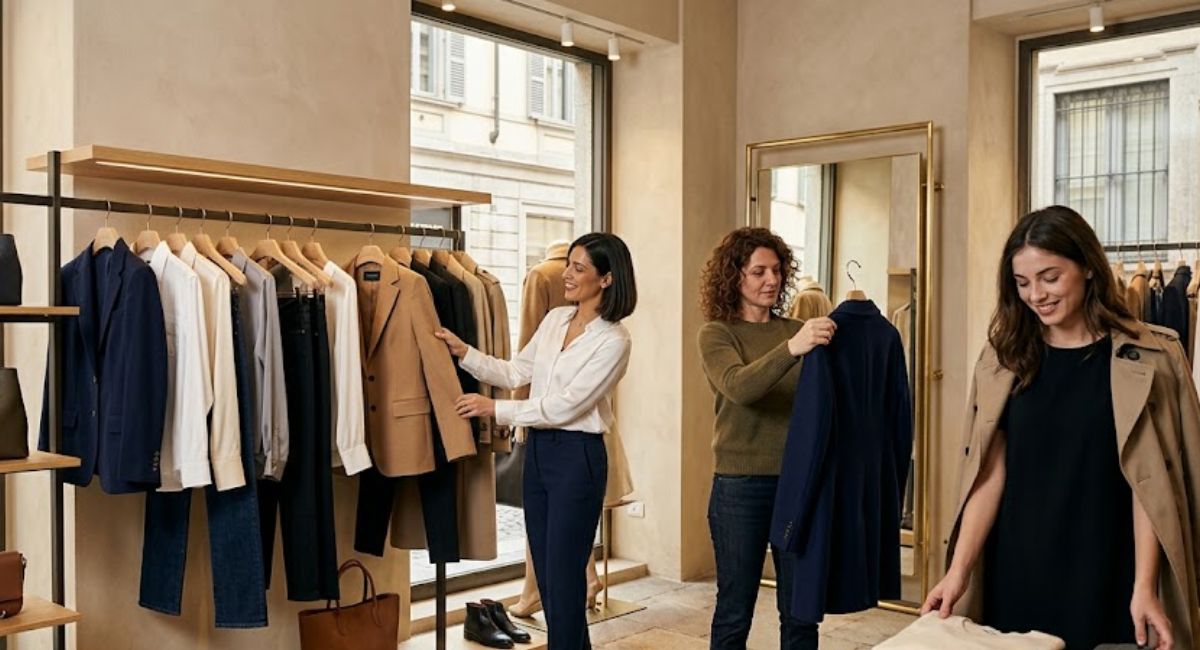
The Tailored Blazer
A well cut blazer is probably the single most important piece in Italian women’s fashion. It works over jeans, over a slip dress, over a plain t shirt. The trick is fit at the shoulder. If the shoulder seam sits even slightly off, the whole blazer looks wrong no matter how good the fabric is.
I made this mistake for years, buying blazers that fit my waist but hung wrong at the shoulder. Once I started checking shoulder fit first and having anything else adjusted by a tailor, the difference was obvious in photos and in person.
Cigarette Trousers
These slim, ankle length trousers show up constantly in Italian street style because they flatter almost every body type and pair with nearly anything. A crisp white shirt tucked into cigarette trousers, with a low heel or flat mule, is a look you will see all over Milan on a Tuesday morning.
The Crisp White Shirt
Not just any white shirt. Italian women’s fashion favors shirts with structure, a defined collar, and sleeves that sit properly at the wrist. This piece does double duty for office wear and evening looks depending on how it is styled.
Quality Leather Goods
Leather shows up everywhere in Italian wardrobes, from jackets to handbags to shoes. Italy has a long history of leather craftsmanship, and it shows in how these pieces are treated as long term investments rather than seasonal buys. A structured leather bag or a well made pair of leather loafers will outlast several trend cycles.
Neutral Base, One Statement Piece
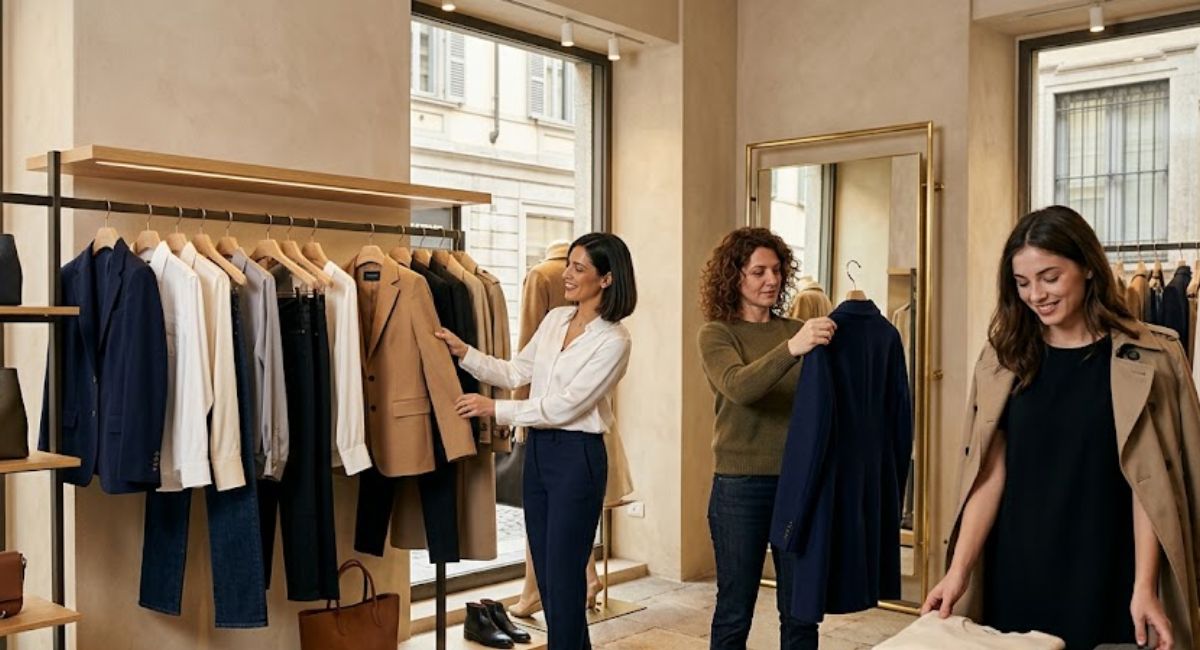
Roughly seventy percent of a typical Italian wardrobe sits in neutral tones like black, white, camel, navy, and beige. The remaining pieces are where personality comes through, a coral silk scarf, an emerald handbag, a printed midi skirt. The rule is simple: one statement per outfit, everything else supports it.
The Color Philosophy Most Articles Get Wrong
A lot of guides claim Italian women only wear neutrals, full stop. That is not quite accurate, and I think it undersells how thoughtful the color choices actually are.
Italian women’s fashion does lean heavily on neutral color families, but color absolutely shows up. The difference is discipline. You will rarely see five colors and three patterns competing in one outfit. Instead, there is one clear color moment, maybe a red lip or a jewel toned coat, and everything else steps back to support it.
This is worth remembering if you are trying to recreate the look. Adding color is fine. Adding chaos is not.
Fit Over Price, Every Single Time
If there is one lesson that changed how I shop, it is this. Italian women will spend money altering an inexpensive dress before they will wear an expensive one that does not fit properly.
This sounds small, but it is genuinely the difference between looking put together and looking like you just grabbed something off a rack. A tailor is not a luxury in Italian fashion culture, it is considered basic maintenance, the same way you would get shoes resoled.
If you take nothing else from this article, take this: find a local tailor, and use them. Even simple things like hemming trousers to the correct break or taking in a waist will change how any outfit reads.
Seasonal Approach To Italian Women’s Fashion
Spring And Summer
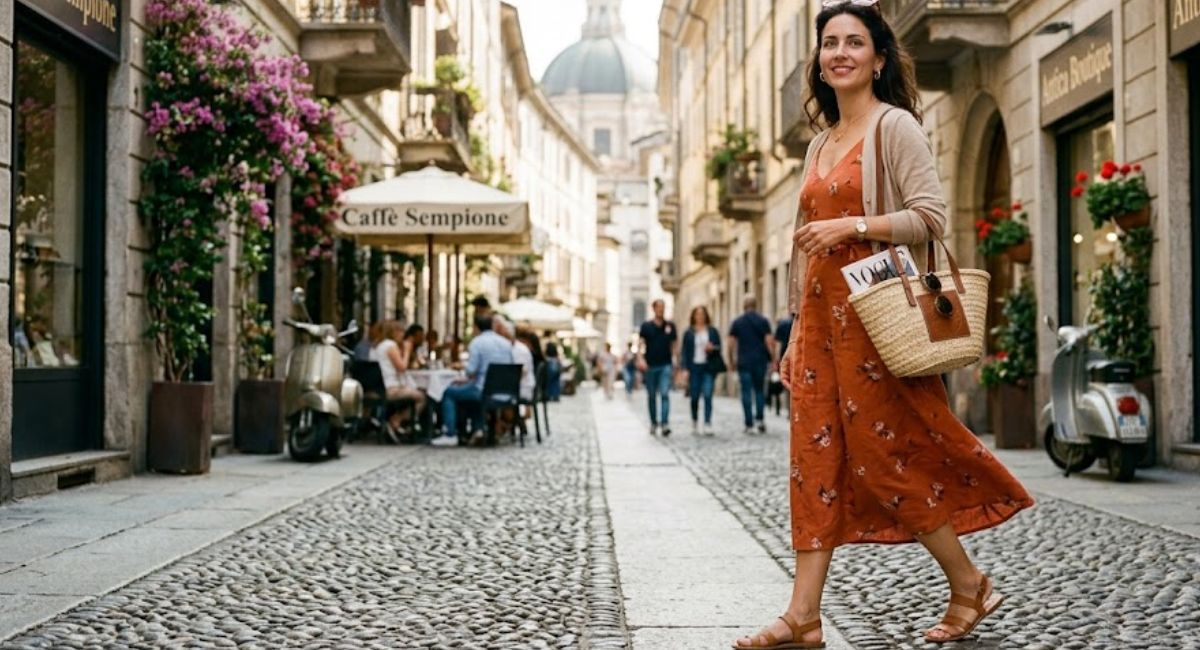
Linen becomes the star fabric. Linen trousers, linen shirts, breezy midi dresses in warm neutral tones. Sandals and espadrilles replace boots. Sunglasses tend to be oversized and simple, without heavy branding.
Autumn And Winter
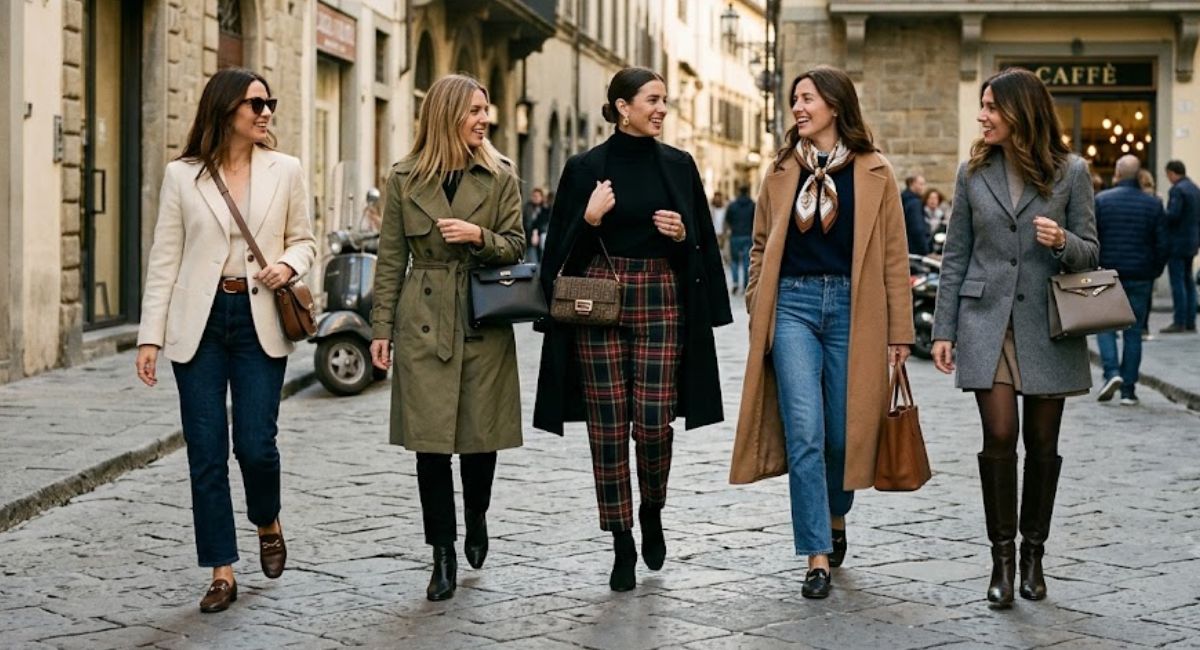
Wool and cashmere take over. A structured wool coat in camel or charcoal is a wardrobe anchor. Leather jackets layer over knitwear. Boots, usually ankle length and in leather, become a daily staple.
Across both seasons, the throughline stays the same. Quality fabric, controlled color, precise fit.
Accessories: The Detail Competitors Skip
Most articles mention accessories briefly and move on. This deserves more attention because accessories are often where Italian style actually lives.
- A single statement bag carries an entire outfit of basics
- Gold jewelry, kept minimal, is favored over stacking trend pieces
- Scarves are used constantly, tied at the neck, looped through a bag handle, or worn as a headscarf
- Sunglasses are treated as a daily essential, not just a summer item
- Shoes are chosen for how they finish a silhouette, not just comfort
The bag especially matters. A structured leather tote or a classic top handle bag in a neutral tone will get more use in an Italian wardrobe than five trendy micro bags combined.
Hair, Skin, And The Overall Finish
Italian women’s fashion does not stop at clothing. The overall look includes hair and makeup choices that support the same philosophy of effortless polish.
Soft waves are common for daytime, while low buns or sleek styles show up for evening occasions. Makeup tends to focus on a warm, sun kissed skin tone, defined cheekbones, and either a bold red lip or a strong cat eye, rarely both at once. Nails are usually kept simple, in nude or deep tones rather than elaborate designs.
The idea is that everything works together. A perfectly tailored outfit loses impact if nothing else about the look feels intentional.
Common Mistakes When Trying To Copy This Style
I have made several of these myself, so consider this a shortcut past the trial and error.
Buying too many trend pieces. Italian style rewards patience. A closet full of fast fashion trend items will never read the same as five well chosen staples.
Ignoring fit. This is the biggest one. Even a designer piece looks cheap if it does not fit the body wearing it.
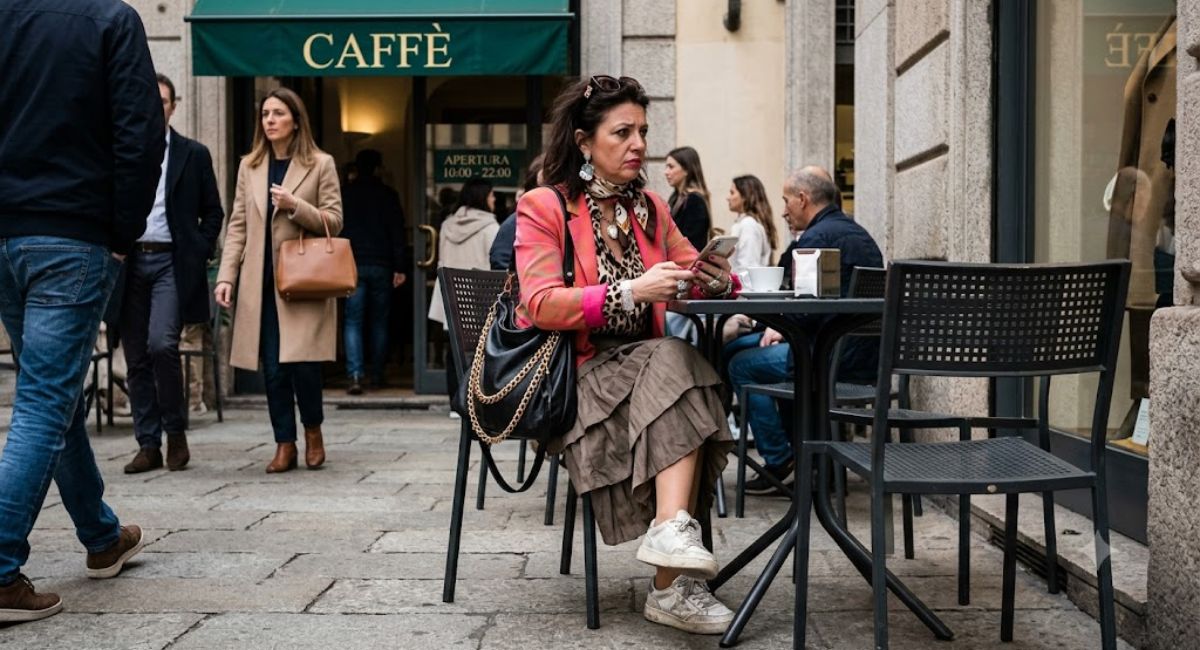
Overdoing color and pattern. One statement color or print per outfit is plenty. More than that starts to look chaotic rather than confident.
Skipping the tailor. A five dollar hem can transform how an entire outfit falls.
Forgetting accessories. A plain outfit with the right bag, shoes, and jewelry can outshine an elaborate outfit with none.
How To Start Building This Wardrobe On A Budget
You do not need designer labels to apply these principles. Start with one well fitted blazer and one pair of well cut trousers, ideally in a neutral color. Add a quality white shirt. From there, look for one leather item, a bag or a pair of shoes, that you can use daily.
Secondhand and consignment shops are genuinely useful here, since older Italian and European brands often used better fabrics than current fast fashion. Even budget retailers occasionally carry pieces with decent fabric content if you check labels for natural fibers like wool, linen, and cotton rather than synthetic blends.
Set aside a small budget for basic tailoring rather than spending it all on new pieces. This single habit will do more for your wardrobe than almost anything else on this list.
Final Thoughts
Italian women’s fashion is really a mindset applied to a closet. Fewer pieces, better fit, controlled color, and quality fabric will get you further than chasing every trend that comes through your feed. It takes patience to build a wardrobe this way, but the payoff is a closet where almost everything works together, and getting dressed stops feeling like a daily puzzle.
Start small. Fit one blazer properly. Find one pair of trousers that actually flatters you. Build from there, and the rest of the look tends to fall into place naturally.
FAQs
1. What defines Italian women’s fashion? It centers on precise fit, quality natural fabrics, a controlled neutral color palette, and confident, minimal accessorizing rather than following trends.
2. Do Italian women only wear neutral colors? No. Neutrals form the base of most outfits, but a single bold color or statement piece is common, as long as it does not compete with other colors in the outfit.
3. What are the essential pieces in Italian women’s fashion? A tailored blazer, cigarette trousers, a crisp white shirt, quality leather shoes or a handbag, and a well fitted neutral coat form the core wardrobe.
4. How important is tailoring in Italian style? Extremely important. Italian women often tailor affordable pieces rather than wear expensive items that do not fit well, since fit is considered non negotiable.
5. Can I recreate Italian women’s fashion on a budget? Yes. Focus on fit and fabric over brand names, invest in basic tailoring, and shop secondhand for higher quality materials at lower prices.
6. What fabrics are most associated with Italian fashion? Wool, cashmere, silk, linen, and leather are the fabrics most closely tied to Italian style due to Italy’s strong textile and leather craftsmanship history.
7. How do Italian women style accessories? They typically choose one statement accessory, like a structured bag or bold earrings, and keep everything else minimal so that piece stands out clearly.
8. Is Italian fashion the same as luxury fashion? Not necessarily. While Italy is home to major luxury brands, everyday Italian style relies more on smart basics, fit, and styling than on logos or price tags.