Long curtain bangs straight hair are one of the most flattering, low-maintenance fringe styles you can try right now. Whether you are growing out blunt bangs or starting fresh, this look works beautifully with naturally straight or flat-ironed hair, giving you that effortless, face-framing softness that has taken over every style feed worth following.
This guide covers everything from how curtain bangs actually behave on straight hair, to cutting, styling, and maintaining them without the daily frustration most people run into.
Why Long Curtain Bangs Work So Well on Straight Hair
Straight hair and curtain bangs are genuinely a perfect match. The clean, smooth texture lets the bangs fall exactly where you want them, without the frizz or unpredictable curl that can make curtain bangs harder to manage on wavy or thick hair.
The length is the key word here. Long curtain bangs sit past your brows, often reaching the cheekbone or even the jawline. This makes them blend almost seamlessly into the rest of your hair, which means you can skip the harsh commitment of shorter, blunter fringe.
On straight hair specifically, long curtain bangs:
- Frame the face without overwhelming it
- Blend into layers without any effort
- Require minimal heat styling to look polished
- Grow out gracefully, which is a huge bonus

Are Long Curtain Bangs Right for Your Face Shape?
This is the question most guides answer with a vague “they work for everyone,” which is not quite honest. Here is a more useful breakdown.
Oval faces get the most flexibility. Long curtain bangs on straight hair will look effortless and balanced, no matter how you part them.
Round faces benefit the most. The center part and outward sweep of curtain bangs visually elongate the face. Keeping your straight hair flat and sleek amplifies this effect.
Heart-shaped faces do really well with this style. The bangs soften a wider forehead while drawing attention to the cheekbones.
Square faces can absolutely rock this look. The softness of the swept fringe breaks up angular jawlines without looking overdone.
Long or oblong faces should be careful. Very long curtain bangs that hit the jawline can sometimes make the face look even longer. Aim for bangs that sit at or just above the cheekbone instead.

How to Cut Long Curtain Bangs on Straight Hair at Home
Plenty of people cut their own curtain bangs successfully. The key is going slowly and cutting less than you think you need to. Here is a step-by-step method that actually works.
What You Need
- Sharp hair cutting scissors (never use regular scissors)
- A fine-tooth comb
- Two hair clips
- A mirror with good lighting
Step 1: Section the Hair
Part your hair down the middle. Then take a triangular section from the center front of your head. The triangle should start at your natural part and extend back about two inches. This triangular section becomes your curtain bangs.
Clip the rest of your hair away.
Step 2: Decide on Length
Hold the section down over your face. Decide how long you want your long curtain bangs to be. For most straight-haired people, somewhere between the cheekbone and the chin works best. Mark this mentally or use a clip as a guide.
Step 3: Cut at an Angle
This is where curtain bangs differ from regular fringe. You are not cutting a straight line across. Point cut the ends by holding the scissors vertically and snipping upward into the hair. This creates the soft, wispy finish that makes curtain bangs look intentional rather than choppy.
Start longer than you think you need. You can always cut more.
Step 4: Separate Into Two Sections
Split the bang section down the middle. Take the left half and sweep it to the left. Take the right half and sweep it to the right. Trim each side separately with a slight inward angle so both sides frame the face symmetrically.
Step 5: Check the Result
Let your straight hair fall naturally. Long curtain bangs on straight hair should fall softly on either side of your center part, framing your face without poking into your eyes.
How to Style Long Curtain Bangs on Straight Hair
Styling is where most people struggle. The good news is that straight hair makes this so much easier compared to other textures.
The Everyday Blowout Method
This takes about three minutes once you get the hang of it.
After washing your hair, apply a small amount of volumizing mousse or a lightweight heat protectant spray to your damp bangs. Use a round brush to blow dry the bangs by sweeping them outward from the center. Direct the airflow downward to keep the hair smooth and straight.
Finish with a flat iron if you want extra sleekness. Run it through the bangs and gently curve the ends outward as you go. This creates that slightly lifted, curtain effect.
Air Dry Method for Lazy Days
Long curtain bangs on straight hair can actually air dry reasonably well. While your hair is still damp, part your bangs down the middle and tuck each side behind the corresponding ear. Let them dry in that position. They will fall with a natural outward curve when you release them.
Some people clip each side with a bobby pin while drying to encourage the right direction.
Overnight Method
Wash your hair at night. While damp, use two clips or bobby pins to sweep each side of your curtain bangs outward and hold them in place. Sleep on a silk pillowcase if you can. In the morning, release the clips and your bangs will have natural movement and shape without any heat.
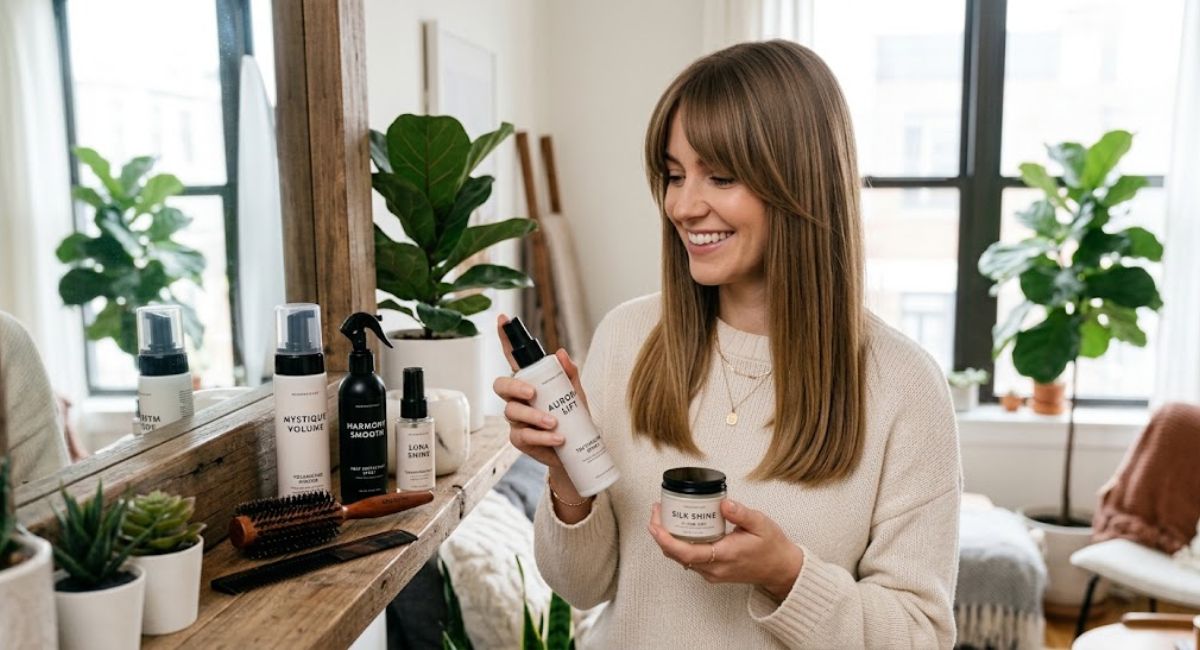
Best Products for Long Curtain Bangs on Straight Hair
You do not need a complicated product lineup. These are the products that genuinely make a difference.
Heat protectant spray: Always use one before any heat styling. GHD Heat Protect Spray and Tresemme Thermal Creations are both affordable and effective.
Lightweight serum: A small drop of Moroccanoil Treatment or Garnier Fructis Hair Serum smooths straight bangs and adds a healthy shine without weighing them down.
Texturizing spray: If your straight hair is very fine, a light texturizing spray like Ouai Wave Spray adds just enough grip so your curtain bangs hold their shape.
Dry shampoo: Bangs get oily faster than the rest of your hair. Batiste Original or Not Your Mother’s Clean Freak dry shampoo are both great for refreshing curtain bangs between washes.
Hold spray: A flexible hold spray, not a stiff one, helps set your bangs in place without making them crunchy. Kenra Platinum Silkening Mist is a good option.
Common Mistakes to Avoid
A lot of curtain bang frustration comes from a handful of avoidable errors. Here is what tends to go wrong and how to fix it.
Cutting them too short too fast. Long curtain bangs on straight hair should stay long enough to sweep to the sides. If you cut aggressively, you end up with bangs that stick straight out rather than frame your face.
Skipping heat protectant. Bangs get heat styled constantly. Without protection, the hair gets brittle and damaged faster than the rest of your hair.
Using too much product. Straight hair already lies flat. Heavy products make curtain bangs greasy and limp by midday. Use the minimum amount needed.
Not trimming regularly. Long curtain bangs grow quickly and lose their shape within a few weeks. A small trim every four to six weeks keeps them looking intentional.
Washing your hair and doing nothing. If you let curtain bangs air dry without any direction, they will dry flat against your forehead or part incorrectly. Give them at least a light sweep and clip while wet.
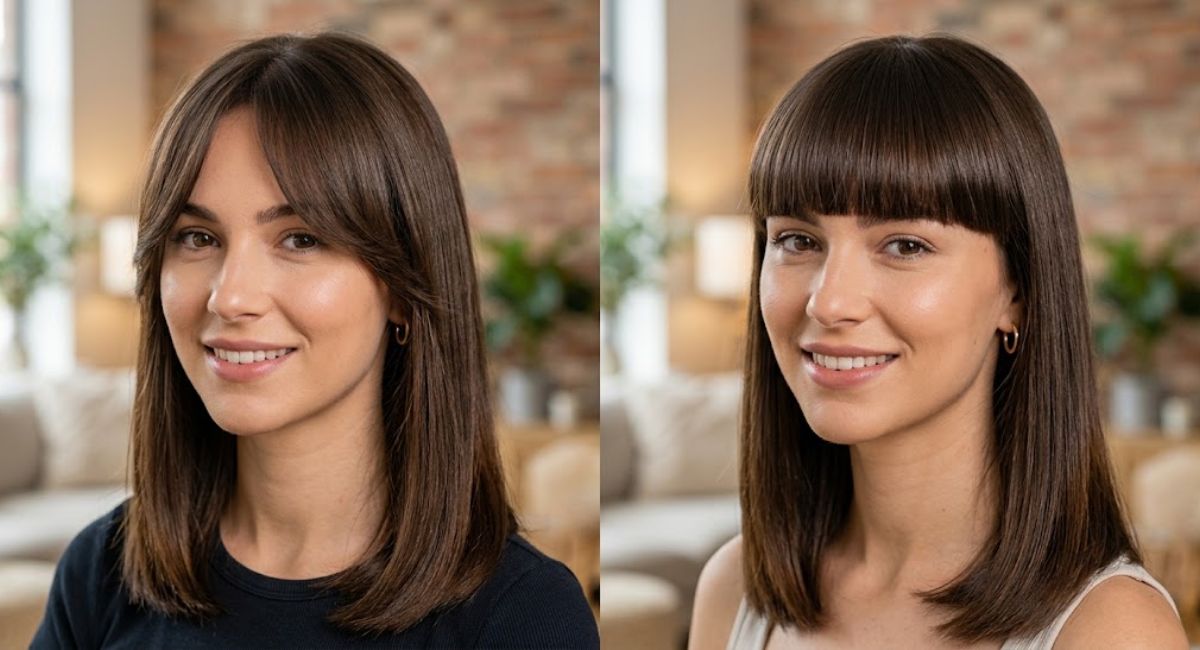
Long Curtain Bangs vs. Other Bang Styles on Straight Hair
It helps to understand what makes this specific style different from similar options.
Long curtain bangs vs. regular curtain bangs: The length is the main difference. Standard curtain bangs usually hit around the eyebrow. Long curtain bangs extend well past the brow, sometimes to the cheek or chin. The longer version blends more naturally into straight hair and requires less precise styling.
Long curtain bangs vs. blunt bangs: Blunt bangs are cut in a straight horizontal line and are much higher maintenance. They require regular trimming and daily styling to look neat. Long curtain bangs are far more forgiving on bad hair days.
Long curtain bangs vs. side swept bangs: Side swept bangs are all pushed to one side. Curtain bangs are parted down the center and swept outward in both directions. Curtain bangs tend to look more balanced and work better with straight hair that has a natural center part.
Maintaining Long Curtain Bangs on Straight Hair
Maintenance is simpler than most people expect once you build a small routine around it.
Washing: Bangs may need washing more often than the rest of your hair, especially if you have an oily scalp. A dry shampoo between washes helps extend the time between full washes without making your curtain bangs look flat or greasy.
Trimming: Every four to six weeks is a good standard. You can do this at home with sharp scissors using the same point cutting technique from the cutting section above.
Sleeping: Silk pillowcases genuinely do reduce frizz and friction overnight. If that is not accessible, loosely pinning your curtain bangs to the side before sleeping keeps them from waking up in all directions.
Humidity: Straight hair can lose its sleekness in humid weather. A light anti-humidity spray applied after styling helps your long curtain bangs hold their shape even when the air is working against you.

Growing Out Long Curtain Bangs
One of the best things about long curtain bangs straight hair is how gracefully they grow out. Because they are already long and blended into the hair, the transition to no bangs at all is smoother than with blunt or short styles.
As they grow, you can continue sweeping them to the sides. Eventually they blend completely into face-framing layers. If you want to speed up the process, regular trims that shape the bangs into layers rather than cutting them shorter will help them merge with the rest of your hair.
FAQs
1. Are long curtain bangs good for straight hair? Yes. Straight hair is actually one of the best textures for curtain bangs because the smooth surface lets the bangs fall cleanly and stay in place with minimal effort.
2. How long should long curtain bangs be on straight hair? Most people aim for curtain bangs that reach between the cheekbone and the jawline. This length blends well with straight hair and frames the face without overwhelming it.
3. Do long curtain bangs need to be styled every day? Not necessarily. On straight hair, you can use the overnight method or air dry with clips and avoid heat tools most days. A quick blowout takes only a few minutes when you want a polished finish.
4. How often should I trim my long curtain bangs? Every four to six weeks is ideal. Curtain bangs lose their shape as they grow, and regular small trims keep them looking intentional.
5. Can I cut long curtain bangs at home? Yes, with sharp scissors and a slow approach. The key is point cutting rather than straight cuts across, and starting longer than you think you need.
6. What products work best for long curtain bangs on straight hair? A lightweight heat protectant, a small amount of hair serum for shine, dry shampoo for between washes, and a flexible hold spray are all you need.
7. Do curtain bangs work on very fine straight hair? Yes, but fine hair may need a light texturizing spray to give the bangs enough grip to stay swept to the sides. Without it, very fine curtain bangs can fall flat.
8. How do I keep my curtain bangs from going flat overnight? Clip each side loosely before sleep or use a silk pillowcase. Either method reduces the friction that causes flat, misshapen bangs in the morning.
9. Can long curtain bangs be worn without a center part? Yes. While the center part is the most natural look for curtain bangs, you can wear a slightly off-center part and still get a similar face-framing effect.
10. How long does it take to grow out long curtain bangs? Because curtain bangs are already long and blended, the grow-out process is fairly smooth. Most people find they merge into face-framing layers within a few months of the last trim.