Business professional outfits for women have evolved far beyond the stiff blazer and pencil skirt combo that dominated offices for decades. Today, dressing professionally means looking polished, feeling confident, and expressing your personality without breaking any unspoken workplace rules. Whether you are walking into a law firm, a corporate boardroom, or a high-stakes client meeting, what you wear sends a message before you even open your mouth.
This guide covers everything, from building a strong wardrobe foundation to choosing the right accessories and avoiding common styling mistakes that even experienced professionals make.
Why Business Professional Attire Still Matters for Women
Some people argue that dress codes are becoming outdated. But here is the reality: first impressions are formed within seconds, and clothing plays a huge role in that. Research consistently shows that professional dressing affects how colleagues, clients, and managers perceive your competence and authority.
This does not mean you need to sacrifice comfort or personal style. It means understanding the rules well enough to work within them, and sometimes, strategically bend them.

What Does Business Professional Actually Mean?
Business professional is a step above business casual. It typically applies to corporate environments, legal and financial firms, formal presentations, and executive-level settings.
For women, business professional outfits generally include:
- Tailored suits (pantsuit or skirt suit)
- Structured blazers paired with dress trousers or midi skirts
- Sheath dresses in solid colors or subtle patterns
- Conservative blouses in neutral or muted tones
- Closed-toe heels or polished flats
The key word is tailored. Fit matters more than price. A well-fitted blazer from a mid-range brand will always outperform an expensive but ill-fitting jacket.

Building Your Core Wardrobe: The Essentials
1. The Power Blazer
Every woman serious about her professional wardrobe needs at least two blazers. A classic black blazer and a neutral-toned one (camel, navy, or charcoal) will carry you through most situations.
Go for structured shoulders and a fitted waist. Avoid oversized or relaxed cuts for strict business professional settings. Those work better in creative or business casual environments.
Brands like Theory, Banana Republic, and J.Crew consistently deliver well-structured blazers at varying price points.
2. Tailored Trousers
Business professional outfits for women almost always include a strong pair of trousers. Wide-leg trousers have become a modern staple, and they read as polished when tailored properly.
Stick to solid colors: black, navy, grey, and caramel are the safest and most versatile choices. Avoid excessive pleats, flashy prints, or casual fabrics like denim or linen blends.
3. The Sheath Dress
A sheath dress is arguably the most efficient piece in a professional wardrobe. One item. Fully dressed. No overthinking.
Choose knee-length or midi-length options. Avoid anything above mid-thigh in strict professional settings. Fabric matters a lot here: ponte, crepe, and wool blends drape professionally and resist wrinkles, which is important on long workdays.
4. Structured Skirts
Pencil skirts remain a classic choice, but A-line midi skirts have gained serious ground in professional settings. They offer more movement and comfort without sacrificing a polished look.
Pair them with a tucked-in blouse and a structured blazer for a complete business professional outfit that feels modern without being trendy.
5. Quality Blouses and Tops
Your tops and blouses are where you can introduce some personality while staying within professional boundaries. Silk and satin blouses in cream, white, blush, or even a muted jewel tone look elegant under a blazer or paired with trousers.
Avoid anything sheer, extremely low-cut, or too casual in fabric. A good rule of thumb: if you would wear it to a casual dinner, it probably does not belong in a business professional setting without layering.
Color Strategy for Business Professional Outfits
Color is one of the most underutilized tools in professional dressing. Here is how to think about it:
Neutrals as your base: Black, navy, white, cream, grey, and camel should form the foundation of your wardrobe. These colors mix and match effortlessly.
Accent colors thoughtfully: Burgundy, forest green, dusty blue, and deep plum can be introduced through blouses, scarves, or one statement piece.
Avoid: Neon colors, loud prints, or overly casual color combinations in strictly formal environments.
One insider tip: wearing a single-color outfit (monochromatic dressing) in a neutral shade reads as extremely polished and authoritative. Think all-navy or all-charcoal grey.
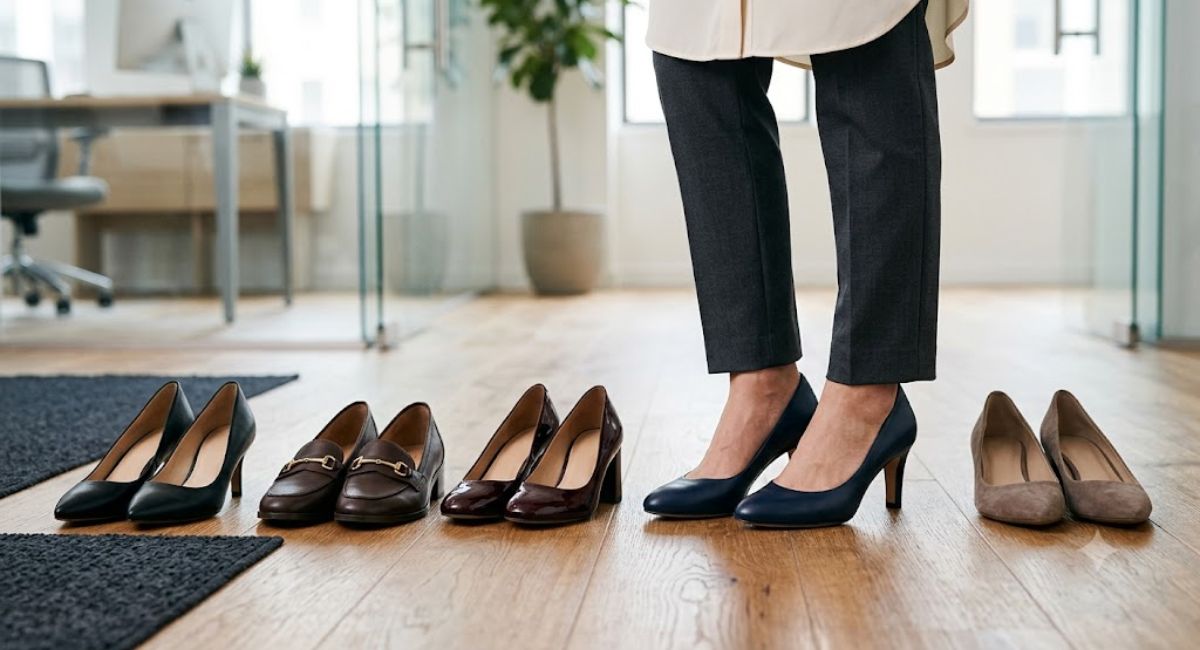
Shoes That Work With Business Professional Outfits
Footwear can elevate or undercut an otherwise perfect outfit. Here are the best choices for business professional settings:
Closed-toe pumps: The gold standard. A 2 to 3 inch heel in black, nude, or navy completes almost any professional look.
Block-heeled shoes: Offer the same polished look as pumps but with better comfort and stability. Great for long days.
Pointed-toe flats: A legitimate alternative to heels. Avoid round-toe flats, as they can look more casual.
Loafers: Depending on the workplace, a structured leather loafer can work beautifully with tailored trousers or a midi skirt.
What to avoid: Open-toe sandals, sneakers (in strict professional settings), wedge sandals, and overly casual boots.
Accessories: Less Is More, But Do Not Skip Them Entirely
Business professional outfits for women are often completed by the right accessories. This is not about loading up on jewelry but about choosing pieces that are deliberate and refined.
Watches: A classic watch signals punctuality and professionalism. You do not need a luxury brand, just something clean and structured.
Earrings: Stud earrings or small hoops are ideal. Dangling statement earrings can work but keep them subtle in size.
Bags: A structured tote or a sleek leather handbag works best. Avoid casual backpacks or oversized bags in strict settings.
Belts: A thin structured belt over a blazer or on trousers adds definition and polish.
Scarves: A silk neck scarf worn as an accessory (not just for warmth) adds a European elegance to simple outfits.
Common Mistakes Women Make With Professional Outfits
Even experienced professionals get this wrong sometimes. Here are the most common pitfalls:
Ignoring fit: The number one mistake. Clothes that are too loose look sloppy. Too tight looks uncomfortable. Always get things tailored if needed.
Overwearing black: Yes, black is safe and professional, but relying on it exclusively makes your wardrobe boring and limits your styling options.
Neglecting fabric quality: Synthetic fabrics that pill, wrinkle excessively, or look cheap undermine even a well-structured outfit. Invest in quality where it counts: blazers, trousers, and shoes.
Misunderstanding the dress code: Business professional is not the same as business casual. Showing up in a smart-casual outfit to a business professional setting is a real mistake that people notice.
Skipping alterations: A mid-range suit that fits perfectly looks better than a designer suit that does not. Tailoring is not a luxury; it is a practical investment.

Seasonal Dressing for Business Professional Women
Winter
Layer thoughtfully. A wool or cashmere turtleneck under a blazer is both warm and sophisticated. Heavy wool trousers replace lighter fabrics. Ankle boots in leather can replace pumps in many business professional settings when styled correctly.
Spring and Summer
Lightweight crepe, cotton blends, and linen-wool mixes keep you comfortable without looking casual. Sleeveless blouses work under blazers. Midi dresses in solid colors or subtle patterns become more popular.
Transitional Seasons
A trench coat is one of the best investments a professional woman can make. It layers beautifully over suits, dresses, and trousers alike and reads as polished in virtually any setting.
Building Outfits on a Budget
Business professional outfits for women do not require a massive wardrobe budget. Here is a smart approach:
Invest in: A quality blazer, one or two pairs of well-fitted trousers, and a pair of classic pumps. These are your workhorses.
Save on: Blouses, scarves, and seasonal pieces. Brands like Zara, H and M’s premium lines, and Mango offer professional-looking pieces at accessible prices.
Shop smart: End-of-season sales on brands like Ann Taylor, Banana Republic, and J.Crew can get you quality pieces at significant discounts.
Capsule mindset: Aim for 10 to 15 pieces that all mix and match. Fewer, better pieces beat a closet stuffed with things that rarely work together.
Real Outfit Combinations That Actually Work
Here are a few tried-and-tested business professional outfit combinations:
Outfit 1: Navy pantsuit with a white silk blouse and nude pointed-toe pumps. Add a gold watch and small stud earrings. Clean, authoritative, and timeless.
Outfit 2: Charcoal grey sheath dress, black structured blazer, and black block-heeled shoes. A simple silver necklace completes it. Effortless and polished.
Outfit 3: Camel trousers, cream blouse, black blazer, and black loafers. A structured leather tote ties it together. Modern and grounded.
Outfit 4: Burgundy midi skirt, white blouse, and a fitted black blazer with black pumps. The pop of color feels intentional without being distracting.
FAQs: Business Professional Outfits for Women
Q1. Can women wear pants in business professional settings? Absolutely. A well-tailored pantsuit or dress trousers paired with a blazer are completely appropriate and often preferred for their practicality and authority.
Q2. Are sleeveless dresses appropriate for business professional environments? Yes, when paired with a blazer or structured cardigan. On their own in strict business professional settings, sleeveless styles can be too casual depending on the workplace.
Q3. What colors are considered most professional for women? Navy, black, charcoal, camel, and white are the most universally accepted. Jewel tones like burgundy and deep green work well as accent colors.
Q4. Can I wear patterned clothing in a business professional setting? Yes, but keep patterns subtle. Fine stripes, small checks, and minimal geometric prints work well. Avoid bold florals, loud graphics, or novelty prints.
Q5. Are open-toe shoes acceptable in business professional settings? Generally, no. Closed-toe shoes are the standard for business professional environments. In more relaxed professional settings, a polished peep-toe pump can sometimes work.
Q6. How do I dress business professional in summer without overheating? Choose lightweight fabrics like crepe, lightweight wool blends, or breathable cotton blends. Sleeveless sheath dresses with a blazer on hand for meetings work well.
Q7. What is the difference between business professional and business casual for women? Business professional is more formal: think suits, structured dresses, and conservative styling. Business casual allows for more relaxed pieces like smart blouses, chinos, and less formal footwear.
Q8. How many business professional outfits do I actually need? A solid capsule wardrobe of 8 to 12 versatile pieces can generate enough combinations for a full work week without repetition.
Q9. Can I wear jewelry in a business professional setting? Yes, but keep it understated. Classic watches, small earrings, and delicate necklaces are ideal. Avoid oversized or noisy jewelry in formal environments.
Q10. Are midi skirts considered business professional? Yes, midi skirts in structured fabrics like wool or crepe are considered appropriate and modern in most business professional settings.