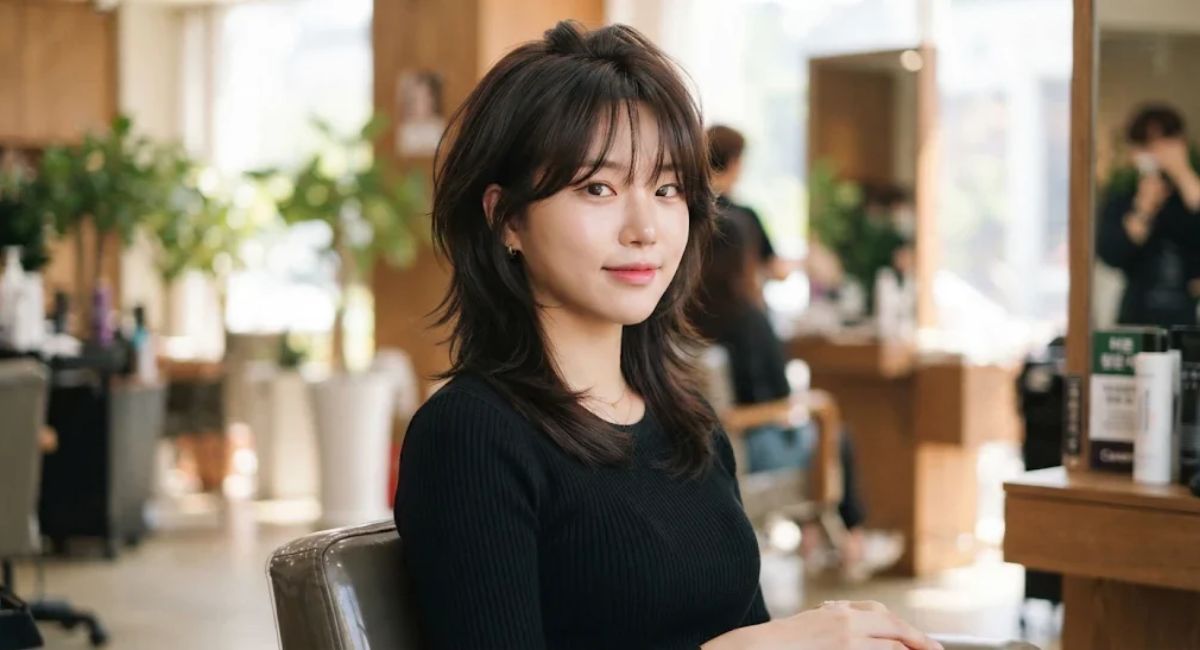
Some haircuts create a dramatic change through length, while others transform the entire appearance through layers, movement and texture. The Korean Wolf Cut belongs to the second category. It gives hair a distinctive shape with shorter layers around the crown, soft face-framing pieces and longer sections that create a relaxed, flowing finish.
What makes this haircut especially appealing is its balance between edgy and feminine styling. It takes inspiration from the traditional shag and mullet but generally uses softer transitions, airy layers and carefully shaped ends. The result can look playful and textured without feeling overly dramatic.
The Korean Wolf Cut also offers plenty of room for customization. You can wear it with curtain bangs, wispy fringe, natural waves or a more polished finish. Whether your hair is shoulder-length or falls past your chest, the right layer placement can help create a shape that complements your natural texture.
However, choosing the right version requires more than saving a pretty hairstyle picture. Hair density, face shape, styling habits and the amount of volume you prefer all influence the final result.
If you are considering this modern haircut, these 20 Korean Wolf Cut variations will help you explore different looks and decide which direction to take to your next salon appointment.
What Is a Korean Wolf Cut?
A Korean Wolf Cut is a layered hairstyle inspired by the traditional wolf cut, with an emphasis on softer transitions, airy movement and face-framing details.
Its structure combines shorter layers near the crown with longer sections underneath. This creates a slightly rounded, voluminous upper shape while allowing the remaining length to fall naturally.
The haircut is often associated with Korean beauty and hairstyle trends, including looks seen in K-pop and Korean entertainment. However, there is no single universal cutting formula. Different hairstylists may interpret the style differently depending on the desired finish and the client’s hair.
Several characteristics usually define the look:
- Shorter crown layers: These create lift and help prevent the hair from looking flat.
- Longer lower sections: The remaining length balances the shorter layers.
- Soft face framing: Front pieces create movement around the cheeks and jawline.
- Textured ends: Feathered or slightly choppy ends give the haircut its relaxed appearance.
- Flexible fringe: Curtain bangs, wispy bangs or no bangs can all complement the shape.
The biggest advantage is that the cut can be adjusted. Someone who prefers a subtle everyday hairstyle can choose blended layers, while someone who enjoys a stronger alternative look can request more noticeable contrast.
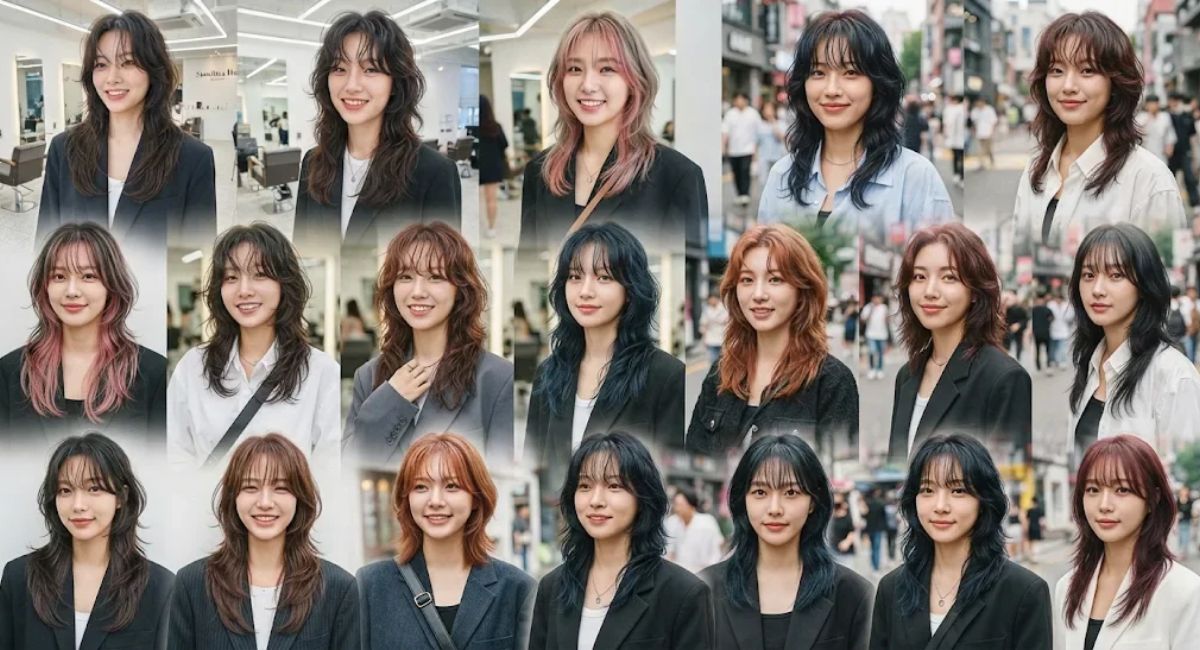
20 Korean Wolf Cut Hairstyles Worth Trying
The following variations explore different interpretations of the haircut. Rather than treating them as completely separate cutting techniques, think of them as different ways to customize the same layered foundation.
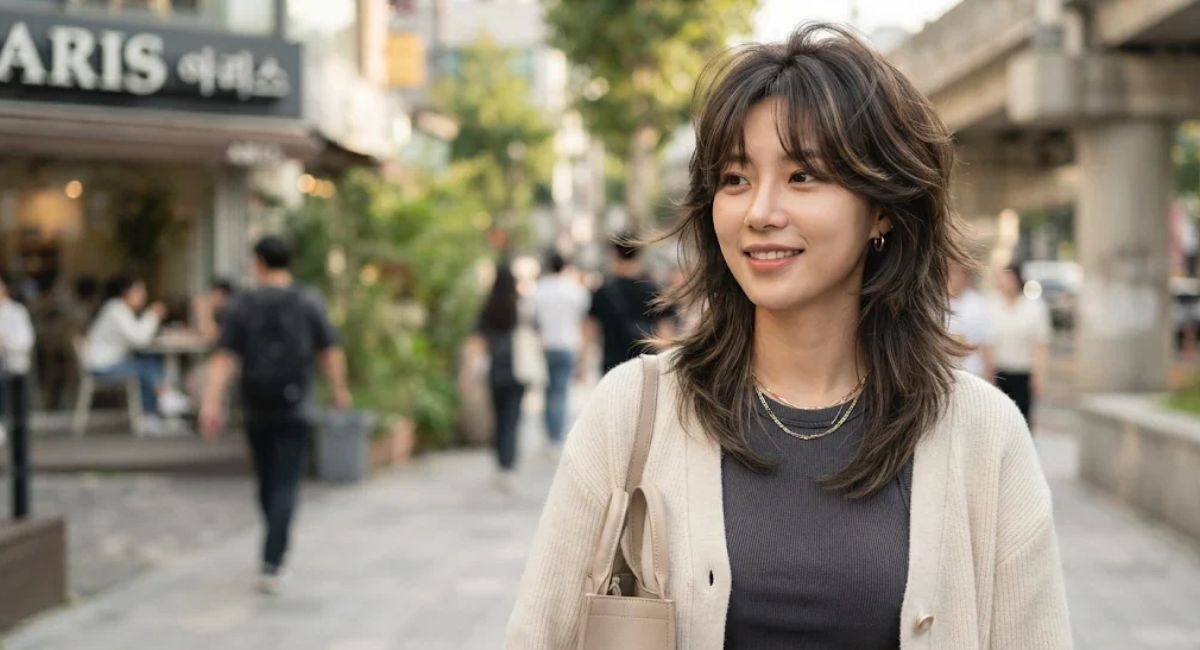
1. Classic Korean Wolf Cut
The classic Korean Wolf Cut is a balanced starting point for anyone who wants to try this hairstyle without committing to an extremely dramatic shape.
It features shorter crown layers that blend into longer lengths, creating natural-looking volume around the upper part of the head. The ends remain soft and slightly separated, giving the hairstyle its signature texture.
This variation works particularly well on medium and long hair because there is enough length to show the difference between the upper and lower sections.
A middle part can make the hairstyle appear symmetrical, while a slightly off-center part gives it a more relaxed finish.
Styling tip: Apply a lightweight volumizing mousse to damp roots and use a round brush to lift the crown while drying.
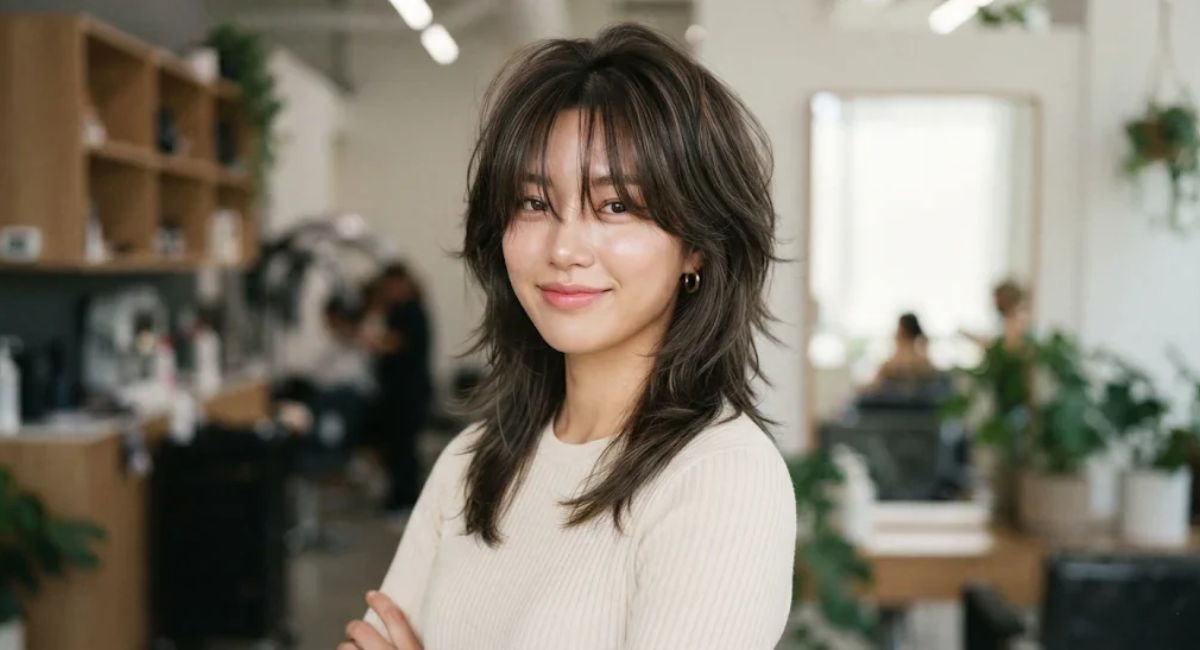
2. Korean Wolf Cut With Curtain Bangs
Curtain bangs are an excellent addition if you want more definition around your face without choosing a full fringe.
The bangs part naturally around the forehead and gradually blend into the shorter side layers. This creates a flowing frame that draws attention toward the eyes and cheekbones.
One reason this combination works so well is that the bangs complement the layered structure rather than competing with it.
You can ask for shorter curtain pieces if you enjoy a more noticeable fringe or longer sections that blend into the cheek area if you prefer a subtle appearance.
Best for: People who enjoy face-framing details and are comfortable spending a few minutes styling their fringe.
3. Soft Korean Wolf Cut
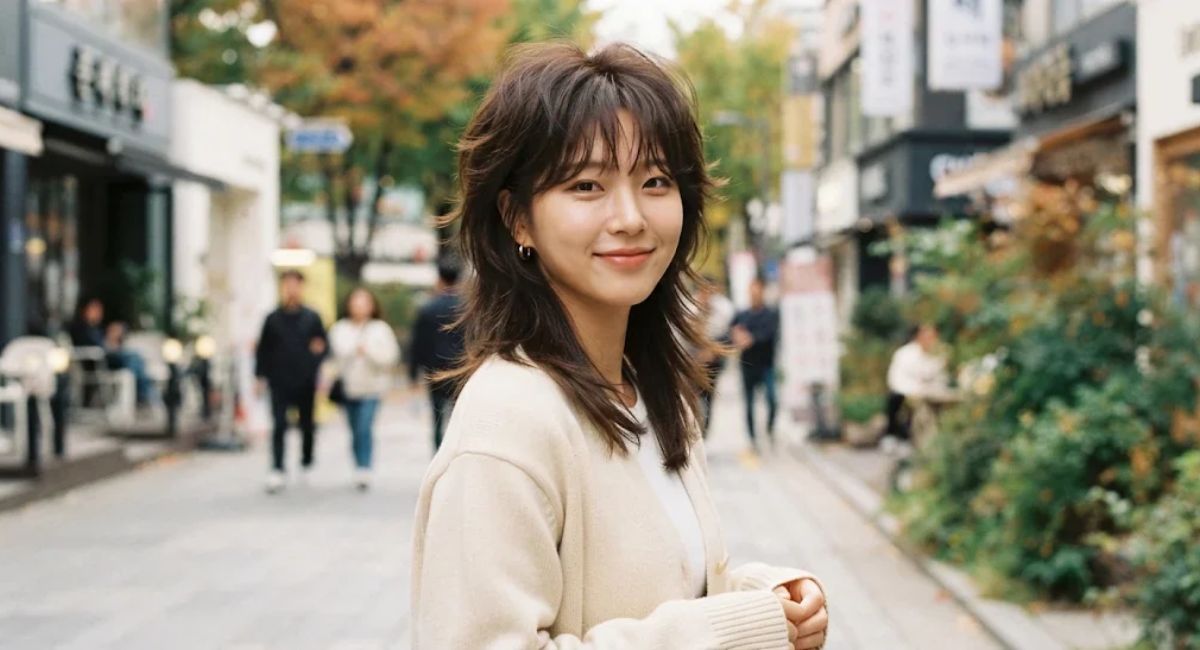
Not everyone wants the pronounced, choppy appearance associated with traditional wolf cuts. The soft Korean variation offers a gentler alternative.
Its layers are more blended, with less separation between the crown and lower sections. The overall silhouette still has movement, but the hairstyle looks smoother and more understated.
This option can be especially appealing if you are transitioning from a conventional layered haircut and want something different without making a dramatic change.
The important detail is controlling how much hair is removed from the ends. Keeping sufficient fullness through the bottom helps maintain a healthy-looking shape.
Styling tip: Use a lightweight styling cream and a large round brush for soft bends rather than tightly defined curls.
4. Korean Wolf Cut for Long Hair
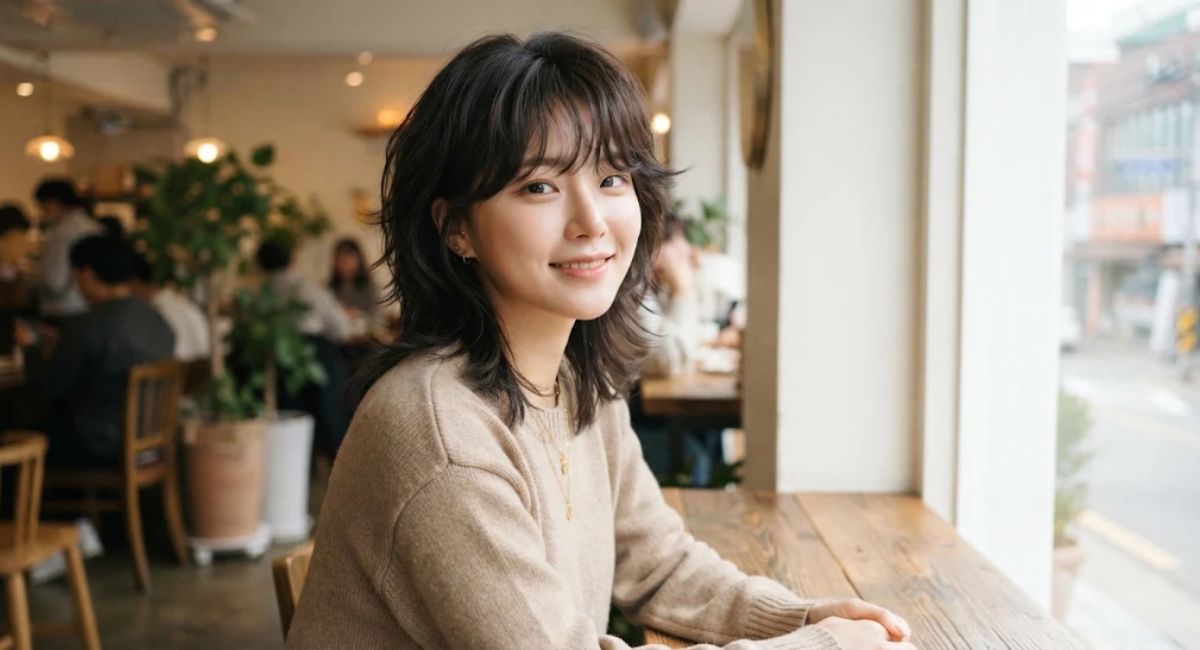
Long hair provides plenty of room to experiment with the contrast that makes a wolf cut recognizable.
In this variation, the shorter layers create volume around the crown and upper sides, while the remaining length flows down the back.
The difference between the two sections should be noticeable without creating an excessively disconnected appearance.
It is a particularly interesting choice for people who enjoy keeping their length but feel that their current hairstyle looks too heavy or lacks movement.
You can also incorporate long curtain bangs or cheekbone-length framing pieces to make the overall shape more interesting.
Styling tip: Use a large-barrel curling iron to create loose bends through selected sections. Leave the ends relatively relaxed for a natural finish.
5. Korean Wolf Cut for Medium Hair
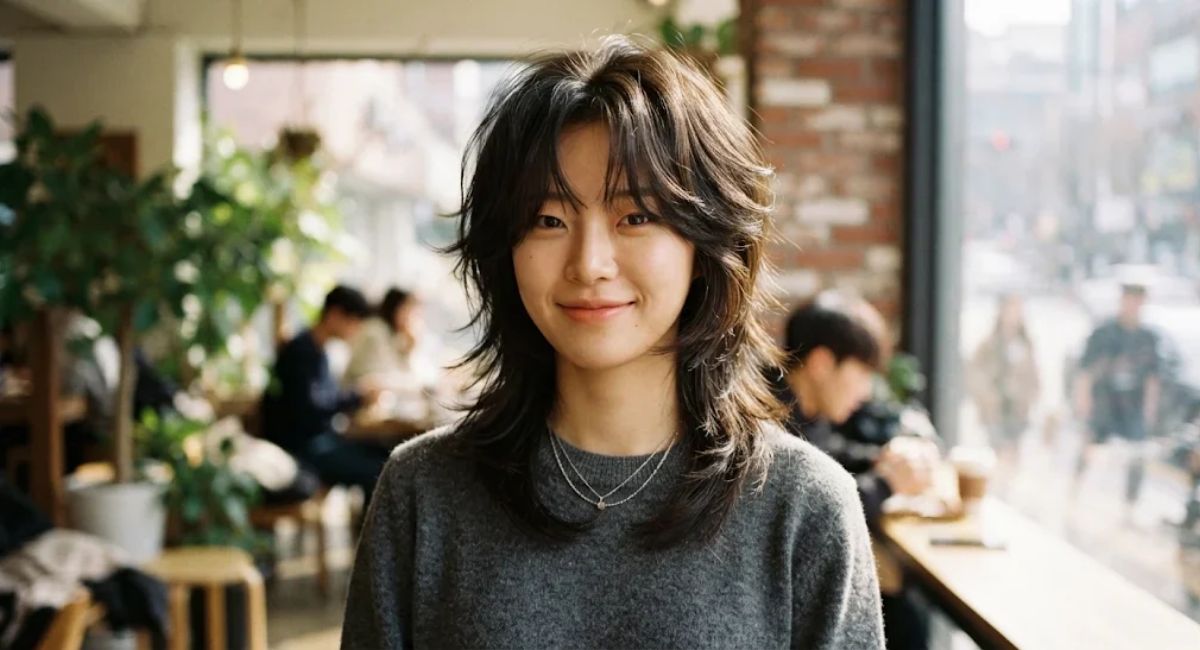
Medium-length hair offers a convenient balance between styling flexibility and manageable length.
The shorter overall shape allows the crown layers to become more noticeable, while the ends can be shaped around the shoulders or collarbone.
This version is particularly attractive if you want a visible transformation without going for a very short haircut.
The placement of the shortest layers matters. If they are cut too high, the hair may appear overly rounded. A skilled stylist can create a more balanced shape by considering the natural direction and density of your hair.
Best for: Anyone who wants movement, a lighter silhouette and a haircut that does not require maintaining very long lengths.
6. Korean Wolf Cut With Wispy Bangs
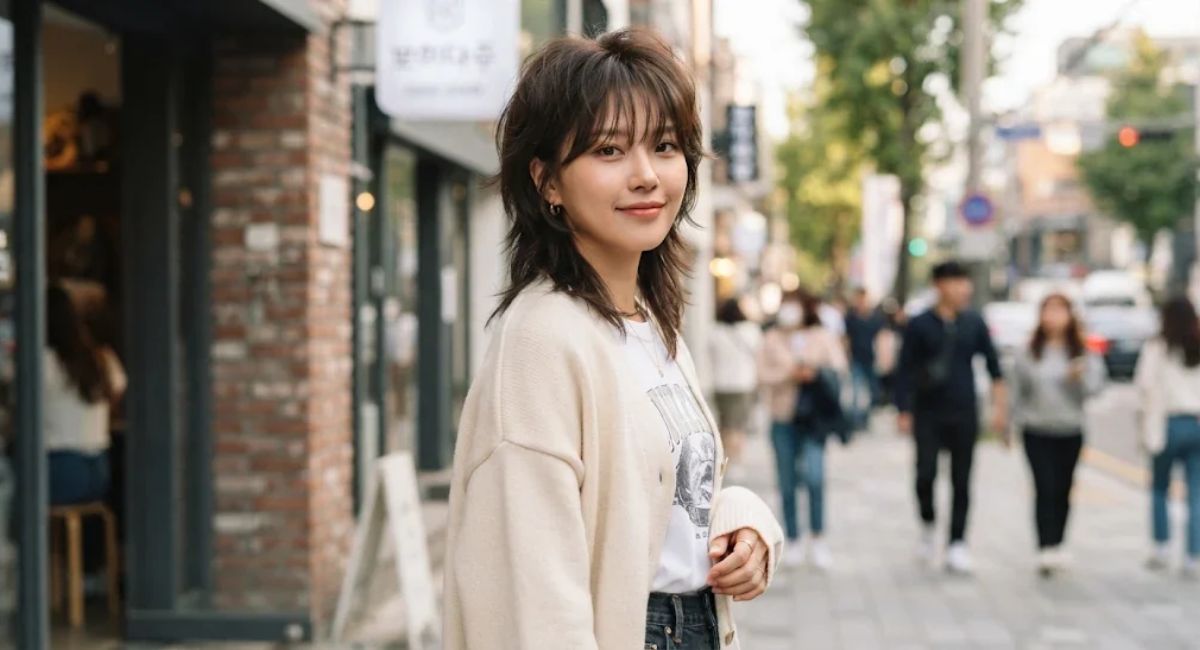
Wispy bangs give this haircut a delicate appearance while preserving its textured personality.
Unlike thick, blunt bangs, this fringe contains lighter sections that allow some forehead visibility. It creates a softer transition between the forehead and the shorter layers around the temples.
This combination works particularly well when the rest of the hairstyle has airy, feathered ends.
If your hair is naturally fine, ask your stylist to keep the fringe light rather than taking too much hair from the front. Overly dense bangs can make the upper section look heavy.
Styling tip: Blow-dry the fringe gently from side to side before directing it into its natural position.
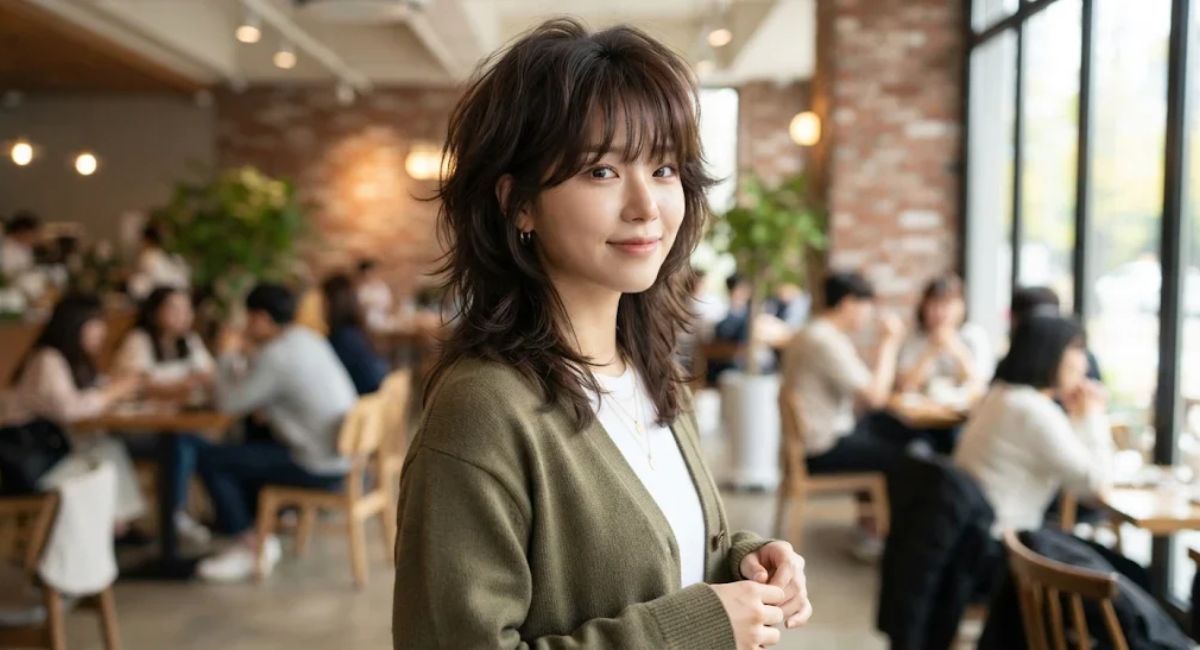
7. Korean Wolf Cut for Thick Hair
Thick hair can make a wolf cut look particularly full and expressive.
The shorter crown layers help create movement, while carefully placed internal layers can reduce excess weight through the middle and lower sections.
However, removing too much bulk can create unwanted frizz or make the ends look thin. The objective is to redistribute weight, not simply remove as much hair as possible.
If your hair is dense, ask your stylist to evaluate the difference between strand thickness and overall density before deciding how aggressively to texturize it.
This distinction matters because two people with apparently similar thick hair may need completely different layering techniques.
Styling tip: A lightweight smoothing cream can help control unwanted puffiness while preserving the natural shape.
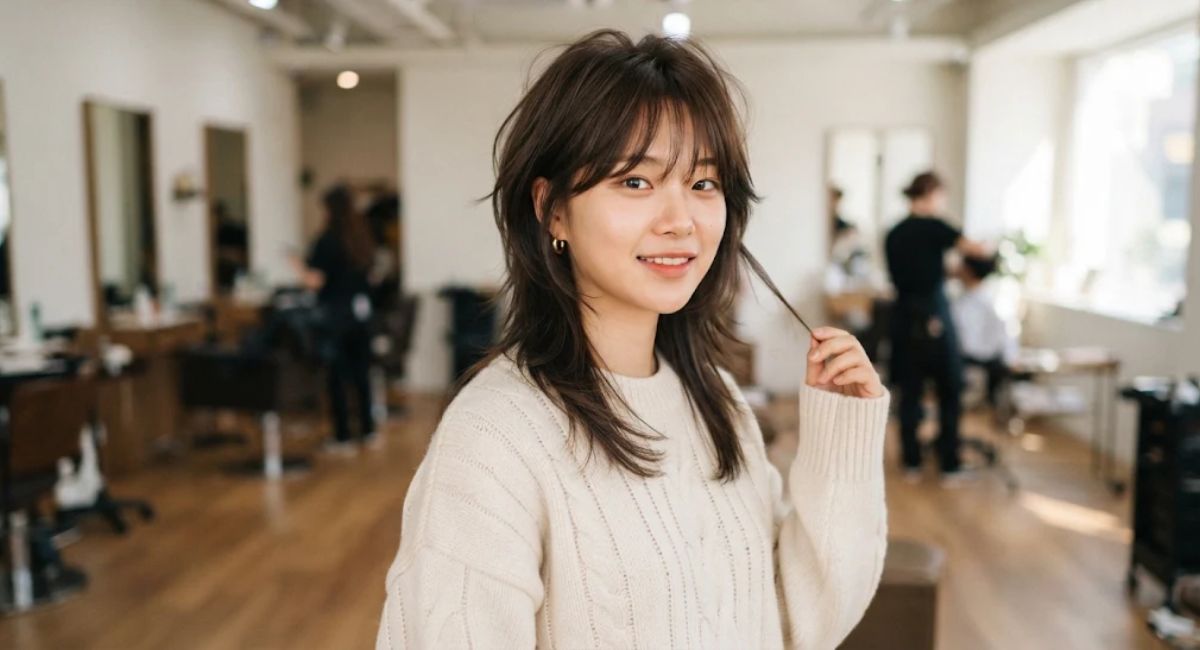
8. Korean Wolf Cut for Fine Hair
Fine hair can benefit from shorter crown layers, but the haircut needs a more careful approach.
Too many layers can make the lower sections appear sparse. Instead, the stylist should create enough lift around the crown while preserving fullness through the perimeter.
A softer version with limited texturizing is often a sensible starting point.
If you have low-density hair, explain that you want visible movement without sacrificing the appearance of thickness. Ask your stylist to show you how much length and density will remain after the cut.
Styling tip: A lightweight root-lifting mousse is generally more useful than heavy creams or oils that can flatten fine strands.
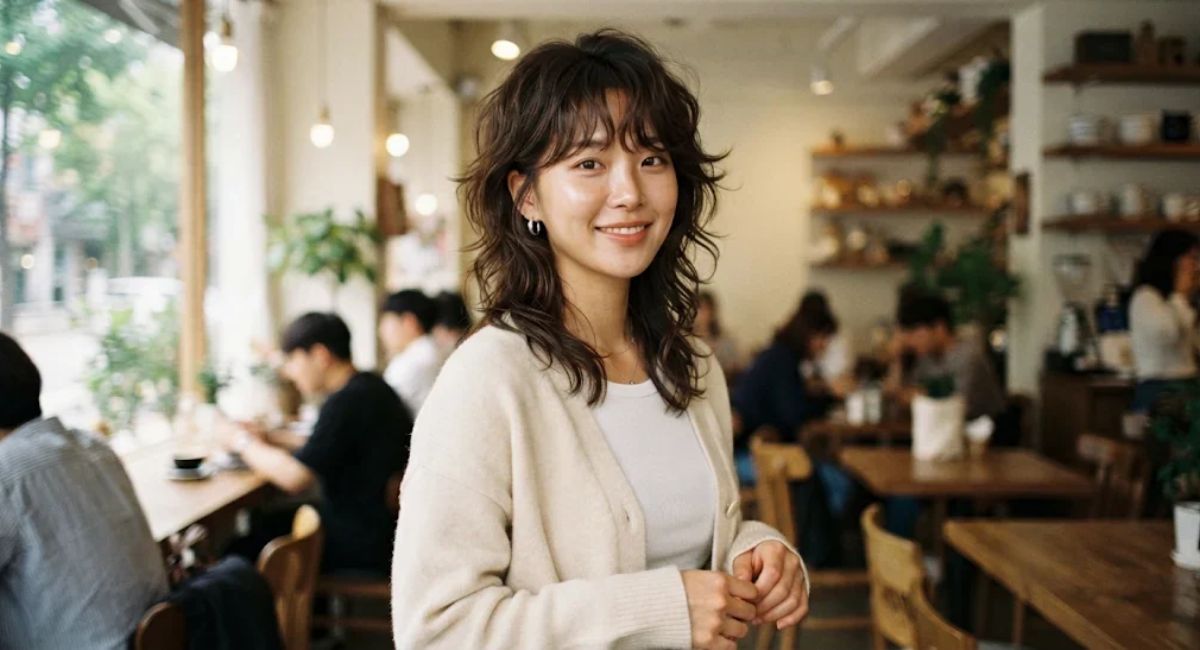
9. Korean Wolf Cut With Natural Waves
Natural waves can make this hairstyle look beautifully relaxed because the texture already creates movement between the layers.
Instead of having to manufacture every bend with a styling tool, you can use your natural wave pattern to emphasize the haircut’s shape.
The stylist should consider where your waves naturally expand and shrink. Cutting the layers without accounting for this behavior can result in uneven volume.
A slightly rounded silhouette often works well because it allows the waves to fall naturally around the shoulders.
Styling tip: Apply a small amount of mousse or curl cream to damp hair, scrunch gently and let it air-dry or use a diffuser.
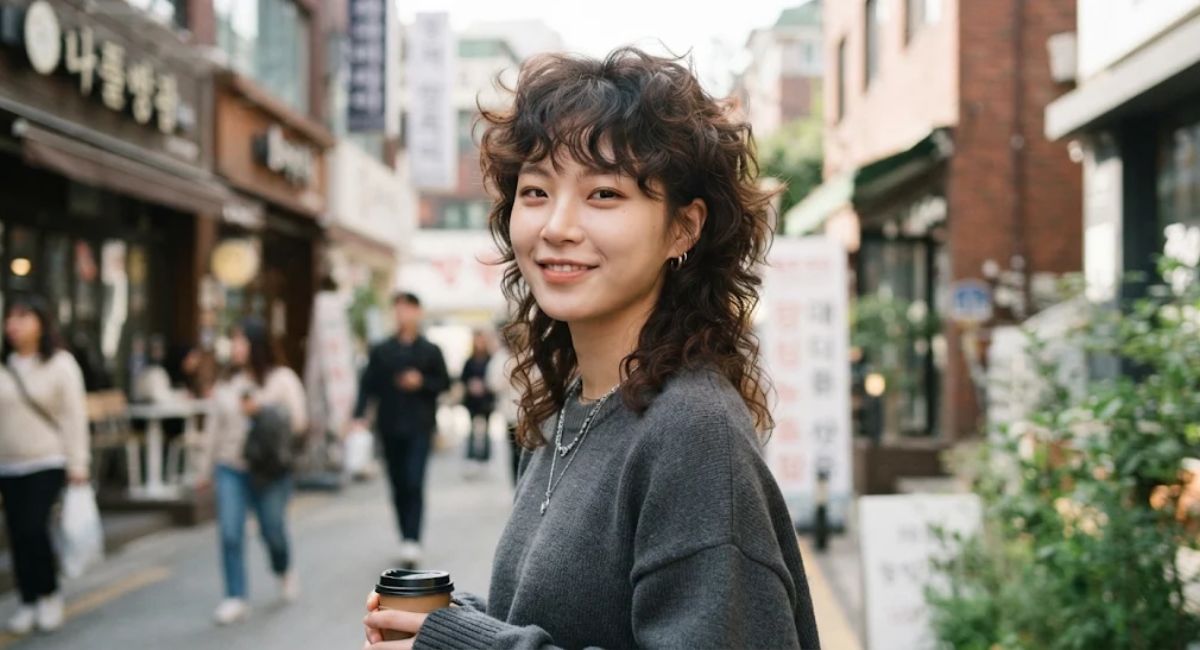
10. Korean Wolf Cut for Curly Hair
Curly hair brings a completely different personality to the Korean Wolf Cut.
The natural curl pattern creates volume and separation, making the shorter crown layers particularly noticeable. Longer sections underneath help maintain balance and prevent the shape from becoming excessively rounded.
The biggest consideration is shrinkage. Curly hair can appear significantly shorter after drying, so cutting it without understanding its natural curl pattern can lead to unexpected results.
Choose a hairstylist experienced in curly hair who can assess the way your curls sit naturally.
Styling tip: Use a curl-defining cream and diffuser on a low setting. Avoid repeatedly brushing the finished hairstyle because it can disrupt curl definition.
11. Korean Wolf Cut With Face-Framing Layers
Face-framing layers can change the overall impression of a haircut without requiring a full fringe.
In this variation, the front sections are shaped around the cheekbones and jawline, creating a natural transition between the shorter crown and longer lengths.
The starting point of these layers can be adjusted according to personal preference.
For example, someone who wants to emphasize the cheekbones may prefer shorter front pieces, while someone who wants a softer jawline frame might choose longer sections.
This is one of the more adaptable versions because it does not depend on a specific bang style.
Styling tip: Direct the front sections away from the face with a round brush to create a gentle outward movement.
12. Korean Wolf Cut With Side-Swept Bangs
Side-swept bangs provide an alternative to the popular middle-parted fringe.
The hair moves diagonally across the forehead, creating asymmetry and a softer appearance around the eyes.
This variation is worth considering if you already wear your hair with a side part or prefer a fringe that does not require a precise middle division.
The bangs should connect naturally with the face-framing layers so that the front does not appear disconnected from the rest of the haircut.
Styling tip: Use a medium round brush to direct the fringe toward the preferred side while blow-drying.
13. Korean Wolf Cut With a Deep Side Part
A deep side part changes the balance of volume and gives the haircut a more dramatic appearance.
Because more hair falls toward one side, the upper section can look fuller without requiring additional layers.
It also offers a simple way to change the hairstyle’s appearance without cutting more length.
This option works particularly well for people who enjoy slightly asymmetrical styling.
If your natural part consistently falls in one direction, your stylist can work with that growth pattern rather than forcing the hair into an uncomfortable position.
Styling tip: Apply a little root-lifting product before blow-drying the hair in the opposite direction of your intended part, then reposition it.
14. Korean Wolf Cut With Flipped-Out Ends
Flipped-out ends bring extra movement to the lower sections of the haircut.
Instead of allowing every layer to fall inward, selected ends are directed outward to emphasize the hairstyle’s feathered structure.
This creates a slightly retro appearance while keeping the overall cut modern.
It is particularly effective on medium-length hair because the outward movement remains visible around the shoulders.
The trick is to avoid making every section identical. A combination of inward and outward movement creates a more natural finish.
Styling tip: Use a round brush or curling iron to flick the ends outward, then finish with a flexible-hold spray.
15. Korean Wolf Cut With a Middle Part
A middle part gives the Korean Wolf Cut a balanced and symmetrical appearance.
The front sections fall evenly on both sides, allowing the face-framing layers to become a prominent part of the hairstyle.
It is a particularly attractive option if you want the haircut to look polished while preserving its relaxed texture.
The exact positioning of the front layers can make a significant difference. They may begin near the cheekbones, jawline or collarbone depending on the desired result.
Styling tip: Blow-dry each front section away from the face to encourage a smooth, open shape.
16. Short Korean Wolf Cut
A shorter Korean Wolf Cut offers a more noticeable transformation.
The upper layers create volume, while the lower sections typically fall around the jawline or neck. The shape can resemble a textured shaggy bob, especially when the ends are feathered.
Because there is less length to balance the layers, the haircut requires thoughtful shaping.
It is important to decide whether you want a rounded, soft silhouette or a more choppy finish before your appointment.
Best for: People who enjoy shorter hairstyles and are comfortable with a more defined layered shape.
17. Korean Wolf Cut With Long Curtain Fringe
A longer curtain fringe creates a graceful transition between the forehead and the remaining layers.
Unlike shorter bangs, these sections can reach the cheekbones or even the jawline. This makes them relatively flexible because they can be tucked behind the ears or styled away from the face.
The combination is particularly appealing if you want the benefits of a fringe without having to maintain very short bangs.
Ask your stylist to connect the fringe with the shortest face-framing layers to avoid an abrupt change in length.
Styling tip: A medium round brush and a few minutes of blow-drying are usually enough to create a soft curtain effect.
18. Layered Korean Wolf Cut With Feathered Ends
Feathered ends give the haircut a lighter, more flowing finish.
Rather than forming a thick, blunt perimeter, the lower sections are shaped into softer pieces that move independently.
This detail is particularly noticeable when the hair is worn down because it helps distinguish the layers.
However, feathering should be customized according to density. Very fine or damaged ends may become even thinner if too much weight is removed.
Styling tip: Use a small amount of lightweight serum on the ends to maintain a smooth finish without making the hair look greasy.
19. Korean Wolf Cut With Subtle Volume
Not everyone wants a high-volume hairstyle.
This variation focuses on subtle movement rather than dramatic height. The crown layers are blended carefully, and the overall shape stays relatively close to the head.
It is a good direction for someone who likes the wolf cut concept but prefers a more understated everyday appearance.
The stylist can preserve additional length around the upper sections to prevent the haircut from becoming too rounded.
Styling tip: Air-dry the hair or use a low-heat blow-dry setting. A little leave-in conditioner can help maintain softness.
20. Korean Wolf Cut With a Tousled Finish
The tousled variation highlights the relaxed character of the wolf cut.
The layers are allowed to move naturally rather than being arranged into a perfectly symmetrical shape. Some pieces fall forward, others move outward, and the ends maintain a slightly undone appearance.
This version is particularly attractive for people who enjoy casual styling and do not want their hair to look overly polished.
Natural waves can make the finish easier to achieve, but straight hair can also recreate it with a small amount of texturizing product.
Styling tip: Apply texture spray to selected sections and separate them gently with your fingers. Avoid using too much product, as the hair should remain flexible.
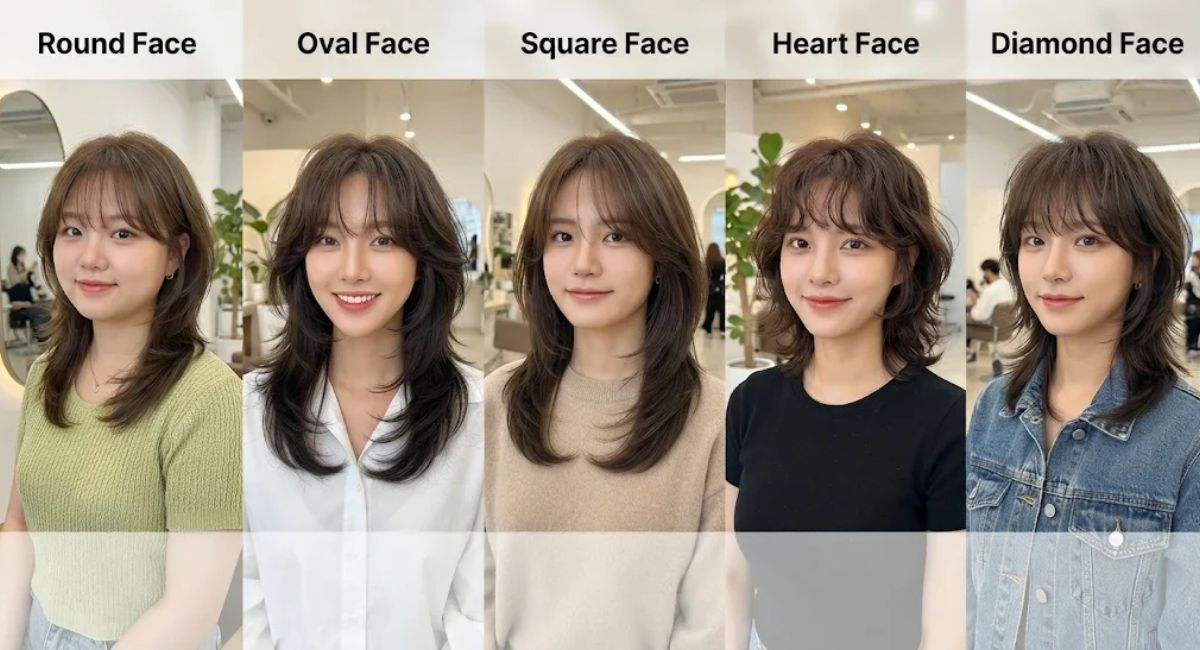
How to Choose a Korean Wolf Cut for Your Face Shape
The right haircut is not determined by face shape alone. Hair texture, density, natural growth direction and styling habits also influence how the final result looks.
Still, understanding your face shape can help you decide where to place the shortest layers and how to approach the fringe.
Korean Wolf Cut for Round Faces
If you have a round face, you may prefer a variation that creates a little more vertical movement.
Longer face-framing layers starting below the cheekbones can help avoid adding excessive width around the fullest part of the cheeks.
A little crown volume can also create a more elongated visual effect.
Curtain bangs are another option, particularly when they remain longer around the sides.
Korean Wolf Cut for Oval Faces
Oval face shapes can generally accommodate a wide range of wolf cut variations.
You might prefer a short, textured version for a more noticeable change or a long layered style for a softer appearance.
Experimenting with fringe is also an option. Curtain bangs, wispy bangs and side-swept sections can all complement the haircut.
Rather than focusing too much on face shape, consider which overall silhouette you enjoy most.
Korean Wolf Cut for Square Faces
A softer variation can work beautifully if you want to introduce movement around a defined jawline.
Wispy front layers and curved sections around the cheeks can create a less rigid appearance.
Avoid requesting extremely blunt front pieces if your preference is a softer finish.
A slightly longer fringe can also help connect the upper and lower sections of the haircut.
Korean Wolf Cut for Heart-Shaped Faces
Heart-shaped faces often have a wider forehead and a narrower chin.
Side-swept or curtain bangs can soften the upper section, while layers around the jawline add visual balance.
If you prefer a longer hairstyle, keeping some fullness through the lower sections can prevent the silhouette from looking too top-heavy.
Korean Wolf Cut for Long Faces
For longer face shapes, a fringe and fuller side sections can help create a more balanced appearance.
Wispy bangs or curtain fringe can reduce the amount of visible forehead, while layers around the cheeks add horizontal movement.
A medium-length variation is also worth considering if you prefer a hairstyle that does not emphasize additional vertical length.
Remember that these are styling suggestions, not strict rules. A good hairstylist should adapt the haircut to your individual features.

Does the Korean Wolf Cut Work for Different Hair Types?
Yes, but the cutting technique should change according to the hair’s natural characteristics.
Straight Hair
Straight hair makes the layer placement easy to see. This can be an advantage because the haircut’s shape becomes clearly defined.
However, straight strands may not naturally hold the tousled finish associated with the style.
A small amount of texture spray, root-lifting mousse or a few loose bends can help reveal the layers.
Wavy Hair
Wavy hair is particularly convenient for this haircut because natural movement helps emphasize the different lengths.
Many people can achieve an attractive finish with minimal styling by using a diffuser or allowing their hair to air-dry.
The stylist should consider how much the waves expand when dry to avoid creating excessive volume around the sides.
Curly Hair
Curly hair requires more individualized shaping.
The shrinkage factor is important because curls can become noticeably shorter once dry. A stylist experienced in curl patterns can help create a balanced silhouette.
Heavy thinning is not automatically necessary. The goal is to distribute volume and preserve the shape of the curls.
Fine or Thin Hair
Fine strands and low-density hair should not automatically be treated as the same thing.
Fine hair describes strand diameter, while density refers to how many strands grow across the scalp.
If your hair is both fine and low-density, preserving fullness through the ends is especially important.
Ask for selective layering rather than aggressive texturizing.
Thick Hair
Thick hair can carry more pronounced layers, but the cutting approach needs to account for its density.
Removing weight from the right areas can improve movement, while excessive thinning can create unwanted frizz.
For additional haircut inspiration, explore DailyFeedia’s medium length hairstyles for thick hair.
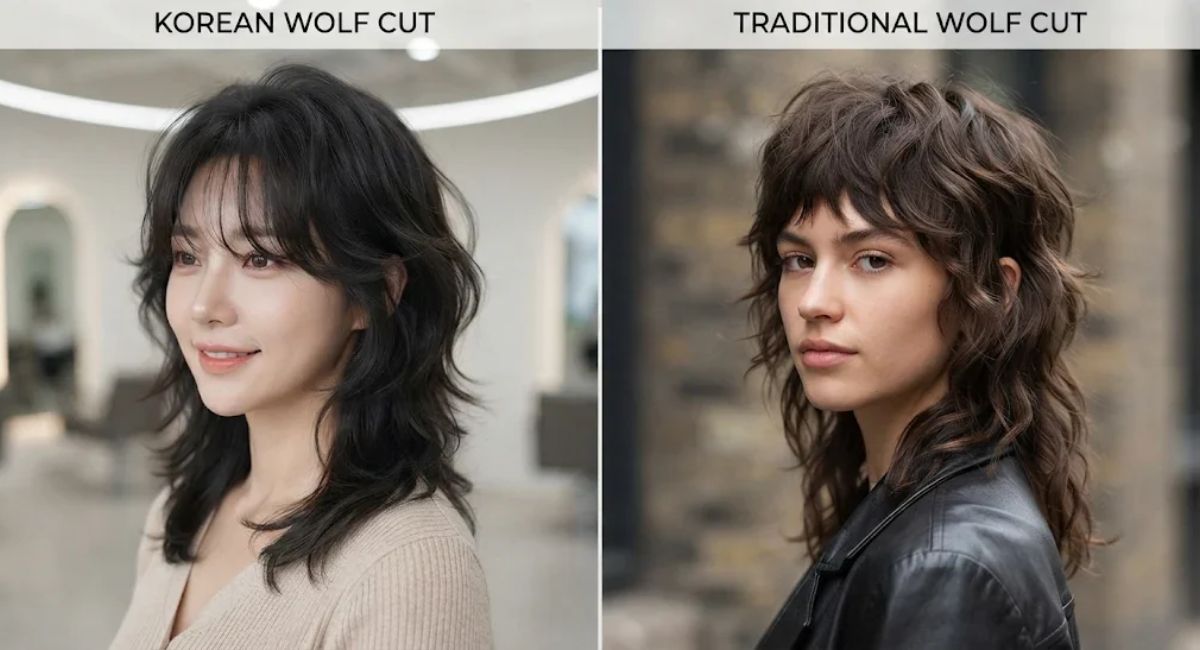
Korean Wolf Cut vs. Traditional Wolf Cut: What Is the Difference?
The two styles share the same general haircut family, but their final appearances can differ.
A traditional wolf cut often emphasizes a stronger shag-and-mullet silhouette. The shorter crown layers may be more pronounced, and the ends can have a deliberately choppy appearance.
A Korean-inspired wolf cut commonly favors a softer finish with more attention to blending, feathered movement and face-framing details.
| Feature | Korean-inspired wolf cut | Traditional wolf cut |
| Layer appearance | Often softer and airy | Often more pronounced |
| Crown volume | Customizable and blended | Frequently dramatic |
| Ends | Wispy or feathered | Choppy and textured |
| Overall look | Soft, modern, relaxed | Edgy and expressive |
| Fringe | Often curtain or wispy | Frequently varied and bold |
These are general styling tendencies, not fixed technical definitions. A stylist can create a softer or more dramatic result within either interpretation.
Korean Wolf Cut vs. Hush Cut
The hush cut is generally more subtle.
Its layers are designed to blend into the overall silhouette rather than create obvious separation. The wolf cut places greater emphasis on texture, crown volume and visible movement.
If you prefer a polished appearance, a hush cut may be more suitable. If you want a more noticeable layered shape, the wolf cut is worth exploring.
Korean Wolf Cut vs. Butterfly Cut
The butterfly cut usually focuses on flowing, face-framing layers that connect smoothly with longer hair.
The wolf cut generally has a more textured appearance, with greater contrast between the crown and lower sections.
If you prefer a softer, bouncy finish, consider exploring DailyFeedia’s butterfly haircut ideas.
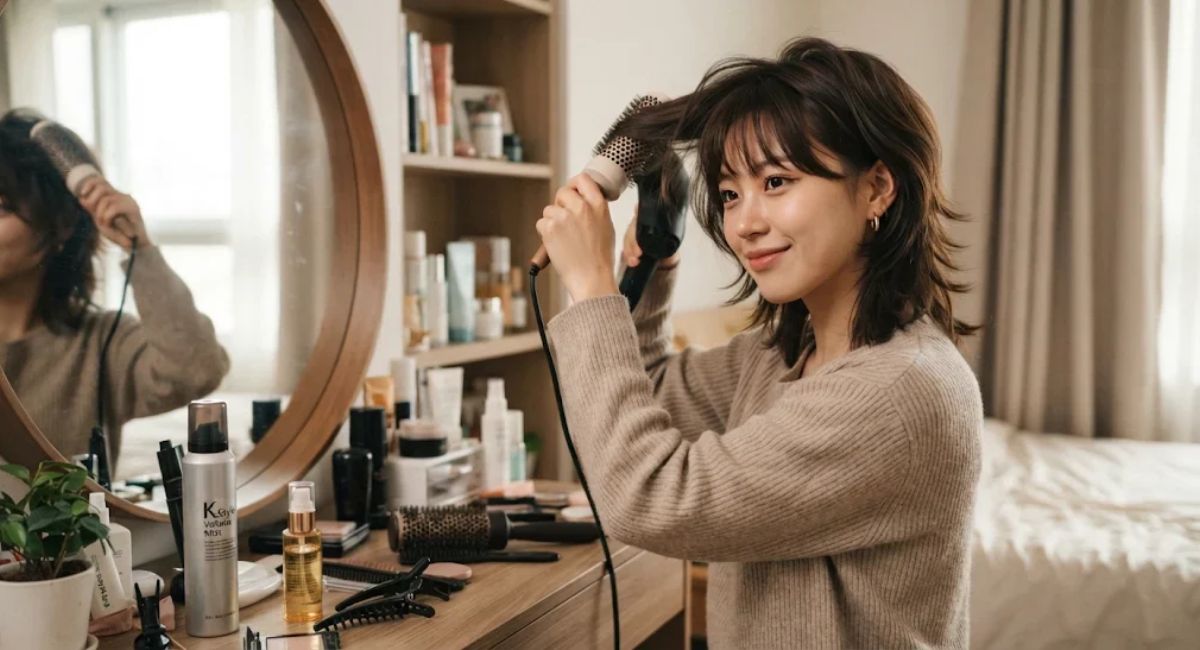
How to Style a Korean Wolf Cut at Home
The haircut provides the structure, but your styling routine determines how much of that structure becomes visible.
Fortunately, you do not need an elaborate collection of tools or products.
Step 1: Start With Damp Hair
After washing, gently remove excess water with a microfiber towel or soft cotton T-shirt.
Avoid rubbing the hair aggressively because friction can increase frizz, particularly around shorter layers.
Step 2: Apply a Lightweight Styling Product
Choose a product according to your hair type.
- Fine hair: Lightweight volumizing mousse.
- Thick hair: A small amount of smoothing cream.
- Wavy hair: Texture spray or mousse.
- Curly hair: Curl-defining cream.
- Straight hair: Lightweight styling lotion.
Apply the product mainly where you want additional movement or definition.
Step 3: Create Crown Volume
Use a blow-dryer and round brush to lift the upper sections.
Direct the airflow toward the roots while lifting small sections away from the scalp.
You do not need exaggerated volume. A little lift is often enough to make the haircut look more structured.
Step 4: Shape the Face-Framing Layers
The front sections can be directed away from the face using a round brush or curling tool.
For curtain bangs, work with each side separately.
If you prefer a more natural finish, allow the layers to fall into their usual positions rather than forcing a perfectly symmetrical shape.
Step 5: Add Texture to the Ends
Apply a small amount of texture spray to the mid-lengths and ends.
Use your fingers to separate a few sections and reveal the layered structure.
Avoid applying too much product. The hair should remain soft enough to move naturally.
Step 6: Finish With Flexible Hold
A lightweight hairspray can help maintain the shape without making the hairstyle stiff.
The goal is to preserve movement, not freeze every strand into place.
For a more relaxed appearance, you can skip the final spray altogether.
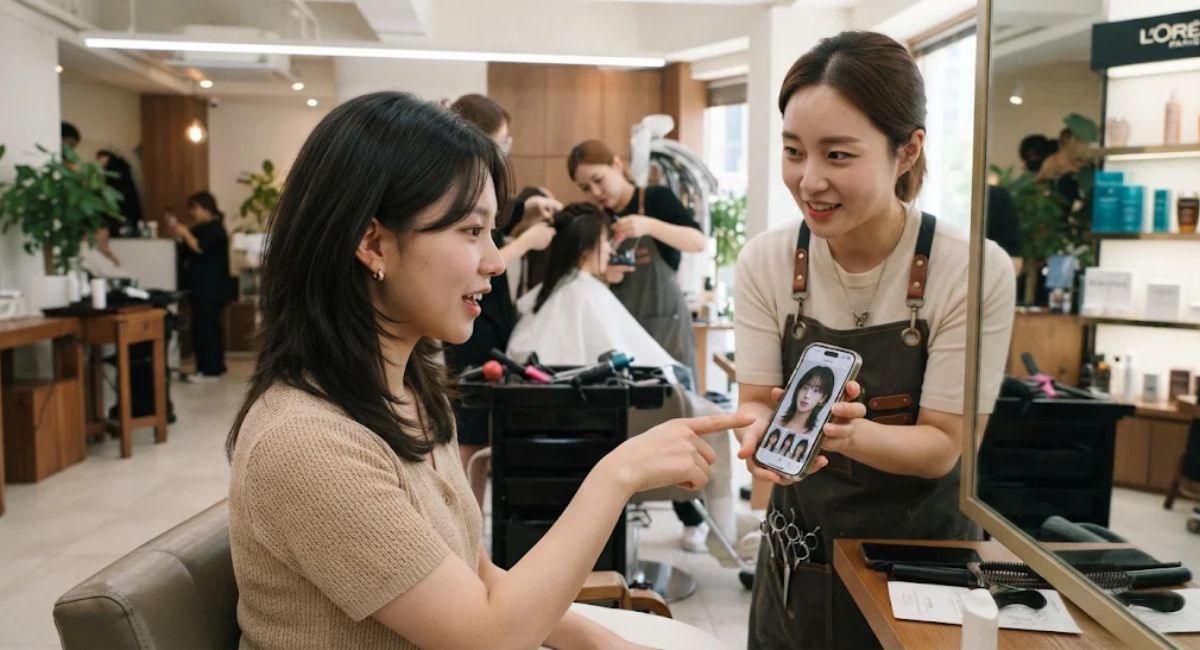
What to Tell Your Hairstylist Before Getting a Korean Wolf Cut
One of the biggest reasons people feel disappointed after a haircut is that the result does not match the picture they originally had in mind.
Haircut names are not always interpreted consistently between salons. One stylist may understand a Korean Wolf Cut as a soft, layered hairstyle, while another may create a more dramatic shag-inspired shape.
Clear communication is therefore essential.
Bring Reference Photos
Save three or four photographs showing the exact characteristics you like.
Try to include:
- One picture showing the overall silhouette.
- One showing the crown layers.
- One showing the front fringe or face framing.
- One showing a similar hair texture to yours.
Avoid relying on a single heavily styled photograph.
Explain How Much Length You Want to Keep
Tell your stylist whether you want to maintain your current length or are comfortable removing several inches.
This is particularly important if you have long hair.
The wolf cut can look very different depending on how short the upper layers become.
Discuss the Amount of Texture
Use clear descriptions rather than simply saying that you want layers.
For example:
- Soft and blended layers.
- Visible crown volume.
- Feathered ends.
- Moderate contrast between the upper and lower sections.
- Light face-framing pieces.
Be Honest About Your Styling Routine
If you normally air-dry your hair, tell your stylist.
If you are comfortable using a blow-dryer every morning, you may have more styling options.
A haircut that looks beautiful after a professional blowout may not be convenient for someone who prefers a five-minute routine.
Ask About Maintenance
Before committing, ask how frequently the shape will need attention.
You should also discuss how the haircut will look as the shorter layers grow out.
A useful salon request:
“I would like a Korean-inspired wolf cut with soft, airy crown layers, face-framing pieces and textured ends. I want visible movement but not an extremely dramatic mullet shape. Please customize the layers according to my hair density and keep enough fullness through the ends.”
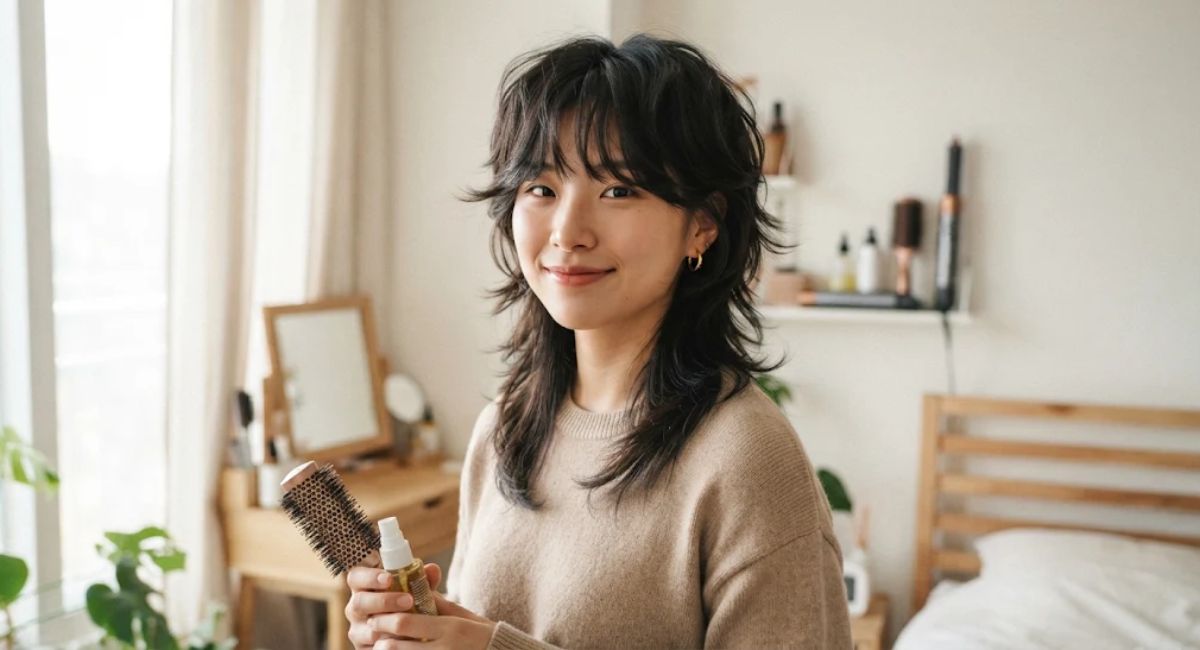
How to Maintain a Korean Wolf Cut
A layered haircut does not require constant salon visits, but it does benefit from occasional reshaping.
The right maintenance schedule depends on how short your layers are, whether you wear bangs and how quickly your hair grows.
Schedule Regular Trims
Many people can maintain a medium or long layered style with appointments approximately every 8–12 weeks.
Shorter variations and noticeable bangs may need attention sooner.
Rather than following a fixed schedule, pay attention to whether the layers have lost their intended shape.
Avoid Excessive Heat Styling
Shorter layers can become particularly noticeable when they are dry or damaged.
Use a heat protectant whenever you use a blow-dryer, curling iron or flat iron.
You can also alternate between heat styling and natural drying to reduce unnecessary exposure.
Keep the Ends Conditioned
The textured ends are an important part of the haircut.
Use a suitable conditioner after washing and apply a small amount of leave-in product when needed.
If your ends become dry or split, trimming them is more useful than continually adding styling products.
Refresh the Crown Between Washes
If the upper layers become flat, a small amount of dry shampoo or root-lifting product can help refresh the appearance.
Apply products sparingly to avoid buildup.
Protect Your Hair While Sleeping
If your hair is long enough, a loose braid or gentle ponytail can reduce tangling overnight.
A smooth pillowcase may also help minimize friction.
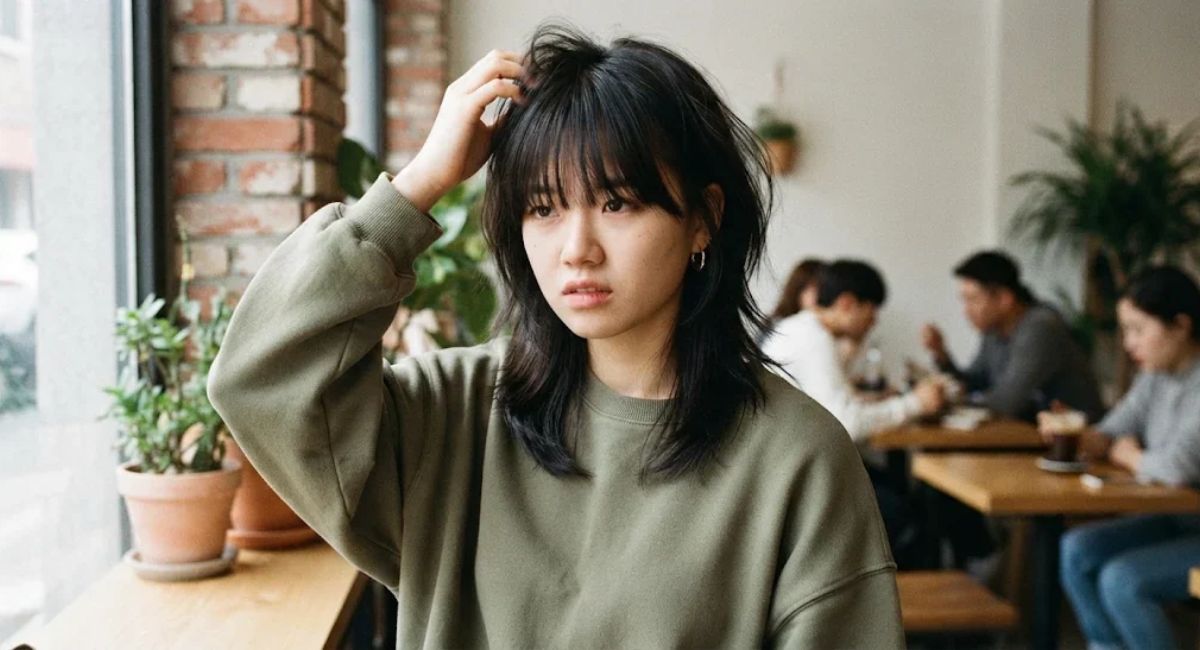
Common Korean Wolf Cut Mistakes to Avoid
Before booking your appointment, it is worth understanding a few problems that can affect the final result.
1. Choosing Layers That Are Too Short
Very short crown layers may create more volume than you expected.
If you prefer a softer appearance, discuss the starting length of the shortest layers before cutting.
2. Ignoring Hair Density
A style that looks full on someone with thick hair may appear sparse on someone with low-density hair.
Your stylist should adapt the haircut rather than copying every detail from a reference photograph.
3. Overusing Thinning Techniques
Excessive thinning can leave the hair looking uneven or create unwanted frizz.
Ask how your stylist plans to remove weight and where the texturizing will take place.
4. Choosing Bangs Without Considering Maintenance
Shorter fringe styles often require more frequent trimming and styling.
If you want something easier to grow out, longer curtain bangs may be a better starting point.
5. Expecting the Haircut to Style Itself
Natural texture can make the wolf cut easier to manage, but some hair types need additional styling to reveal the intended shape.
Be realistic about how much effort you are willing to invest.
6. Copying a Photograph Without Considering Your Own Hair
A celebrity or influencer photograph can be useful inspiration, but it should not replace a proper consultation.
The same cut can behave differently on different textures and densities.
Is the Korean Wolf Cut Worth Trying in 2026?
The Korean Wolf Cut is worth considering if you enjoy hairstyles with movement, visible layers and a slightly undone appearance.
Its biggest strength is flexibility. You can keep the look subtle with blended layers or create something more expressive with shorter crown sections, a noticeable fringe and textured ends.
It is also a useful option for people who feel that their current haircut lacks shape.
However, it is not automatically the best choice for everyone. If you prefer sleek, uniform lengths or rarely style your hair, a softer layered haircut may be easier to maintain.
Before making a decision, consider your natural texture, the amount of length you want to preserve and how much daily styling you are comfortable with.
The best version of a Korean Wolf Cut is not necessarily the most dramatic one. It is the version that works with your hair rather than requiring you to fight against it every morning.
Frequently Asked Questions About the Korean Wolf Cut
1. What is a Korean Wolf Cut?
A Korean Wolf Cut is a layered hairstyle inspired by the traditional wolf cut. It typically features shorter crown layers, longer lower sections, soft face-framing pieces and textured ends for a relaxed appearance.
2. Is a Korean Wolf Cut suitable for thin hair?
Yes, but it needs careful customization. People with fine or low-density hair should generally avoid excessive layering that removes too much fullness from the ends. A softer version with selective crown layers may be more suitable.
3. Does a Korean Wolf Cut suit round faces?
Yes. Longer face-framing layers, a little crown volume and curtain bangs can create a flattering appearance. The placement of the layers should be customized according to individual features.
4. What is the difference between a Korean Wolf Cut and a regular wolf cut?
A Korean-inspired version generally emphasizes softer transitions, airy layers and face-framing details. A traditional wolf cut may have more dramatic crown volume, choppier layers and stronger contrast between the upper and lower sections.
5. Can you get a Korean Wolf Cut with curly hair?
Absolutely. Curly hair can create beautiful volume and texture with this haircut. However, the stylist should account for curl shrinkage and shape the layers according to the natural curl pattern.
6. Does a Korean Wolf Cut require daily styling?
Not necessarily. People with natural waves or curls may need very little styling. Straight or fine hair may benefit from a small amount of mousse, texture spray or blow-drying to make the layers more visible.
7. How often should you trim a Korean Wolf Cut?
Many medium and long versions can be reshaped every 8–12 weeks. Shorter styles and bangs may need more frequent attention to preserve their shape.
8. Can you get a Korean Wolf Cut without bangs?
Yes. The hairstyle works without a fringe. You can ask for longer face-framing layers instead, allowing the front sections to blend naturally into the rest of the haircut.
Conclusion
The Korean Wolf Cut offers an interesting way to refresh your hairstyle without committing to one specific look. Its combination of crown volume, layered lengths and textured ends creates plenty of opportunities for customization.
From soft medium-length variations to long, dramatic layers, there is more than one way to wear this haircut. The important thing is to choose a version that suits your natural hair texture, density and everyday routine.
If you are unsure where to begin, a softer Korean-inspired wolf cut with moderate crown layering and longer face-framing sections is a sensible starting point.
Bring a few reference photographs to your stylist, discuss the amount of length you want to keep and make sure the cutting technique is adapted to your hair.
A well-planned haircut should make your hair easier and more enjoyable to wear, not create another complicated routine.