Medium length wolf haircut ideas for women are everywhere on TikTok and Pinterest right now, and for good reason. This cut takes the volume of a shag and the edge of a mullet, then blends them into something wearable for almost any face shape and hair type. If you have been scrolling through inspiration photos but still feel unsure whether this style will actually work on your hair, you are in the right place.
I have spent a lot of time talking to stylists and reading through client experiences, and one thing keeps coming up: women either love this cut for years, or they regret not asking enough questions before sitting in the chair. This guide is meant to close that gap. We will cover what the cut actually is, who it suits, how to ask for it correctly, and how to style it at home without spending an hour every morning.
What Exactly Is a Wolf Cut?
A wolf cut is a layered hairstyle that mixes two older trends, the shag and the mullet, into one shape. The crown gets short, choppy layers for volume, while the lengths underneath stay longer and a bit messier looking.
The result is hair that looks full on top and slightly wild toward the ends, almost like it has a mind of its own. That “undone” texture is the whole point. A wolf cut is not supposed to look freshly blow dried at a salon. It is supposed to look like you woke up with great hair by accident.
The style is often traced back to South Korean and East Asian hair trends from the early 2020s, though shag and mullet hybrids have shown up in different decades going back to the 70s. What makes the modern version different is the heavier layering at the crown and the more deliberate, styled messiness.
Why Medium Length Is the Sweet Spot for This Cut
Short wolf cuts look great, but they grow out fast and leave little room for adjustment. Long wolf cuts need serious length to show off the layering properly.
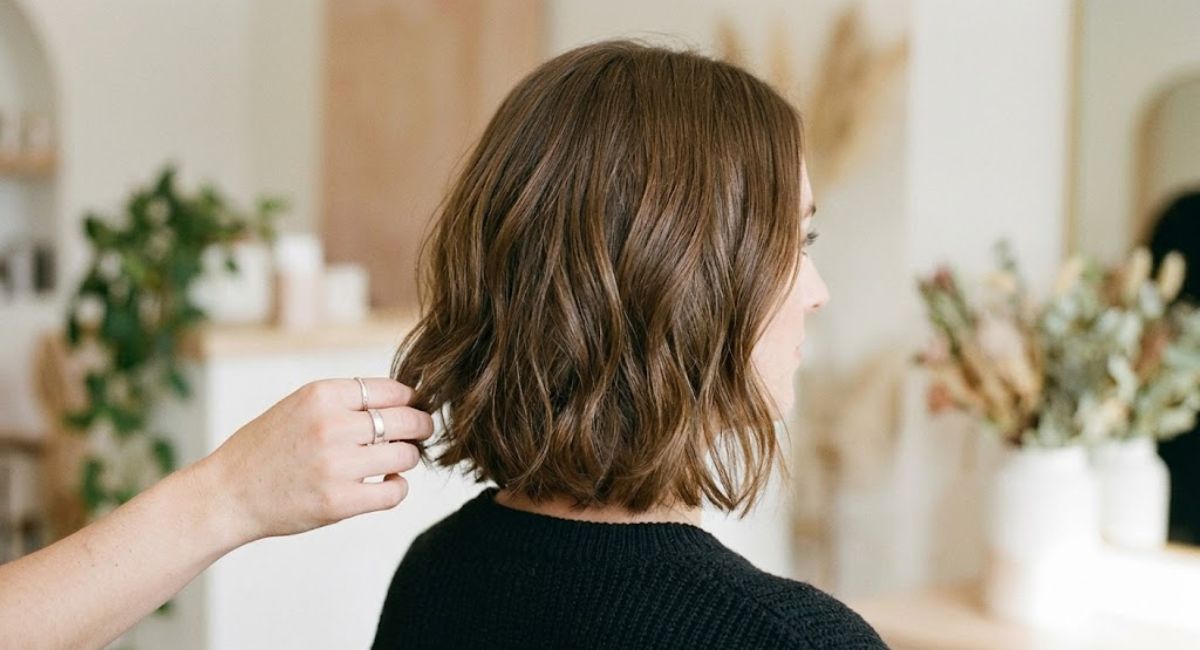
Medium length, usually somewhere between collarbone and shoulder, sits right in the middle. You get:
- Enough length for the layers to move and separate
- Enough shortness at the crown for real volume
- An easier grow out phase compared to short versions
- More versatility for updos, half ponytails, and clips
If you are not sure you want to commit to a dramatic look, medium length wolf cuts are the safer entry point. You can always go shorter later once you know how your hair responds to the layering.
10 Medium Length Wolf Cut Ideas Worth Showing Your Stylist
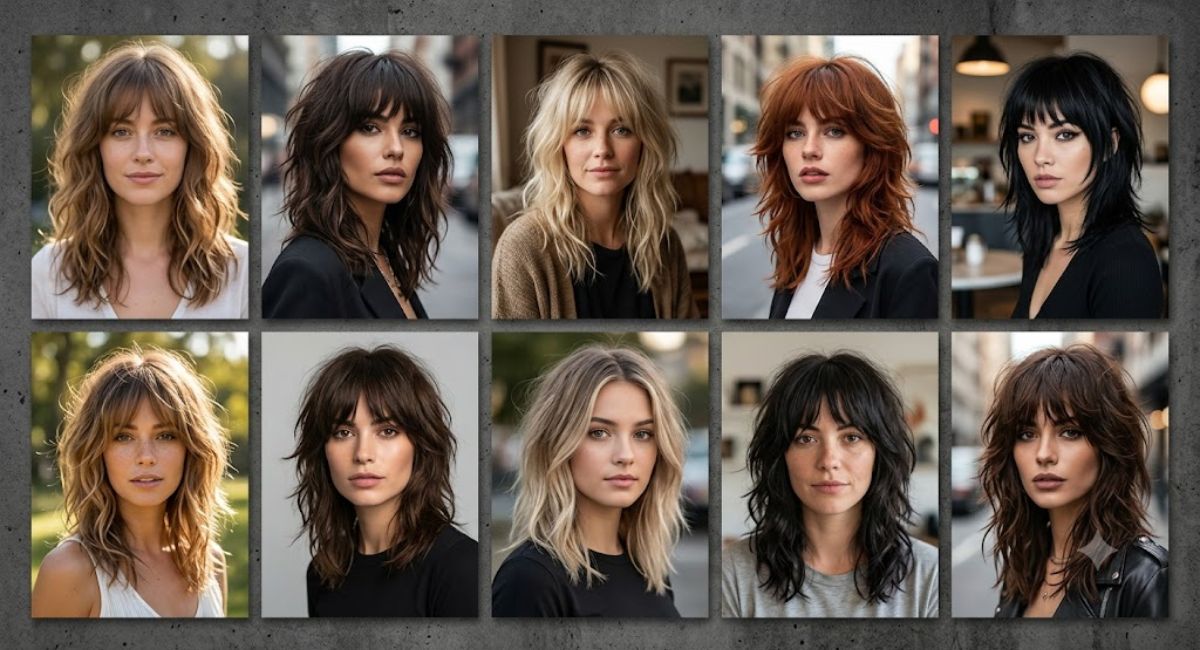
Below are specific variations that work well for different hair types and styling habits. Bring screenshots of whichever ones catch your eye, since stylists work much better from pictures than from verbal descriptions alone.
1. Classic Shoulder Length Wolf Cut
This is the baseline version most people picture when they hear “wolf cut.” Layers start around the crown and blend down to shoulder length, with the ends left slightly choppy rather than blunt.
It works on straight, wavy, and curly hair, though curly hair will show the layers in a softer, less defined way.
2. Wolf Cut With Curtain Bangs
Adding curtain bangs softens the whole look and frames the face nicely. This combination has become one of the most requested versions because it photographs well and suits round, oval, and heart shaped faces.
Curtain bangs do require some maintenance though. Expect to touch them up every four to six weeks if you want them to keep their shape.
3. Choppy Wolf Cut With Blunt Bangs
If curtain bangs feel too soft for your taste, blunt bangs paired with choppy layers create a much edgier contrast. Think Jenna Ortega’s Wednesday Addams era hair, just slightly longer.
This version tends to suit thicker, straighter hair best since the blunt line needs enough density to hold its shape.
4. Wavy Wolf Cut for Natural Texture
If your hair already waves on its own, a wolf cut can be one of the lowest maintenance cuts you will ever get. The layers enhance the natural wave pattern instead of fighting it.
Stylists often recommend skipping heavy product here and letting the hair air dry, maybe scrunching in a light curl cream while it is still damp.
5. Curly Wolf Cut
Curly hair shrinks as it dries, so a wolf cut on curls usually looks shorter once it is fully dry than it did while wet. Mention this to your stylist before the cut so the length ends up where you actually want it.
The payoff is worth it. Curly wolf cuts create incredible volume at the crown without needing diffusing or extra product.
6. Wolf Mullet Hybrid (Shullet)
Sometimes called a “shullet,” this version leans harder into mullet territory with more dramatic length at the back compared to the front. It is bolder than a standard wolf cut and tends to suit people who already feel comfortable with shorter, edgier styles.
7. Wolf Cut With Face Framing Layers Only
Not ready for heavy crown layering? Ask for face framing layers paired with a slightly shorter top section instead of full wolf layering throughout. This gives a hint of the trend without the commitment.
8. Fine Hair Wolf Cut
Fine hair needs a gentler approach. Heavy layering at the crown can sometimes make fine hair look thinner rather than fuller. A good stylist will use softer, blended layers instead of choppy chunks, and may keep the crown layers slightly longer than they would for thick hair.
9. Thick Hair Wolf Cut
Thick hair handles dramatic layering really well, which means you can go bolder here. Choppy, defined layers will not disappear the way they might on fine hair, so feel free to ask for more texture if that is the look you want.
10. Color Enhanced Wolf Cut
A lot of the dramatic wolf cuts you see online get extra dimension from color, not just cutting. Money piece highlights, balayage, or even a bold all over color like copper or plum can make the layers pop even more.
How to Ask Your Stylist for a Wolf Cut (Without Miscommunication)
This is the part most articles skip, and it is honestly the most important part. A wolf cut is not one fixed shape. It is a style category, and the details matter a lot.
Here is what to bring up during your consultation:
- Show 2 to 3 reference photos, not just one. This helps your stylist understand the range you like rather than copying a single image exactly.
- Mention your hair type clearly. Straight, wavy, curly, fine, thick, all of it changes how the layers will sit.
- Ask where the shortest layers will land. Crown height varies a lot between wolf cut versions.
- Decide on bangs before the appointment, since adding them later is a separate conversation.
- Talk about maintenance level. If you are someone who blow dries daily versus someone who air dries and goes, say so. It changes how the layers should be cut.
I have heard more than one story of someone showing a single photo, getting a technically correct wolf cut, and still feeling disappointed because the crown volume or bang length was not what they pictured. Clear communication fixes almost all of that.
Styling a Medium Wolf Cut at Home
You do not need a salon visit every time you want this look to show up well. Most of the styling can be done with tools you probably already own.
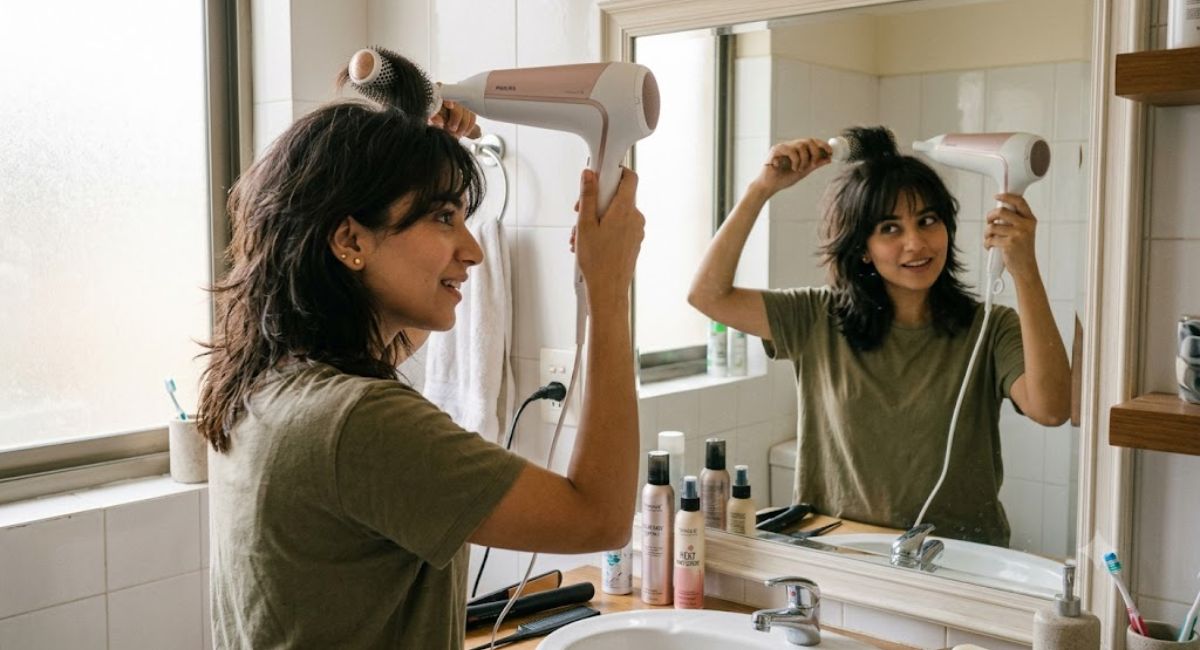
For straight hair: Blow dry upside down at the roots to add lift, then run a flat iron or curling wand through random sections of the ends, alternating the direction in and out. This creates the slightly undone movement that makes the cut look intentional rather than flat.
For wavy hair: A light sea salt spray on damp hair, followed by air drying or a light diffuse, usually does the job. Scrunch gently while drying to encourage the wave pattern.
For curly hair: Apply a curl cream or gel to soaking wet hair, then let it air dry or diffuse on low heat. Avoid touching the curls too much while they dry, since that is what causes frizz.
For fine hair: Use a volumizing mousse at the roots before blow drying, and avoid heavy oils or creams that can weigh the layers down.
A round brush, a one inch curling wand, and a good texturizing spray will cover almost every styling need for this cut.
Common Mistakes to Avoid
A few patterns show up again and again with wolf cuts gone wrong, and most of them are easy to avoid once you know about them.
- Skipping the consultation details. Vague requests lead to vague results.
- Over styling every single day. Part of the appeal of this cut is that it looks good slightly undone. Constant heat styling can also damage the shorter crown layers faster since they are more exposed.
- Not accounting for shrinkage on curly hair. Always ask your stylist to cut slightly longer than you think you want if you have curls.
- Choosing bangs without thinking about face shape. Curtain bangs and blunt bangs do very different things for round versus angular faces.
- Ignoring grow out plans. Ask your stylist how the cut will grow out and when you will likely need a trim, usually somewhere around eight to twelve weeks for maintaining shape.
Who This Cut Works Best For
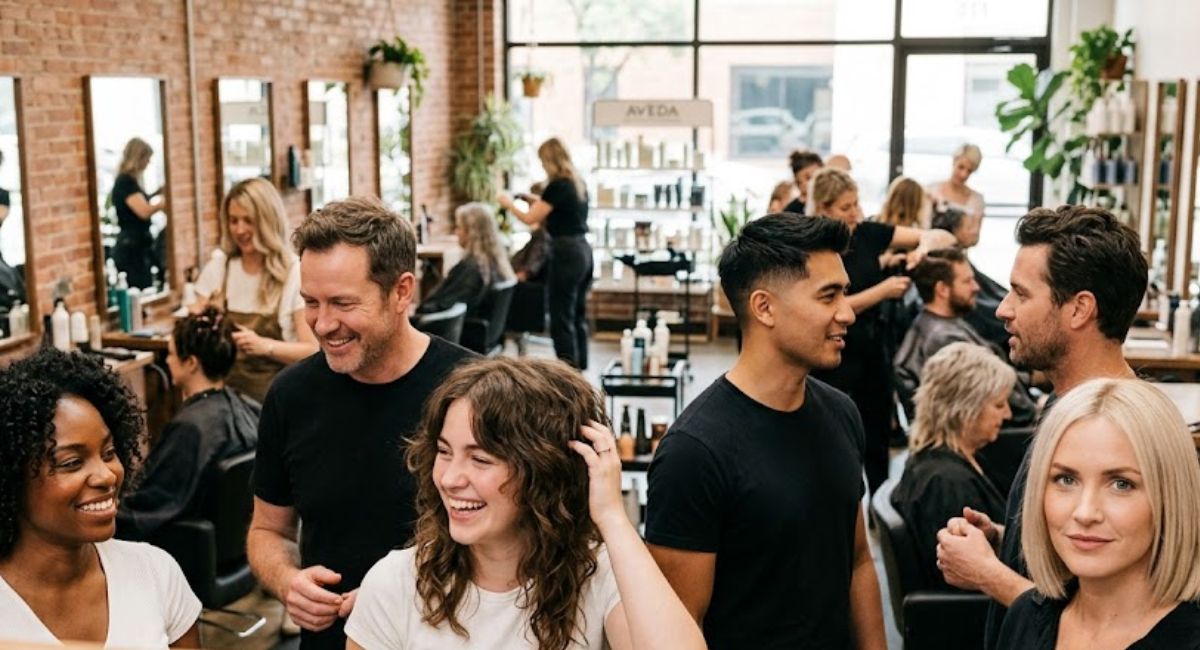
Wolf cuts genuinely suit a wide range of people, which is part of why the trend has stuck around. That said, a few things make it easier to pull off:
- Hair that already has some natural texture or wave
- A willingness to use at least minimal styling tools
- Comfort with shorter layers near the face and crown
- Medium to thick hair density, though fine hair can absolutely work with the right adjustments
If you have very fine, completely straight hair and prefer zero styling time, a softer version with blended rather than choppy layers will serve you much better than the most dramatic wolf cut photos online.
Final Thoughts
A medium length wolf cut is one of those rare haircuts that manages to look both effortless and intentional at the same time. The key to getting it right is not just picking a pretty photo, it is understanding your own hair type, communicating clearly with your stylist, and being realistic about how much styling you actually want to do on a Tuesday morning.
Bring your reference photos, ask the right questions, and you will walk out with a cut that actually matches what you pictured, not just something close to it.
FAQs
1. What is the difference between a wolf cut and a shag? A shag focuses on layering throughout the hair for movement, while a wolf cut adds extra volume specifically at the crown and blends in mullet style length contrast at the back.
2. Does a wolf cut work on fine hair? Yes, with adjustments. Fine hair does better with softer, blended layers rather than choppy chunks, since heavy layering can make thin hair look sparser.
3. How often do I need to trim a wolf cut to keep its shape? Most people need a trim every 8 to 12 weeks to maintain the layering, though this varies based on how fast your hair grows.
4. Can I get a wolf cut if I have curly hair? Absolutely. Curly hair tends to show off the volume at the crown beautifully, though you should mention curl shrinkage to your stylist before cutting.
5. Is a wolf cut low maintenance? It can be. Wavy and curly hair types often need minimal daily styling, while straight hair may need a bit more work with a curling wand or flat iron to recreate the texture.
6. What face shapes suit a medium wolf cut best? Most face shapes work well, though curtain bangs tend to favor round and heart shaped faces, while blunt bangs suit oval and longer face shapes.
7. Will a wolf cut suit thick hair or will it look too bulky? Thick hair actually handles wolf cuts very well since it can support more dramatic layering without losing shape.
8. Do I need bangs for a wolf cut? No, bangs are optional. Many wolf cuts skip bangs entirely and rely on face framing layers instead.
9. How long does hair need to be to start a wolf cut? Hair should ideally be at least chin length, though medium and longer lengths show off the layering more dramatically.
10. Can I color my hair along with getting a wolf cut? Yes, and many people do. Highlights, balayage, or a bold color change can enhance the dimension of the layers even further.