Men’s fade haircut styles have taken over barbershops worldwide, and honestly, it’s easy to see why. A well-executed fade makes almost any hairstyle look sharper, cleaner, and more intentional. Whether you’re stepping into a barbershop for the first time or you’ve been rocking a fade for years but want to try something new, this guide breaks down everything you need to know, from the different types to how face shape affects your choice.
No fluff, no generic advice. Just real, practical information that helps you walk in with confidence and walk out looking exactly how you imagined.
What Is a Men’s Fade Haircut, Exactly?
A fade haircut is a modern barbering technique that creates a smooth gradient transition from longer hair on top to progressively shorter hair on the sides and back. The “fade” refers to how the hair appears to fade away as it gets closer to the skin, creating a clean, polished look.
What separates a proper men’s fade haircut from a basic short cut is the blending. Unlike a simple buzz cut where all hair is one length, a fade demands expert clipper work, blending multiple guard sizes to create smooth gradations with no visible lines or steps.
Fades originated in the military and Black barbershop culture in the 1940s and 1950s but have evolved into countless variations. Today, the fade haircut is worn by men across every profession, age group, and style preference.
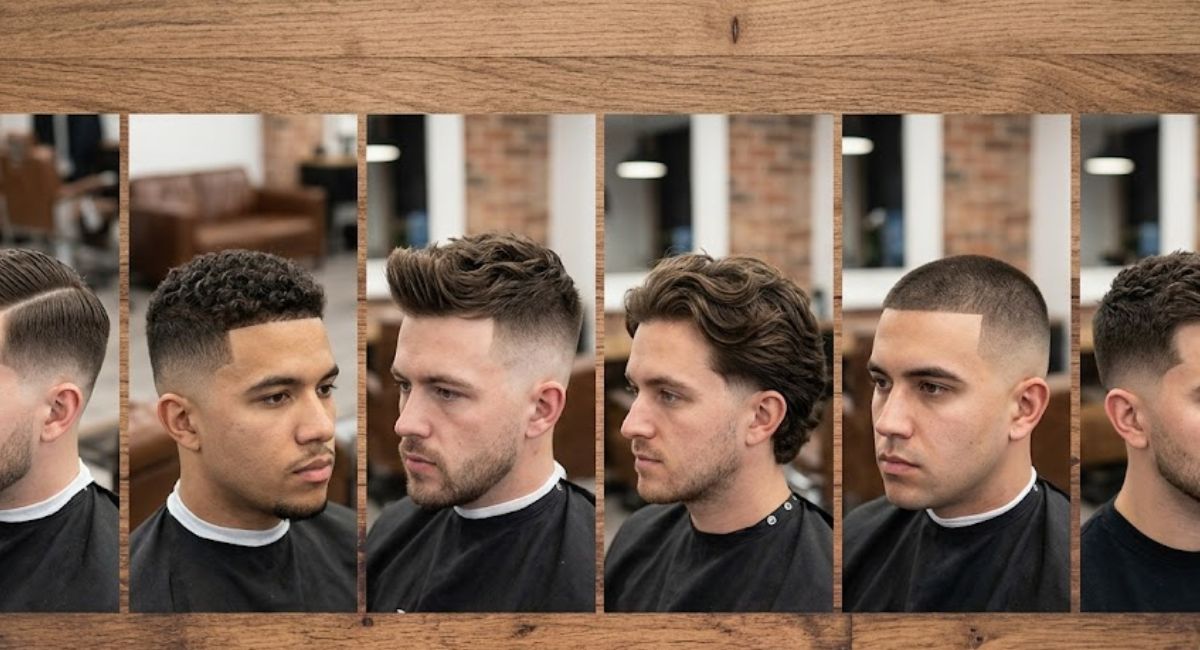
The Main Types of Fade Haircuts for Men
This is where most guides fall short. They list the types but don’t actually explain when to pick each one. Here’s the breakdown you actually need.
Low Fade
The low fade is the most discreet but no less stylish option. The fade starts very close to the ear and rises slightly, leaving the middle and top longer.
It’s a great choice if you work in a formal environment or simply prefer a cleaner, more conservative look. The low fade pairs incredibly well with medium-length styles on top, and if you have a beard, it blends into facial hair naturally without looking disconnected.
The classic low fade works well with different hairstyles on top, from short to longer styles. If you have a longer face, this is worth considering since it adds width to the sides.
Mid Fade
The mid fade is the all-rounder. It starts at a medium height on the sides and nape, creating a very interesting balance between elegance and modernity.
Most barbers will suggest a mid fade as a starting point if you’re unsure what you want. It’s versatile enough for casual wear but polished enough for office environments. The contrast it creates on the sides is noticeable without being dramatic.
For thick or curly hair, go with tighter sides and a longer top to control volume. Straight hair looks sharp with added texture or a messy fringe.
High Fade
A high fade starts well above the ears and creates a strong contrast between the top and sides. This is the most aggressive of the three main fade types and works best when you want a bold, statement look.
Skin fades on the sides with messy, tousled tops give you an edge without trying too hard. If you pair a high fade with a textured crop or a pompadour, the result is dramatic in the best way.
Skin Fade (Bald Fade)
A skin fade haircut is a modern style where the sides and back are tapered down until they blend seamlessly into the skin, creating a sharp contrast with longer hair on top. It comes in low, mid, and high fade levels, offering different looks depending on preference.
The skin fade is the most high-maintenance of all fade types. You’ll need to visit the barber every two to three weeks to keep it sharp, but the result is one of the cleanest looks a men’s fade haircut can achieve.
Drop Fade
The drop fade is a variation where the fade line curves down behind the ear following the natural curve of the head, rather than maintaining a consistent horizontal line. This creates a distinctive arc shape.
It’s a subtle but noticeable variation that gives the standard fade more character. The drop fade looks especially good on guys with longer faces, as it helps balance the face shape.
Taper Fade
The taper fade is the most conservative option in the fade family. It maintains the clean, graduated look of a fade while being subtle enough for even the most traditional professional environments. Think lawyers, corporate settings, and environments where you need to look put together without drawing too much attention.
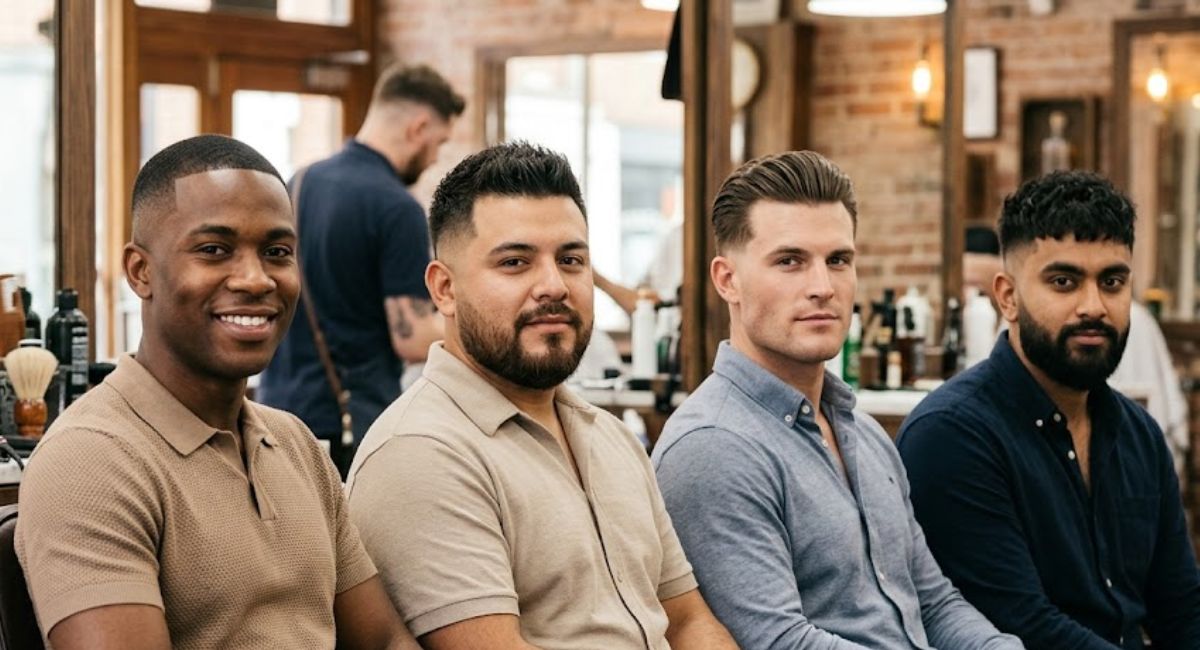
Choosing the Right Fade for Your Face Shape
This is the part most guys skip, and it’s the reason some fades look incredible on one person and completely off on another. Your face shape matters more than most people realise.
Men with a round or round-square face shape benefit from cuts that add height and angles. High fades, pompadours, quiffs, side parts, and faux hawks elongate the face and define features.
Men with a square face benefit from cuts that maintain strength while softening angles. Textured crops, quiffs, and high fades balance a strong jawline, while side parts or pompadours add height and refinement.
For heart-shaped faces, medium layers, side-swept bangs, and low fades with volume on top are ideal.
Oval faces are the lucky ones. Men with oval head shapes are fortunate, as most styles work well. If you have an oval face, you can experiment freely with any type of fade.
How to Tell Your Barber Exactly What You Want
One of the most common problems men face with fade haircuts is leaving the chair with something different from what they imagined. This mostly comes down to communication.
When it comes time to sit in the barber’s chair, it’s not as straightforward as simply asking for a fade. To ensure that you get the hairstyle you are after, it’s important that you understand two things: how short you want the back and sides, and how long you want the top.
Here’s a simple approach that works every time:
Start by naming the fade type: low, mid, or high. Then tell your barber the guard number you want at the shortest point. A number 1 is very close to the skin, a number 2 gives a little more length. Specify whether you want a skin fade or want to keep some hair at the base. Finally, describe the top. Do you want it textured, smooth, swept to one side, or left with volume?
The ultimate goal of a fade is to evenly distribute the gradual fall of the hair in a smooth transition, so blending a number 1 into a number 3 with some length on top is a simple enough instruction for any barber to follow.
Bring a photo. Seriously. Even experienced barbers appreciate the reference because terms like “low” and “tight” mean different things to different people.
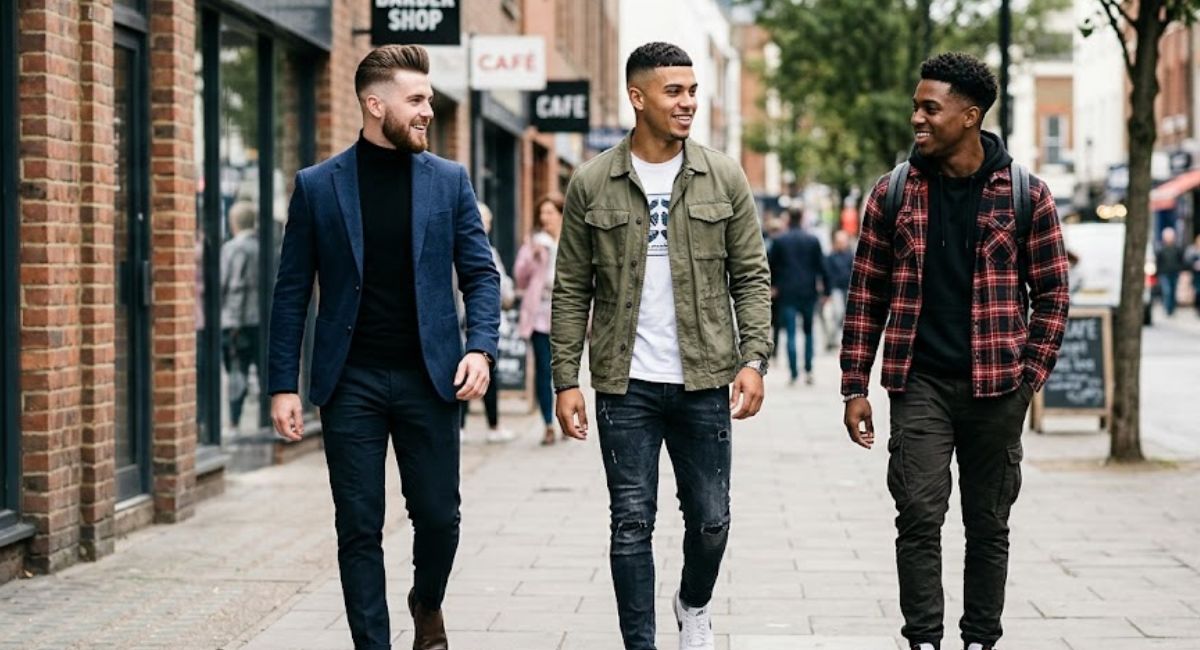
Best Styles to Pair With a Fade Haircut
A fade on its own is just the foundation. What goes on top is where your personality shows.
Textured Crop with Fade: One of the most popular combinations right now. The crop keeps the top short and manageable while the fade on the sides keeps everything sharp.
Pompadour Fade: Volume-heavy on top, tight on the sides. It works best with a high or mid fade and suits men with thicker hair.
Curly or Afro Top with Fade: Afro-textured fades are getting sharper, tighter, and even more customized. Natural curls with a tight skin fade create one of the most visually striking looks available.
Comb Over Fade: A side-swept top with a fade underneath. It looks polished and works in nearly every environment, professional or casual.
Faux Hawk Fade: Longer hair through the centre of the head with faded sides. It’s bold but not as extreme as a real mohawk.
How Often Do You Need to Maintain a Fade Haircut?
This is a question a lot of first-timers don’t think about until their fade starts growing out and looking blurry.
Most fade haircuts require a trim every two to three weeks to maintain sharp lines and a clean finish. Skin fades and high fades grow out faster because the contrast is more visible. Low fades and taper fades can last a little longer before the edges become noticeable.
If you want to stretch the time between cuts, ask your barber to avoid going too short at the base. A slightly longer fade grows out more gradually and holds its shape better for four weeks.
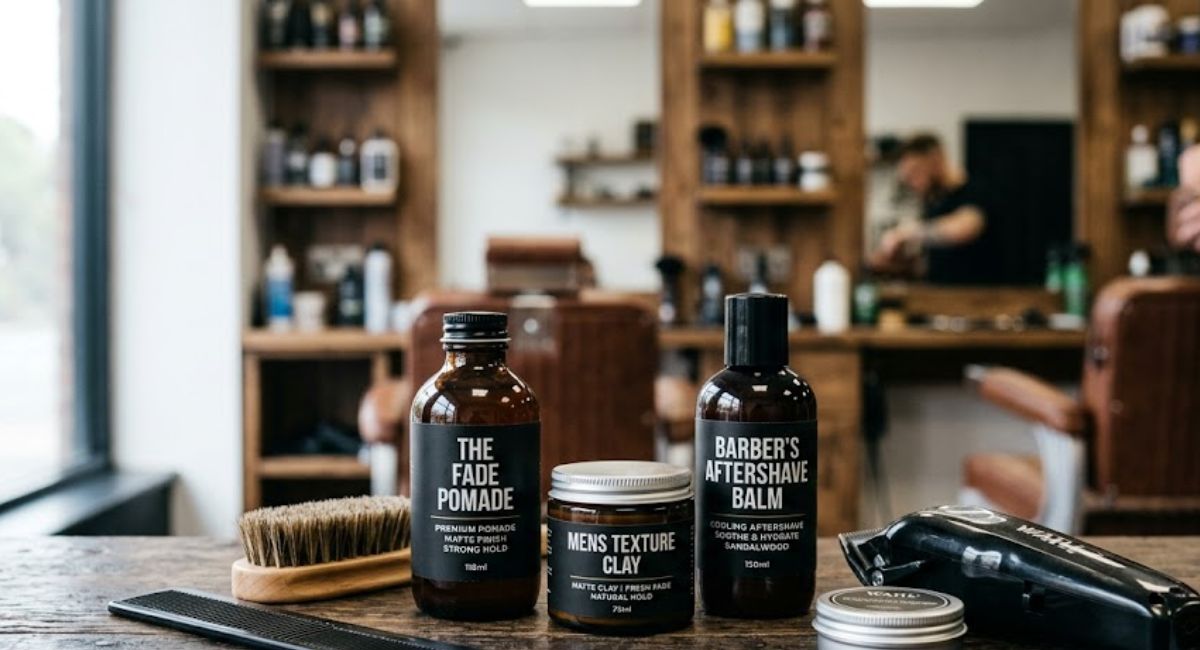
Products That Keep a Fade Looking Fresh
The right product makes a big difference, especially on the top section. Here’s what actually works:
Sea salt spray is ideal for texture and natural movement. Spray it on damp hair and let it dry for a relaxed, lived-in finish that still looks intentional.
Matte clay is a top pick for textured crops and messy styles. It gives you hold without shine, which keeps things looking modern rather than overly styled.
Pomade works best for comb-overs and pompadours. Water-based pomades are easier to wash out and give you a medium-to-high shine finish.
Styling powder adds volume and grip to fine or thin hair. Just a small amount worked into the roots makes a noticeable difference.
Avoid heavy waxes or thick gels on shorter styles. They tend to clump the hair together and erase the texture your barber worked to create.
Common Mistakes Men Make With Fade Haircuts
Going too extreme too soon is the biggest one. If you’ve never had a fade before, starting with a skin fade is a big commitment. Begin with a low or mid fade and adjust from there.
Not maintaining the cut is another. A fade that’s been left for six weeks stops looking like a fade and starts looking like a grow-out. Budget for regular barber visits if you want it to stay sharp.
Ignoring your hair texture is also common. A style that looks perfect on someone with straight hair can look completely different on wavy or curly hair. Talk to your barber about what’s realistic for your texture before deciding on a style.
FAQs About Men’s Fade Haircuts
1. What is the most popular men’s fade haircut right now? The low taper fade with a textured top is the most popular men’s haircut in 2026. It offers a clean, modern look with natural volume and works for most hair types.
2. How long does a fade haircut last before needing a touch-up? Most fades need a trim every two to three weeks. Skin fades may need attention even sooner to stay looking clean.
3. What’s the difference between a taper and a fade? A taper is a gradual length reduction that typically stays longer around the ears. A fade goes shorter, often down to the skin, with a more dramatic blend.
4. Can men with curly hair get a fade? Absolutely. Curly hair and fade cuts work beautifully together. Many barbers specialize in fades for natural textures, and the result is often more striking than on straight hair.
5. What should I tell my barber to get a fade? Tell them the type (low, mid, or high), the guard size at the shortest point, whether you want skin or guard-length at the base, and describe or show a photo of the top style you want.
6. Does a fade work for thinning hair? Yes, but carefully. A low fade draws less attention to the sides. Avoid very high contrasts if you’re dealing with visible thinning at the crown.
7. How do I know if a high fade or low fade suits me better? Face shape plays a big role. Round faces generally benefit from more height, making a higher fade a better choice. Longer faces do better with a low fade that adds width at the sides.
8. Is a skin fade harder to maintain? Yes. It grows out faster and the contrast between skin and hair becomes visible sooner. Plan for more frequent barber visits, usually every one to two weeks for the freshest look.
9. Can I get a fade at any barbershop? Most barbershops offer fade cuts, but quality varies significantly. Look for a barber with a portfolio showing clean blends and smooth gradients before committing.
10. What products should I use after getting a fade? Sea salt spray, matte clay, or a light pomade depending on your top style. Avoid heavy waxes that can weigh down shorter styles or clump textured hair.