Women’s fashion of the 40s tells a story that most people never expect. It was not just about pretty dresses and vintage hats. It was about survival, resourcefulness, and quiet rebellion stitched into every seam.
If you scroll through old photographs from this decade, you will notice something striking. The shoulders are strong. The waists are cinched. The whole silhouette looks like it means business. That is because it did.
I have spent years digging through old sewing patterns, wartime magazines, and thrift store racks trying to understand this era properly. What I found surprised me. The clothes women wore in the 1940s were shaped almost entirely by things happening far outside the fashion world, mainly World War II and its aftermath.
This guide walks you through everything that defined the decade, from fabric rationing to the New Look revolution, so you actually understand why the style looked the way it did, not just what it looked like.
Why Women’s Fashion of the 40s Split Into Two Very Different Eras
Most articles treat the 1940s as one single style. That is a mistake.
The truth is, women’s fashion of the 40s really breaks into two distinct chapters. The first half, roughly 1940 to 1945, was ruled by war. The second half, from 1946 onward, was a celebration of everything the war had taken away.
Understanding this split changes how you look at every dress, coat, and hat from the decade. A boxy 1942 suit and a full skirted 1948 gown look like they came from different planets, yet they are only six years apart.
The Wartime Years (1940 to 1945)
When World War II broke out, fabric became a controlled resource almost overnight. Wool, cotton, silk, and rayon were needed for uniforms, parachutes, and military supplies, not evening gowns.
In Britain, the government introduced the CC41 Utility Clothing Scheme. In the United States, the War Production Board issued Limitation Order L85. Both restricted how much fabric a garment could use and banned decorative extras like patch pockets, wide belts, and puffed sleeves.
Women adapted quickly. The phrase “make do and mend” became a household motto. Old dresses were unpicked and resewn. Men’s suits left behind by soldiers were tailored into women’s jackets. Stockings became so scarce that some women drew a fake seam line up the back of their bare legs with eyebrow pencil.
The Postwar Boom (1946 to 1949)
Once the war ended, something shifted almost immediately. Women were tired of squared shoulders and rationed hemlines. They wanted color, volume, and softness again.
In 1947, Christian Dior launched his now legendary New Look collection in Paris. It brought back a dramatically feminine silhouette with a nipped waist and a full skirt that could use up to fifteen yards of fabric. To women who had spent years stretching every scrap of material, this was almost shocking.
Not everyone welcomed it. Some critics called it wasteful. Others worried it would push women back into a purely decorative role after they had spent the war working in factories and offices. But the style caught on fast, and by 1949 it had become the dominant look, carrying straight into the 1950s.
The Signature Silhouette of the 1940s
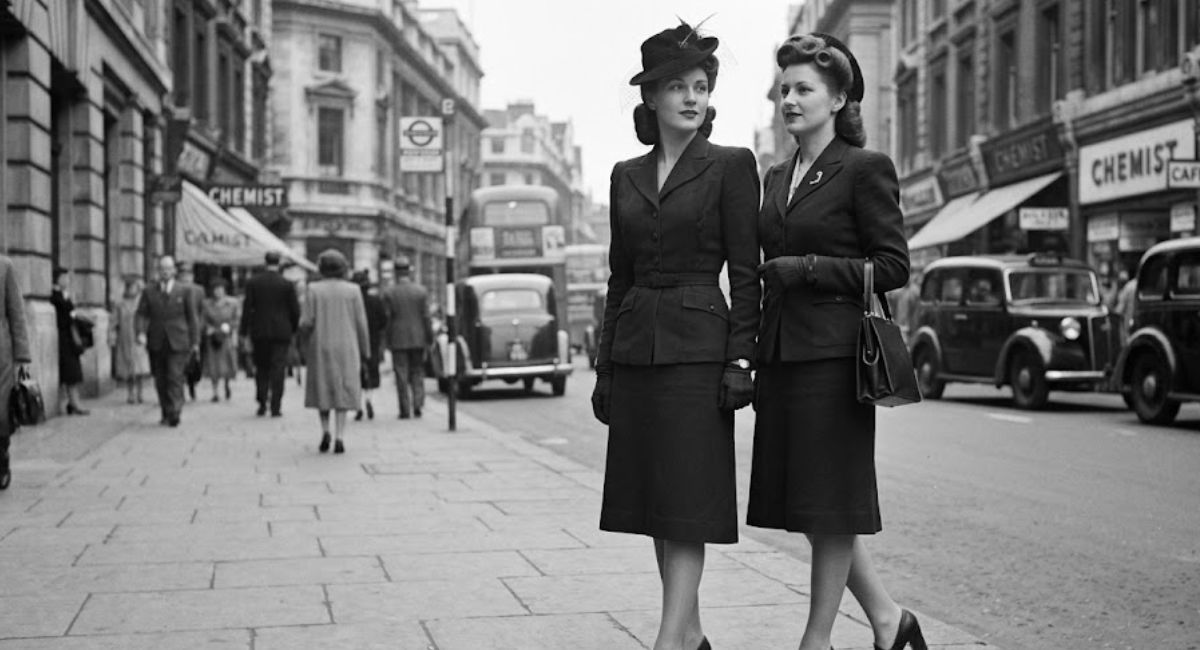
If you had to describe women’s fashion of the 40s in one sentence, it would be this: strong shoulders, a defined waist, and a knee length skirt that moved with purpose.
This silhouette was consistent across day dresses, suits, and coats. Here is what defined it.
- Padded, squared shoulders that gave outfits a confident, almost military posture
- A nipped in waist, usually sitting at the natural waistline, often emphasized with a belt
- Knee length hemlines, either straight cut or a soft A line, chosen for practicality as much as style
- Structured seams and darts instead of loose draping, since tailoring stretched fabric further than flowing cuts
- Muted, practical colors early on, like navy, olive, brown, and gray, followed by softer pastels once the war ended
This was a look built for women who were working, commuting, and managing households largely on their own. It had to hold up under real life, not just look good in a photograph.
Everyday Wardrobe Staples
Day Dresses and the Shirtwaist Dress
The shirtwaist dress was the true workhorse of the decade. Modeled after a men’s button down shirt, it had a fitted bodice, a defined waist, and a skirt that fell just below the knee. Women wore it for shopping, errands, visiting friends, or simple office work.
It was practical for a reason beyond looks. You could slip it on quickly with no help, which mattered when women were juggling factory shifts, childcare, and household duties all at once.
The Swing Dress
The swing dress offered a bit more movement. It had a fitted top and a flared skirt that swung when you walked or danced, which made it a favorite for social evenings and swing dancing halls. Compared to the boxier utility styles, it felt lighter and more playful.
Tailored Suits and Trousers
Suits were everywhere in women’s fashion of the 40s, and they carried real symbolic weight. A tailored jacket paired with a matching skirt or trousers said something about capability and independence, especially as more women entered offices and factories.
Trousers themselves were a genuine turning point. Before the war, it was still unusual for a woman to wear pants in public. Once women began filling factory jobs left vacant by men who had gone to fight, wide leg, high waisted trousers became a practical necessity. Rosie the Riveter, the wartime symbol of women in industrial work, is remembered in coveralls and rolled up sleeves, not a dress.
Actresses like Katharine Hepburn helped push trousers into everyday acceptance too. Her off screen wardrobe of high waisted slacks and button down shirts was unusual for the time, but it influenced what regular women felt comfortable wearing.
Coats and Outerwear
Early 1940s coats were plain and square, usually with a few large buttons and simple necklines. They were long, often reaching the knee, since keeping warm without wasting fabric was the priority.
Shorter box coats, cut wide at the hip like a cape, offered another popular option. Fur trims carried over from the 1930s remained popular for those who could afford them, particularly for formal wear.
Evening Wear and Special Occasions
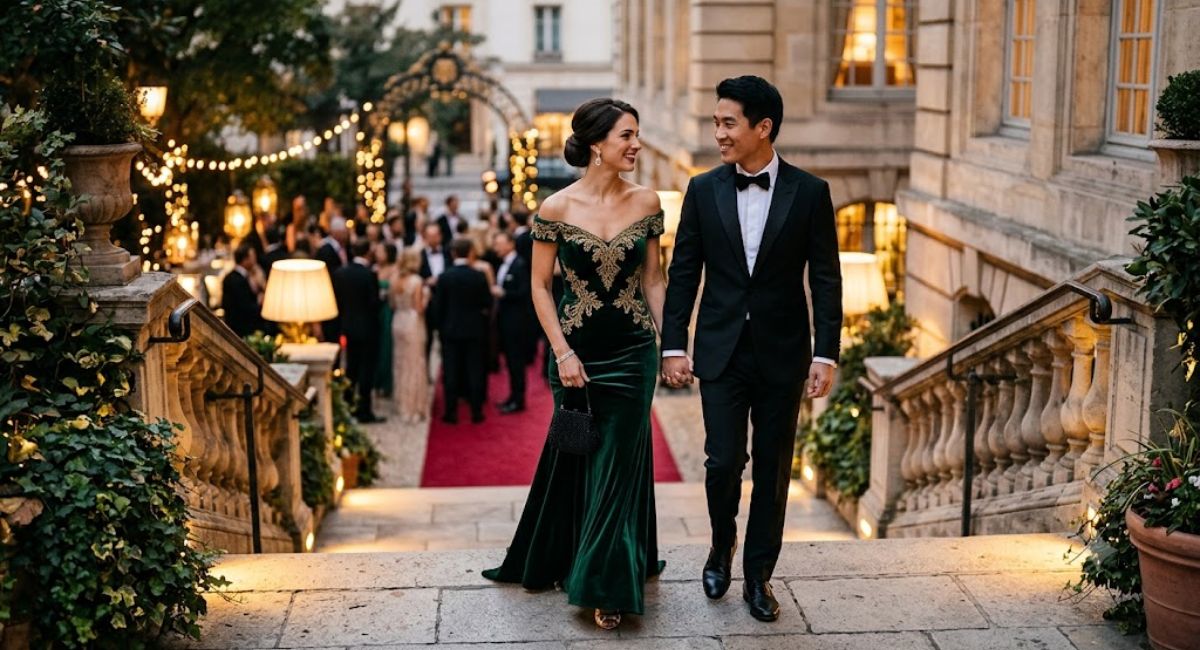
Not everything about women’s fashion of the 40s was rationed and practical. Evening wear still carried real glamour, especially for those with access to Hollywood style inspiration.
Full length gowns, often with fitted bodices and flowing skirts, remained popular for formal events throughout the decade. Once postwar fabric restrictions lifted, evening gowns became fuller and more decadent, echoing the New Look’s dramatic volume.
Wedding dresses tell an interesting story here too. Many brides during the war years wore repurposed gowns passed down from mothers or grandmothers, since new fabric for a one time occasion dress felt indulgent when materials were rationed. It was common practical thinking dressed up as tradition.
Accessories That Completed the Look
A 1940s outfit was never really finished without the right accessories, and this is a detail plenty of guides gloss over.
- Hats ranged from fedoras and berets to felt hats and small fascinators, often tilted at an angle for a bit of personality
- Gloves were common for semi-formal outings like lunch or shopping, usually in neutral colors matched to one other accessory
- Handbags stayed flat and structured, practical rather than oversized
- Shoes were sturdy and chunky compared to the delicate 1930s styles, with wedge heels becoming especially popular
- Seamed stockings were treasured, and when they were unavailable, some women drew a fake seam down the back of their leg with an eyebrow pencil
Hairstyles also played a huge role in completing the era’s look. Victory rolls, soft waves, and voluminous curls framed the face and paired naturally with the structured shoulders of the clothing.
Colors and Fabrics of the Decade
Color choices in women’s fashion of the 40s tell you almost exactly which half of the decade you are looking at.
During the war years, colors leaned muted and serious. Navy, olive, brown, gray, and burgundy dominated because they were practical, hid wear well, and matched the somber mood of rationing.
After the war ended, women were genuinely hungry for color again. Softer pastels returned for daywear, and richer, more saturated shades came back for formal occasions. It was almost a visual sigh of relief after years of restraint.
Fabric availability shaped everything as well. Wool, cotton, and rayon were common but limited, so designers and home sewers alike had to be clever with cutting patterns to avoid waste. This is part of why fitted, structured tailoring worked so well. It used fabric efficiently while still looking intentional and polished.
How to Recreate Women’s Fashion of the 40s Today
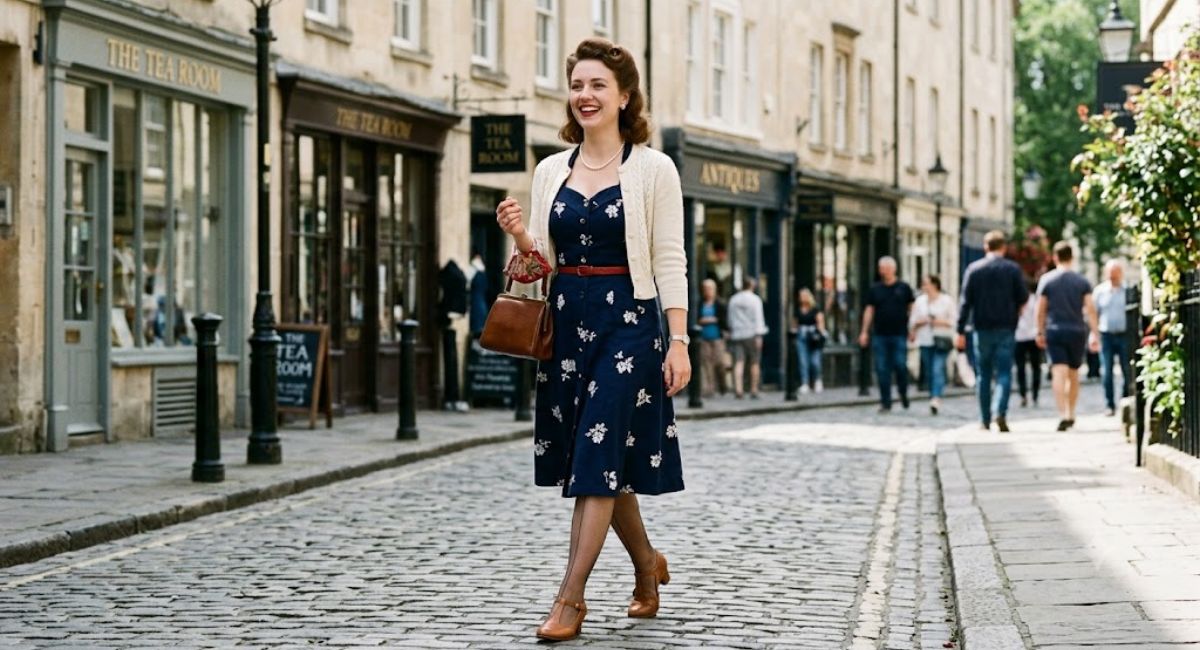
You do not need a time machine or a museum budget to bring this style into your modern wardrobe. Here is how I would approach it if I were building a 1940s inspired outfit from scratch.
- Start with a fitted, high waisted piece. A pencil skirt or tailored trousers instantly nods to the era’s silhouette.
- Add structure on top. Look for blazers or blouses with even slight shoulder definition. You do not need dramatic pads, just a hint of structure.
- Choose a knee length hemline. This one detail does more to nail the decade than almost anything else.
- Pick your era. Muted tones read as early 1940s wartime style. Fuller skirts and richer colors lean postwar New Look.
- Finish with accessories. A structured handbag, a simple hat, and a red lip pull the whole outfit together without much effort.
Thrift stores, vintage specialty shops, and reproduction clothing brands are honestly the easiest way to source pieces. You rarely need to sew from scratch unless you want an exact museum accurate recreation.
Common Mistakes People Make When Dressing in 1940s Style
I have seen this go wrong more often than you would think, so a few honest notes here.
Going too costume like is the biggest issue. Real 1940s fashion was wearable and lived in, not exaggerated. If your outfit looks like it belongs in a stage play rather than a Tuesday commute, pull back on the accessories.
Mixing eras is another common slip. A voluminous New Look skirt paired with 1930s bias cut styling reads as confused rather than intentional. Decide which half of the decade you are channeling and stay consistent.
Ignoring the waistline is a mistake too. The nipped in waist is really the anchor of the entire silhouette. Skip it, and the whole look loses its structure.
Final Thoughts on This Iconic Decade
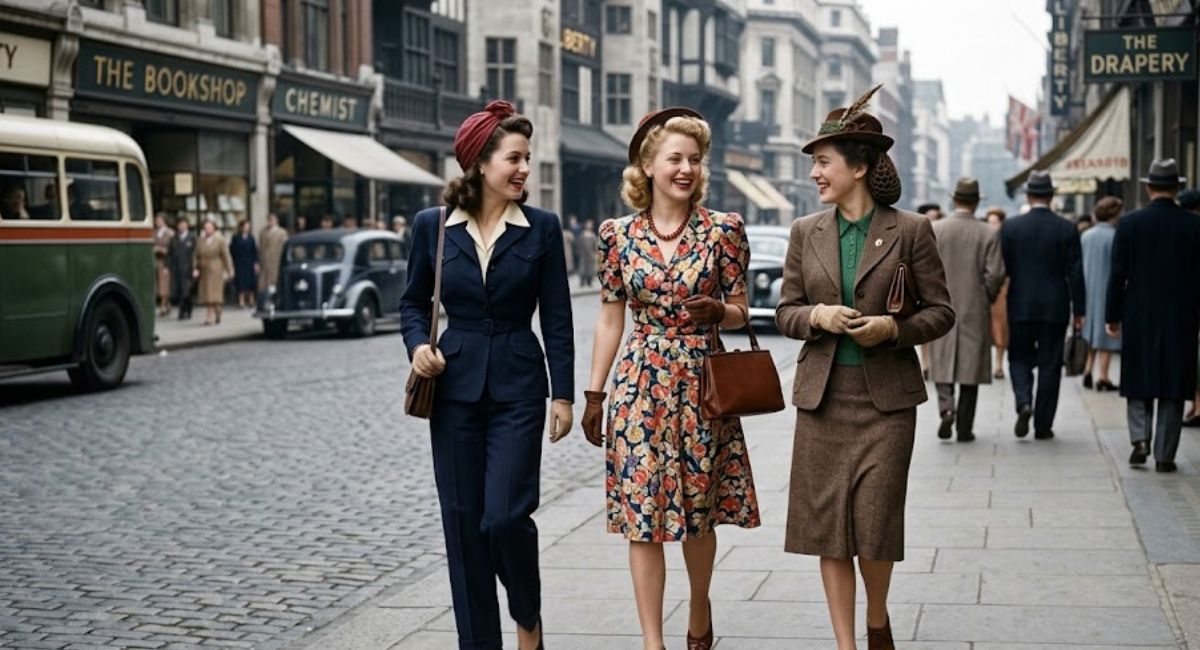
Women’s fashion of the 40s remains one of the most influential style periods in modern history, and honestly, it earns that reputation. It managed to be practical during genuine hardship and then turn around and celebrate femininity the moment circumstances allowed.
What strikes me most, looking back, is how much the clothing reflected real life. These were not runway fantasies. They were outfits built for women running households, working factory shifts, and eventually stepping into a more independent postwar world. That honesty is exactly why the look still feels timeless today.
FAQs
1. What defined women’s fashion of the 40s? A structured silhouette with padded shoulders, a nipped in waist, and knee length skirts, shaped heavily by World War II fabric rationing and later softened by postwar glamour.
2. Why did 1940s clothing look so structured and boxy? Wartime fabric rationing under schemes like CC41 and Limitation Order L85 restricted embellishments and encouraged fabric saving tailored cuts.
3. What is the New Look and why does it matter? Christian Dior’s 1947 New Look brought back full skirts and a dramatically feminine silhouette after years of wartime austerity, defining postwar fashion.
4. Did women really wear trousers in the 1940s? Yes. Trousers became common for factory and industrial work as women filled roles left vacant by men who had gone to war, though they were still unusual in casual social settings.
5. What colors were popular in 1940s women’s fashion? Muted tones like navy, olive, brown, and gray dominated during the war, while softer pastels and richer shades returned once fabric restrictions lifted.
6. What shoes did women wear in the 1940s? Sturdy, chunky shoes were common, with wedge heels becoming especially popular compared to the more delicate styles of the 1930s.
7. How can I recreate 1940s fashion with modern clothing? Look for high waisted, fitted pieces with a knee length hemline, add slight shoulder structure, and finish with a simple hat or structured handbag.
8. What is a shirtwaist dress? A button down dress styled after a men’s shirt, with a fitted bodice and knee length skirt, worn as an everyday staple throughout the decade.