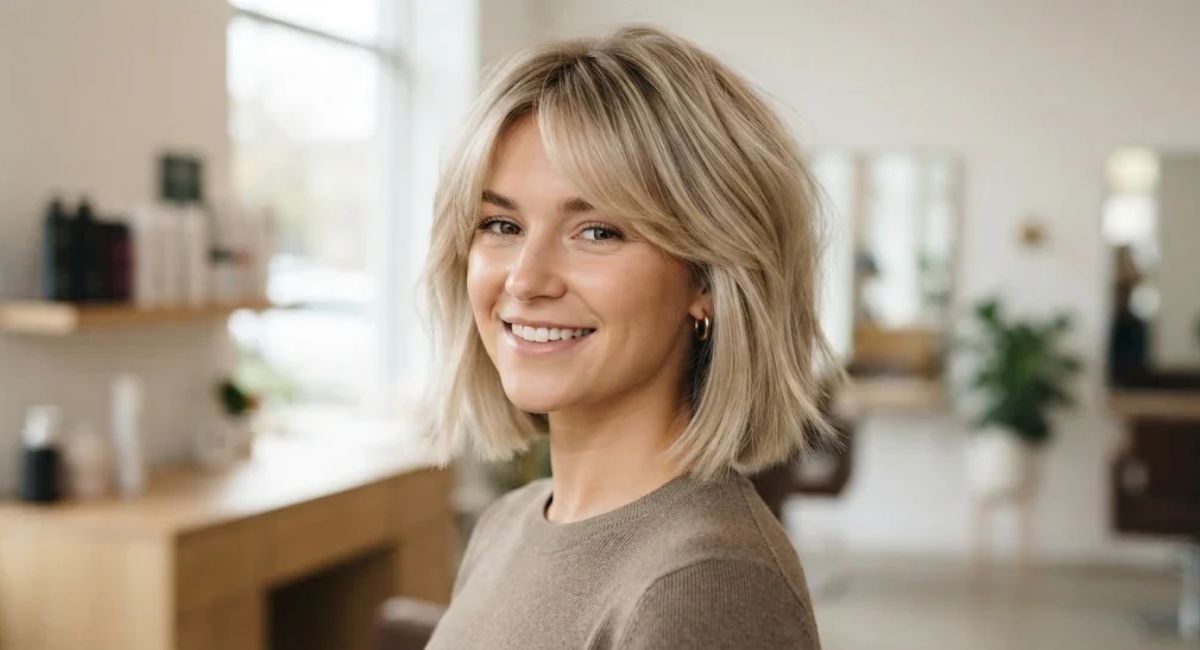
Fine hair can be beautiful, soft, and incredibly versatile, but finding a haircut that gives it enough body is not always easy. Some styles lose their shape within hours, while others make the ends look thinner than they really are. If you have been thinking about going shorter, bob haircuts for fine hair offer an excellent opportunity to create a more structured, fuller-looking hairstyle without relying on complicated styling routines.
The secret is choosing a bob that works with your natural hair texture rather than fighting against it. A clean, blunt perimeter can make the ends appear denser, while carefully placed layers introduce movement without removing too much weight. Even small changes, such as adjusting the length around your jawline or adding a soft fringe, can completely change how a haircut frames your face.
There is no single bob that works for every woman with fine hair. Some people look fantastic with a sharp chin-length cut, while others prefer a longer shape that provides more styling flexibility. Your natural texture, hair density, face shape, lifestyle, and willingness to maintain the haircut all matter.
Whether you prefer something polished and sophisticated or relaxed and slightly messy, these 25 bob haircut ideas will help you find a style worth discussing with your hairstylist.
Understanding Why Bob Haircuts Work for Fine Hair
Before choosing a particular style, it helps to understand what makes a bob different from longer hairstyles.
Fine hair describes the diameter of individual hair strands. Thin hair usually describes the overall density, meaning how many strands grow across the scalp. Someone can have fine hair with plenty of density, or fine hair with relatively low density.
This distinction matters because the best haircut depends on what you are trying to achieve.
When fine hair is left very long, its weight can sometimes pull the roots downward and make the hairstyle appear flatter. Shorter lengths can reduce that weight and allow the hair to hold its shape more easily.
Another advantage is the perimeter. A bob with a clean, relatively solid bottom line can make the ends look visually fuller. Excessive layering, on the other hand, may remove too much of the hair’s existing weight.
That does not mean layers are always a bad idea. Strategically placed layers can create movement and make a haircut feel less flat. The important part is knowing where to place them and how much weight to remove.
25 Bob Haircuts for Fine Hair Worth Trying in 2026
1. Classic Blunt Bob
The classic blunt bob is one of the strongest starting points if your main concern is making fine hair appear thicker.
This haircut features a relatively even perimeter, usually sitting somewhere between the chin and shoulders. Rather than creating lots of short, disconnected layers, the stylist maintains a clean bottom edge that gives the hair a stronger visual outline.
The result is a polished hairstyle that looks particularly attractive on naturally straight hair. A middle part creates a symmetrical appearance, while a slightly off-centre part can introduce a little more movement.
Ask your stylist to preserve density through the ends and avoid excessive thinning with scissors or a razor.
Best for: Fine, straight hair and women who prefer clean, structured hairstyles.
2. Chin-Length Bob
A chin-length bob brings attention to the jawline and creates a noticeably shorter silhouette.
Its biggest advantage is that it removes much of the length that can weigh fine strands down. The haircut can be worn with a precise outline or a slightly softer finish, depending on your preference.
For a fuller-looking result, ask for a solid perimeter rather than extremely wispy ends. A gentle inward bend created with a round brush can make the shape look especially elegant.
This length is also a useful option if you want a noticeable transformation without choosing a very short pixie-style haircut.
Best for: Women who enjoy shorter hairstyles and want a defined face-framing shape.
3. French Bob with Soft Bangs
The French bob combines a shorter length with a relaxed, slightly undone finish.
Typically sitting around the jawline or just below it, this haircut looks particularly appealing with soft bangs that blend into the sides. The fringe introduces another visual element without requiring heavy layering throughout the rest of the hair.
Fine straight hair can benefit from the clean outline, while naturally wavy hair creates a more casual interpretation.
One thing to consider is fringe maintenance. Bangs may need trimming more frequently than the rest of the haircut, particularly if you prefer them above your eyebrows.
Best for: Women who love understated, chic hairstyles with a little personality.
4. A-Line Bob
An A-line bob features a shorter back that gradually becomes longer towards the front.
This angled silhouette creates a distinctive shape without requiring complicated styling. The shorter back can be gently graduated to encourage lift around the nape, while the longer front sections frame the face.
For fine hair, the graduation should be carefully controlled. Too much stacking can leave the back looking sparse, especially if your overall hair density is low.
A slightly angled version is an excellent choice for someone who wants something more interesting than a traditional one-length bob.
Best for: Fine straight hair and women who enjoy structured, face-framing haircuts.
5. Soft Layered Bob
Not every bob needs a completely blunt finish. A soft layered bob introduces subtle movement while keeping enough weight through the ends.
Instead of adding short layers everywhere, your stylist can incorporate longer, carefully blended sections that allow the hair to move naturally.
This approach works particularly well for women whose fine hair tends to sit flat around the sides of the face.
A small amount of lightweight styling mousse can help the layers maintain their shape without making the hair feel stiff.
Best for: Fine hair that needs movement but still requires a fuller-looking outline.
6. Textured Bob
A textured bob is a great option if your hair looks too flat when worn in a perfectly straight style.
The haircut uses subtle variations in length to create a softer, less uniform appearance. It can be especially attractive on naturally wavy hair because the existing texture gives the shape additional movement.
The important distinction is between controlled texture and excessive thinning. Fine hair generally benefits from a stylist who understands how to create movement without removing too much density.
For everyday styling, a lightweight texturizing spray can help define the ends.
Best for: Fine wavy hair and women who prefer relaxed, modern hairstyles.
7. Shoulder-Length Blunt Lob
If cutting your hair short feels like too much of a commitment, the blunt long bob is worth considering.
Often called a lob, this hairstyle sits around the shoulders or collarbone. It retains more length than a traditional bob while maintaining a relatively strong bottom outline.
One advantage is versatility. You can wear it straight, create loose waves, tuck one side behind your ear, or pull it into a small ponytail.
For fine hair, keeping the ends relatively full is more important than introducing lots of layers.
Best for: Women transitioning from long hair to a shorter style.
8. Inverted Bob
An inverted bob has a more pronounced difference between the back and front sections.
The back is shorter and may feature graduated layers, while the front gradually extends towards the jawline or shoulders. This creates a curved silhouette that looks more sculpted than a traditional bob.
For fine hair, a restrained version can introduce shape around the crown and nape without sacrificing too much density.
It is worth discussing the amount of graduation with your stylist before committing, particularly if your hair is naturally sparse around the back.
Best for: Women who prefer a defined, modern haircut with noticeable shape.
9. Side-Parted Bob
Sometimes the simplest change can make a hairstyle look completely different.
A side-parted bob shifts the hair away from its usual centre position, creating an asymmetrical distribution around the face. This can make the crown appear more lifted, especially when the hair is blow-dried in the opposite direction before settling into the part.
The haircut itself can be blunt, layered, or slightly textured.
A deep side part creates a more dramatic effect, while a subtle side part looks softer and more natural.
Best for: Fine hair that tends to lie flat at the crown.
10. Wavy Bob
A wavy bob is ideal for anyone who wants a softer alternative to a sleek, straight haircut.
Loose waves create variation throughout the hairstyle, helping the hair look more dimensional. You do not need tight curls or elaborate styling to achieve the effect.
If your hair already has a natural wave, ask your stylist to shape the cut around your existing texture. This can reduce the amount of heat styling required.
For naturally straight hair, a curling wand or flat iron can create a few relaxed bends. Avoid making every section identical; a slightly irregular finish often looks more natural.
Best for: Fine hair with natural movement or women who enjoy softly styled waves.
11. Italian Bob
The Italian bob offers a fuller, more rounded silhouette than many traditional French-inspired versions.
It usually sits around the jawline or slightly below, with enough length to tuck behind the ears or create a soft outward movement.
The overall shape feels polished without being overly rigid. This makes it a useful option for women who want a sophisticated hairstyle that can transition from casual daytime outfits to formal occasions.
For fine hair, ask your stylist to maintain fullness through the ends and use minimal layering.
Best for: Fine hair that needs a polished shape with styling versatility.
12. Bob with Curtain Bangs
Curtain bangs create a soft frame around the forehead and blend into the sides of the haircut.
When paired with a bob, they can add visual interest around the face without requiring a dramatic change in overall length.
The fringe is generally parted near the centre, with the sides gradually becoming longer. This makes it easier to style than a heavy, straight-across fringe.
If your hair is especially fine around the hairline, discuss whether you have enough density to support the bangs you want. A lighter fringe may be more suitable.
Best for: Women who want face-framing detail without committing to full bangs.
13. Micro Bob
The micro bob is a particularly short version of the traditional bob, often sitting around the ears or upper jawline.
Its compact length gives the haircut a strong, noticeable shape. It can look especially striking with a clean perimeter and a slightly rounded finish.
One advantage for fine hair is that there is less length to weigh down the style. However, the shorter silhouette makes the haircut’s shape more noticeable, so precision matters.
Consider how the cut will look with your natural texture before choosing an extremely short version.
Best for: Women who enjoy bold, short hairstyles and are comfortable with regular trims.
14. Feathered Bob
A feathered bob introduces soft, flowing movement around the ends and sides.
Unlike heavy, choppy layering, the feathering should be controlled and blended. The aim is to make the haircut appear lighter and more dynamic without creating an overly thin outline.
It can work particularly well for fine hair with a slight natural bend.
A round brush helps create the characteristic outward or inward movement, depending on how the ends are styled.
Best for: Women who want a softer haircut with movement around the face.
15. Stacked Bob
A stacked bob features graduated sections at the back that create a rounded shape around the nape.
The front can remain relatively long, creating a balanced contrast between the shorter back and longer sides.
This haircut can provide built-in structure, which is useful for fine hair that struggles to hold a rounded silhouette.
However, stacking should be tailored to the hair’s actual density. Too many short layers can make the back appear thin rather than full.
Best for: Fine hair that needs additional shape around the back of the head.
16. Asymmetrical Bob
An asymmetrical bob features sides that are intentionally different in length.
One side may sit around the jawline, while the other extends slightly lower. The difference can be subtle or dramatic, depending on how much contrast you prefer.
This creates visual interest without depending on heavy layers or elaborate styling.
A smooth finish makes the asymmetrical shape more noticeable, while soft waves create a relaxed interpretation.
Best for: Women who want a distinctive haircut that feels different from a traditional bob.
17. Airy Bob
The airy bob is designed to feel light, soft, and naturally moving.
Rather than relying on a rigid outline, the haircut uses restrained internal shaping and gentle texture to prevent the hairstyle from looking flat.
Fine hair can benefit from this approach when the stylist carefully preserves enough weight around the perimeter.
It is particularly attractive with a slightly tousled finish and a natural-looking part.
Use a lightweight root-lifting product rather than heavy creams or oils.
Best for: Fine hair that looks better with movement than with a completely sleek finish.
18. Bob with Wispy Bangs
Wispy bangs offer a lighter alternative to thick, full fringe.
They create a delicate frame around the forehead while allowing some natural separation between the strands.
When combined with a chin-length or shoulder-length bob, the result feels relaxed and youthful without looking overly styled.
The fringe should be designed around your actual hairline. If the front sections are extremely fine, a very sparse fringe may not deliver the fullness you expect.
Best for: Women who like soft fringe styles and subtle face-framing details.
19. Rounded Bob
A rounded bob features a curved silhouette that follows the natural shape of the head.
The ends are generally shaped to create a gentle inward curve, giving the haircut a neat and balanced appearance.
For fine hair, this can be a useful option because the shape looks intentional even without excessive layers.
The style can be worn with a centre part or a slightly off-centre part, depending on the amount of volume you want around the crown.
A round-brush blow-dry helps maintain the curved outline.
Best for: Fine straight hair and women who prefer polished, timeless hairstyles.
20. Shaggy Bob
A shaggy bob brings a more relaxed personality to the traditional haircut.
It features visible texture, softer layers, and a slightly undone finish. The shape can be particularly attractive when fine hair has a natural wave.
However, this is one style where the cutting technique makes a major difference. Heavy, disconnected layers may make already sparse ends look thinner.
A softer shaggy interpretation with longer layers is often a better starting point.
If you enjoy this aesthetic, you can also explore DailyFeedia’s guide to shaggy bob hairstyles.
Best for: Fine wavy hair and women who prefer effortless, textured hairstyles.
21. Box Bob
The box bob is defined by its strong, relatively square silhouette.
It generally features a clean outline with minimal layering, creating a structured appearance around the jawline.
This shape can be particularly useful for fine hair because it keeps the haircut visually solid rather than allowing the ends to become overly wispy.
It looks excellent with a straight finish, although a slight bend at the ends can soften the overall effect.
Best for: Fine straight hair and anyone who loves geometric, modern haircuts.
22. Bell-Shaped Bob
A bell-shaped bob has a softly rounded outline, with the hair curving around the lower part of the head.
The shape can create a fuller-looking appearance around the jawline while keeping the overall hairstyle relatively compact.
Some versions use gentle graduation or subtle front shaping to achieve the curved finish.
For fine hair, the key is maintaining a balanced silhouette without removing too much weight from the sides.
This style is particularly appealing when paired with a smooth blow-dry.
Best for: Women who prefer rounded hairstyles with a polished finish.
23. Bixie Bob
The bixie combines elements of a bob and a pixie haircut.
It is shorter and more textured than a conventional bob, but it retains enough length around the sides and back to frame the face.
This makes it an interesting choice if you want to experiment with shorter hair without going for a traditional pixie.
Fine hair can look particularly lively in this shape because the shorter sections are easier to lift and arrange.
However, it may require more frequent styling to maintain the intended texture.
Best for: Women who want a short, modern haircut with plenty of personality.
24. Collarbone Bob with Face-Framing Layers
This longer bob sits around the collarbone and features subtle layers near the front.
The extra length provides flexibility, while the face-framing sections prevent the hairstyle from looking too heavy or uniform.
It is especially useful for women who want a shorter haircut but still enjoy tying their hair back occasionally.
Ask for the front layers to blend gradually into the rest of the cut. Abruptly short sections can make fine hair look disconnected.
Best for: Fine hair that needs a longer, versatile haircut.
25. Natural-Texture Bob
The natural-texture bob is less about following a particular silhouette and more about designing the haircut around your own hair.
For naturally wavy hair, this may involve subtle layers that allow the waves to form without becoming bulky. For straight hair, a stronger perimeter may be more appropriate.
The goal is to avoid forcing your hair into a shape that requires extensive heat styling every morning.
This can be one of the most practical choices for women who prefer a low-maintenance routine.
Best for: Women who want a haircut that works with their natural texture rather than against it.
How to Choose the Right Bob for Your Fine Hair
Looking at hairstyle inspiration is a useful starting point, but choosing the right cut requires a little more thought.
Consider Your Hair Density
If you have fine strands but plenty of hair, you may be able to experiment with soft layers, curtain bangs, and textured shapes.
If your hair is both fine and low in density, preserving the ends becomes more important. A blunt bob, box bob, or carefully shaped lob may provide the stronger outline you want.
Think About Your Natural Texture
Straight hair often displays the perimeter of a haircut very clearly. This makes precise blunt shapes particularly attractive.
Wavy hair can benefit from controlled layers that allow the natural movement to develop.
Curly fine hair requires a different approach. Your stylist should account for shrinkage, curl pattern, and how the hair sits when dry.
Choose a Length You Can Maintain
Shorter bobs can feel lighter and easier to style, but they may require more frequent trims to maintain their exact shape.
A collarbone bob gives you more flexibility and is generally easier to tie back.
Think about your daily routine before deciding.
Take Your Face Shape into Account
Face shape can help guide the length and framing of your bob, but it should not be treated as a strict rule.
A jaw-length bob can highlight the jawline, while longer front sections can create a softer frame around the cheeks.
Curtain bangs and side parts can also change how the haircut balances your facial features.
The best approach is to choose a silhouette that makes you feel comfortable rather than following rigid hairstyle rules.
Blunt Bob vs Layered Bob: Which Is Better for Fine Hair?
This is one of the most important decisions to make before booking your appointment.
A blunt bob keeps the bottom edge relatively solid. This creates the appearance of thicker ends and is often a reliable option for fine or low-density hair.
A layered bob introduces movement and can help prevent the haircut from looking flat. However, too many short layers may reduce the visual fullness of the perimeter.
Here is a simple comparison:
| Feature | Blunt Bob | Layered Bob |
| Overall appearance | Clean and structured | Soft and textured |
| End density | Stronger visual outline | Depends on layering |
| Movement | More controlled | More natural movement |
| Styling | Sleek or softly curved | Tousled or blow-dried |
| Suitable texture | Particularly straight hair | Often useful for wavy hair |
| Main consideration | Can look flat without root lift | Excessive layers may look sparse |
Neither option is automatically better for everyone.
If your priority is fuller-looking ends, start with a blunt shape. If your hair already has enough density but needs movement, consider subtle layers.
How to Style a Bob for Fuller-Looking Hair
The right haircut makes a difference, but styling also affects how much volume your bob appears to have.
Start with Lightweight Products
Fine hair can become weighed down quickly by heavy creams, oils, and styling products.
Try a lightweight volumizing mousse or root-lifting spray on damp hair. Concentrate the product near the roots rather than applying large amounts throughout the length.
Blow-Dry the Roots First
If you want additional lift, begin by directing airflow towards the roots.
Use your fingers to lift sections away from the scalp. Once the roots are mostly dry, use a round brush to shape the ends.
This technique helps create a more balanced finish without requiring excessive heat.
Experiment with Your Parting
A middle part creates a symmetrical look, but it is not your only option.
Changing to a slightly off-centre or deeper side part can introduce visible lift and change the overall balance of the haircut.
You can even switch your part occasionally to prevent your hairstyle from looking exactly the same every day.
Add Soft Waves
Loose bends create visual variation throughout the hair.
You do not need tight curls. A few gentle waves around the mid-lengths and ends can make a bob look more dimensional.
Always use a suitable heat protectant before using hot tools.
Avoid Overloading the Ends
Heavy serums and oils can make fine hair appear flatter, particularly when applied close to the roots.
If you need extra smoothness, use a very small amount through the ends only.
How Often Should You Trim a Bob?
Maintenance depends on the haircut’s length, shape, and how quickly your hair grows.
A sharp, short bob may need more frequent appointments to keep its outline looking precise. A longer bob with softer shaping usually offers more flexibility between visits.
As a practical starting point:
- Short, precise bobs: Consider a trim every 4–6 weeks.
- Classic chin-length bobs: Around 6–8 weeks may work.
- Longer, softer lobs: Approximately 8–10 weeks may be manageable.
These are general scheduling suggestions rather than strict rules. Your stylist can recommend a suitable interval based on your haircut.
If you are growing your bob out, ask for small maintenance trims rather than repeatedly changing the overall shape.
Common Bob Haircut Mistakes to Avoid
Even a beautiful haircut can disappoint if its structure does not suit your hair.
Choosing excessive layers: Too many short layers can remove the weight that helps fine hair look fuller.
Keeping too much length without considering weight: Some fine hair becomes flatter when it grows beyond a comfortable length.
Requesting a style without discussing density: Fine hair and low-density hair are not identical. Your stylist should understand the difference.
Using heavy styling products: Too much product can leave fine strands looking greasy or flat.
Ignoring your natural texture: A haircut that only looks good after extensive heat styling may not suit your everyday routine.
Choosing a picture without considering its styling: Salon inspiration photographs often involve professional blowouts, extensions, or carefully arranged lighting. Discuss what the haircut will realistically look like on your own hair.
What to Tell Your Hairstylist Before Getting a Bob
Taking inspiration photographs to your appointment is helpful, but explaining what you want is equally important.
Instead of simply saying you want a bob, discuss the details that matter.
You can ask:
- Can we keep the ends looking full?
- Would a blunt perimeter work better for my hair density?
- How much layering can my hair handle?
- Would a chin-length or collarbone-length cut suit my natural texture?
- Can we create volume without requiring daily heat styling?
- How will this haircut grow out?
- How frequently will I need maintenance appointments?
It is also worth showing your stylist photographs of the haircut from multiple angles.
A front-facing picture may look beautiful, but the back and side profiles determine how the overall shape will work.
Most importantly, be honest about how much time you spend styling your hair. The perfect haircut is not simply the one that looks attractive in a photograph. It is the one you can realistically enjoy wearing.
Frequently Asked Questions About Bob Haircuts for Fine Hair
1. What is the best bob haircut for fine hair?
A classic blunt bob is an excellent starting point because its solid perimeter creates the appearance of fuller ends. However, a soft layered bob or textured lob may work better if your hair needs additional movement.
2. Are short bob haircuts good for fine hair?
Yes. Shorter bob haircuts can reduce the weight pulling on fine strands and make the hairstyle easier to shape. Chin-length and jaw-length styles are popular options, although the best length depends on your hair density and natural texture.
3. Should fine hair have layers in a bob?
Fine hair can have layers, but they should be carefully planned. Longer, subtle layers can introduce movement, while excessive short layers may make the ends appear thinner.
4. Is a blunt bob better than a layered bob for thin hair?
A blunt bob is often a safer choice when the priority is creating the appearance of density. A layered bob can still work beautifully when the layers are restrained and the perimeter remains relatively full.
5. Does a bob make fine hair look thicker?
A well-designed bob can create the visual impression of thicker hair. Shorter lengths and a solid outline can help the ends look fuller, although a haircut cannot physically increase the number or diameter of hair strands.
6. What bob length is best for fine, thin hair?
Chin-length to collarbone-length styles are useful starting points. Shorter cuts can reduce weight, while a longer bob provides additional styling flexibility. Your natural density and texture should guide the final decision.
7. Can women with fine wavy hair wear a bob?
Absolutely. A bob can work particularly well with natural waves because the texture introduces movement. A soft, carefully layered shape can enhance the waves without removing too much weight.
8. How can I make my bob look fuller without using heat?
Try lightweight root-lifting products, change your parting, and allow your hair to dry naturally when possible. You can also experiment with gentle braids or loose overnight styling techniques to create natural-looking movement.
Final Thoughts
Choosing between different bob haircuts for fine hair is ultimately about finding the right balance between shape, length, and movement.
A blunt bob can give your ends a fuller-looking outline, while a soft layered style introduces movement. A French bob creates a shorter, more distinctive silhouette, and a collarbone lob provides additional flexibility if you are not ready to lose too much length.
Do not choose a haircut simply because it looks beautiful on someone else. Consider your natural texture, hair density, styling habits, and the amount of maintenance you are comfortable with.
Take a few inspiration photographs to your next salon appointment and discuss how the stylist can adapt the shape to your hair.
The right bob should not just look beautiful when you leave the salon. It should also feel manageable, flattering, and easy to enjoy in your everyday life.