
Choosing a new haircut becomes much easier when you understand how different lengths, layers, and textures work with your natural features. If you have fuller cheeks, a softly curved jawline, and a face that appears almost as wide as it is long, finding a flattering hairstyle can sometimes feel like a challenge. Fortunately, there are plenty of stylish haircuts for round faces that offer beautiful shapes without sacrificing personality or versatility.
From flowing long layers and sophisticated shoulder-length cuts to modern pixies and textured bobs, the possibilities are far more varied than you might expect. Some hairstyles introduce movement around the cheeks, while others create interesting angles through their silhouettes. The right fringe, parting, or carefully positioned layers can also change how a haircut frames your face.
However, there is no universal haircut rule for round faces. Your natural hair texture, density, preferred length, and everyday styling routine should all influence your decision. A haircut that looks effortless on someone with naturally wavy hair might require considerably more work on straight or fine hair.
In this guide, we explore 20 stylish haircuts for round faces, including modern options for short, medium, and long hair. You will also discover how to choose the right cut for your hair type, what to discuss with your hairstylist, and how to maintain your chosen look.
Understanding What Makes a Haircut Flattering for a Round Face
Before choosing a particular haircut, it helps to understand the characteristics commonly associated with a round face shape.
A round face typically has relatively similar width and length measurements. The cheeks are often the widest area, while the jawline and chin have softer, curved contours rather than pronounced angular points.
This does not mean every person with full cheeks has a round face. Facial proportions vary, and hairstyle recommendations should never depend on one feature alone.
When choosing a haircut, consider three important elements.
Length and vertical movement: Longer sections can create a sense of vertical movement, particularly when they fall below the chin and continue towards the shoulders or chest.
Strategic layering: Face-framing layers can introduce movement around the cheeks and jawline. Their placement matters more than simply having lots of layers.
Volume distribution: Volume near the crown can add height, while excessive fullness directly beside the cheeks may create a wider-looking silhouette.
These are styling principles rather than strict beauty rules. A good haircut should complement your natural features and reflect the appearance you enjoy.
20 Stylish Haircuts for Round Faces Worth Considering in 2026
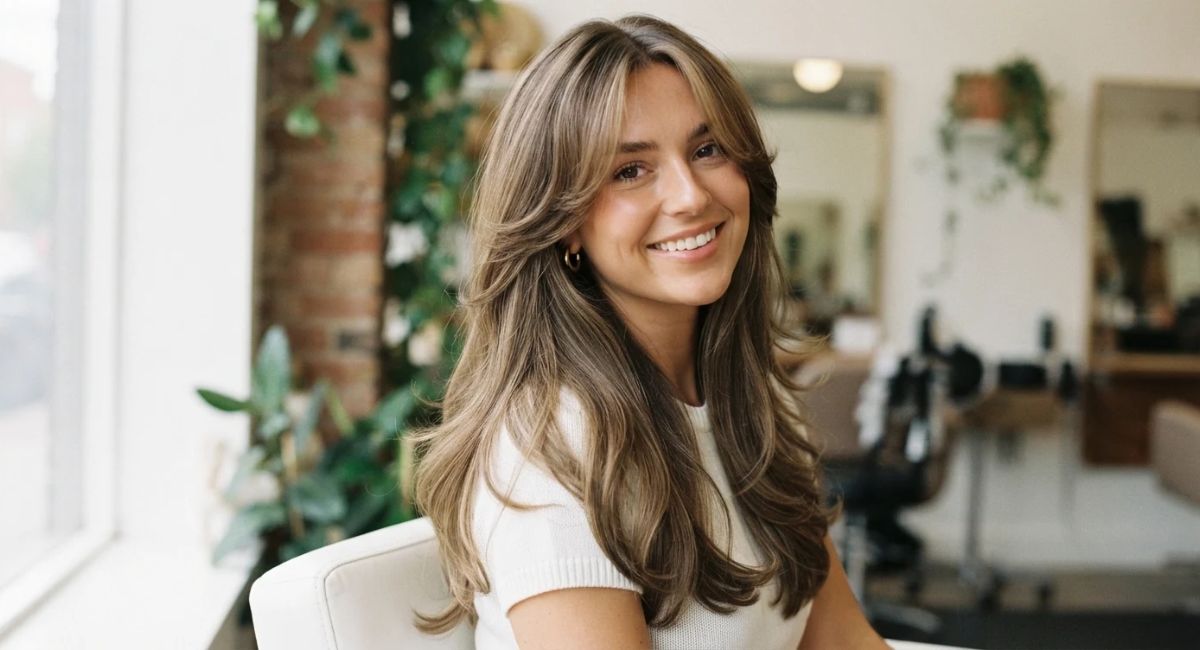
1. Long Layers with Soft Face-Framing Pieces
Long layers are a beautiful starting point if you enjoy keeping your hair length but want a more defined shape around your face.
This haircut combines longer sections through the back with shorter pieces around the front. Instead of ending abruptly at cheek level, the face-framing sections gradually blend into the remaining length.
The result is a flowing hairstyle with movement that feels natural rather than heavily structured.
One advantage of this cut is its versatility. You can wear it straight, create loose waves, or use a round brush to give the front sections a gentle curve.
For fine hair, ask your stylist to preserve enough weight through the ends. If you have thick hair, slightly more internal layering can help remove unnecessary bulk.
Best for: Medium to long hair, especially straight and wavy textures.
Styling tip: Create a soft bend from the middle of the hair towards the ends instead of curling every section tightly.
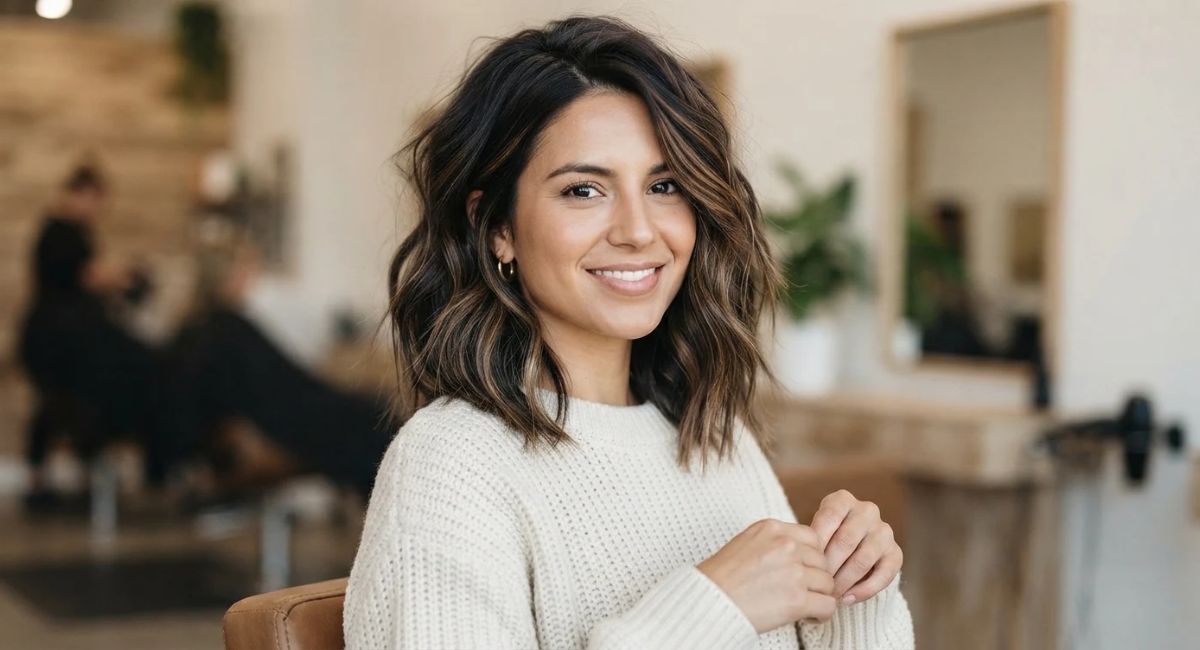
2. Textured Shoulder-Length Lob
A long bob, commonly called a lob, offers an excellent balance between shorter hair and the flexibility of longer hairstyles.
This version sits around the shoulders or slightly below them, with subtle texture throughout the lengths.
Unlike a very short, rounded bob, the longer silhouette creates more space below the jawline. That makes it an appealing choice if you want a contemporary haircut without removing too much length.
The textured finish also prevents the hairstyle from looking overly stiff. A few soft layers can create movement while keeping the overall shape polished.
It works particularly well with naturally wavy hair, although straight hair can achieve a similar appearance with a little styling.
Best for: Women who want a manageable medium-length haircut.
Styling tip: Apply lightweight styling mousse to damp hair and create loose bends with a curling iron if additional texture is desired.
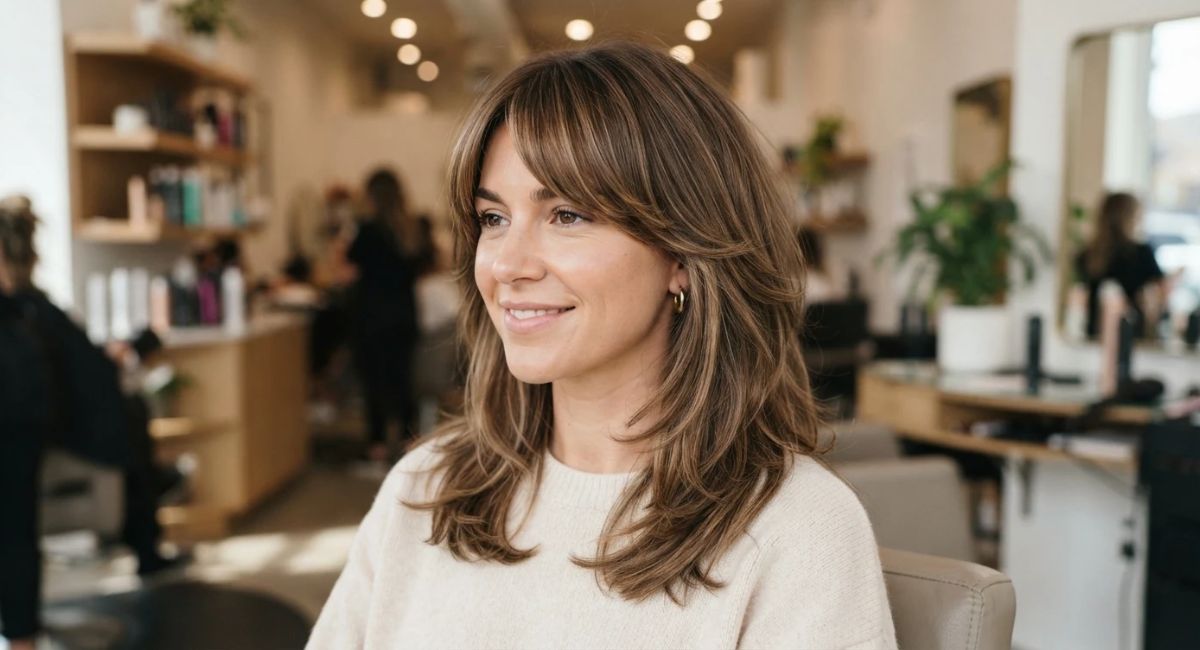
3. Side-Swept Bangs with Medium Layers
Side-swept bangs are a lovely way to introduce asymmetry into a hairstyle.
Instead of creating a straight horizontal line across the forehead, the fringe moves diagonally towards one side. This creates a softer, less symmetrical frame and works beautifully with medium-length layers.
The longer sections can be blended into the sides, allowing the hairstyle to transition naturally from the fringe to the rest of the hair.
This combination is especially useful if you want bangs but prefer something more flexible than a heavy, straight-across fringe.
You can also style the bangs differently depending on the occasion, sweeping them across your forehead or blending them into a side part.
Best for: Straight, wavy, and moderately thick hair.
Styling tip: Use a small round brush to direct the fringe away from the face while blow-drying.
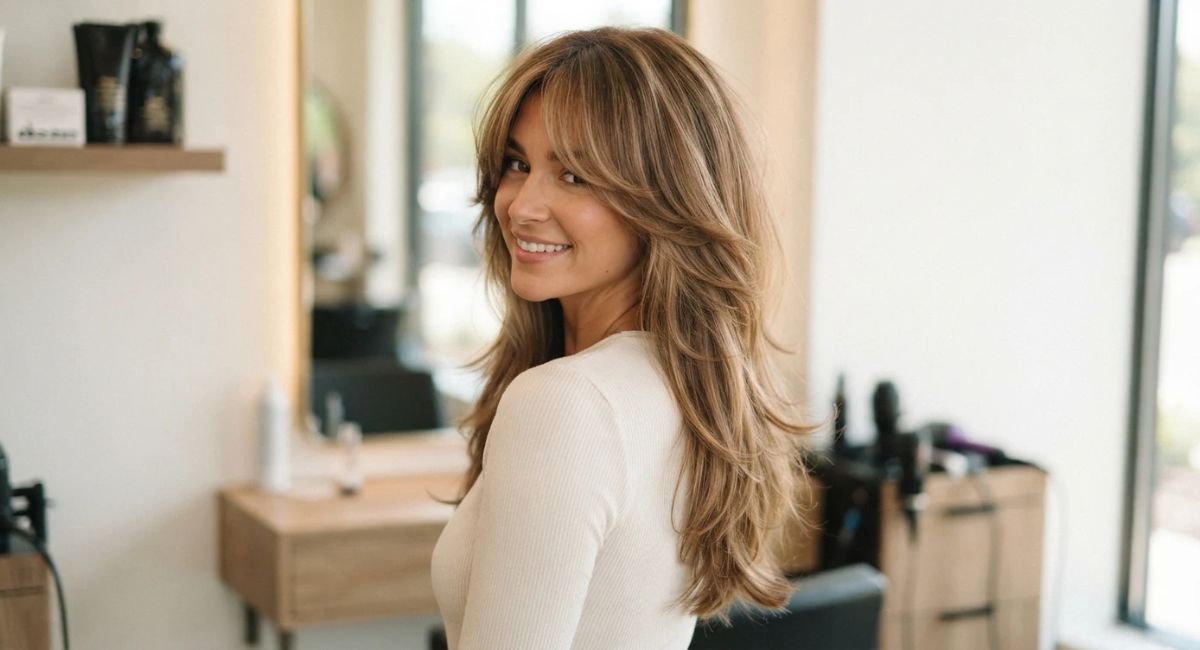
4. Long Butterfly Haircut
The butterfly haircut combines shorter face-framing layers with longer sections through the back.
Its defining feature is the contrast between the shorter front pieces and the flowing length underneath. When styled with a round brush, the layers create a soft, wing-like appearance around the face.
For a round face, the important detail is customizing where the shortest layers fall. You can request a more gradual face frame that avoids creating unnecessary fullness directly around the cheeks.
This haircut is particularly attractive on medium to thick hair because the different layers have enough density to create movement.
If you enjoy voluminous blowouts and do not mind spending some time styling your hair, this could be an excellent option.
For more inspiration, explore our guide to butterfly haircut ideas.
Best for: Long, medium-to-thick hair.
Styling tip: Use a large round brush to create outward movement through the front layers and gentle curves through the ends.
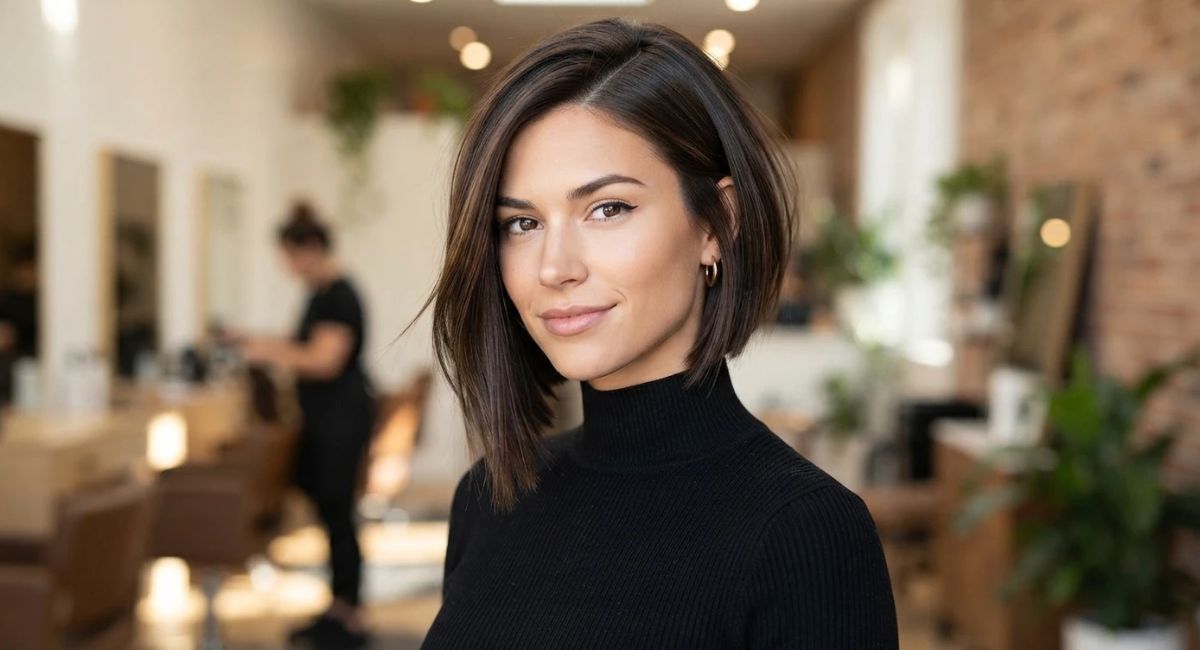
5. Asymmetrical Bob
An asymmetrical bob is a more distinctive choice for anyone who enjoys structured, contemporary hairstyles.
The haircut features uneven lengths on either side. One side may finish near the jawline, while the other extends slightly farther towards the neck or shoulder.
This difference creates a noticeable diagonal line that gives the hairstyle a modern appearance.
You can choose a subtle asymmetrical shape for everyday wear or a more dramatic version for a stronger fashion statement.
The finish also changes the overall personality of the haircut. A sleek blowout looks sophisticated, while a slightly tousled finish creates a relaxed appearance.
Best for: Straight and slightly wavy hair.
Styling tip: Keep the longer front section smooth and use a lightweight serum to maintain definition without making the hair look greasy.
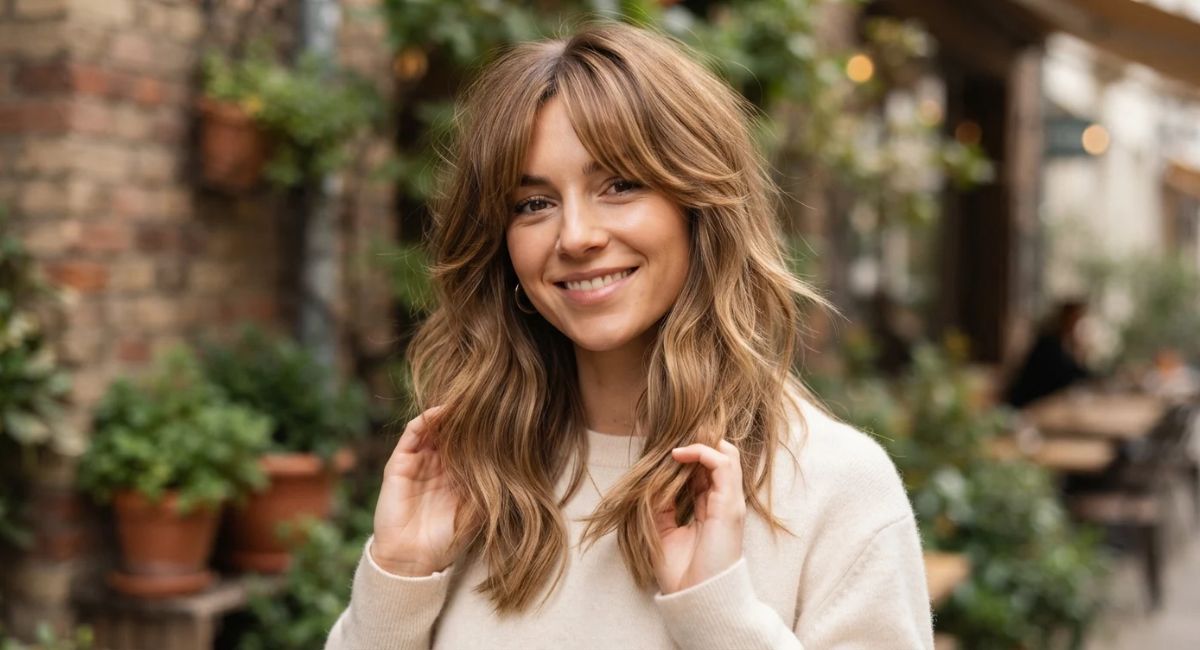
6. Soft Shag Haircut with Curtain Bangs
A modern shag is ideal if you prefer a hairstyle with personality, texture, and movement.
This cut uses multiple layers to create a slightly undone appearance. Curtain bangs add another dimension by opening around the forehead and blending into the sides.
For round faces, the placement of the shorter layers is particularly important. Keeping the main face-framing sections slightly longer can prevent the haircut from becoming excessively wide around the cheeks.
The result is relaxed, fashionable, and especially attractive when worn with natural waves.
A shag can also be customized for different hair densities. Fine hair generally needs controlled layering, while thicker hair may benefit from additional internal shaping.
Best for: Wavy and naturally textured hair.
Styling tip: Scrunch a small amount of texture cream into damp hair and allow it to air-dry for a relaxed finish.
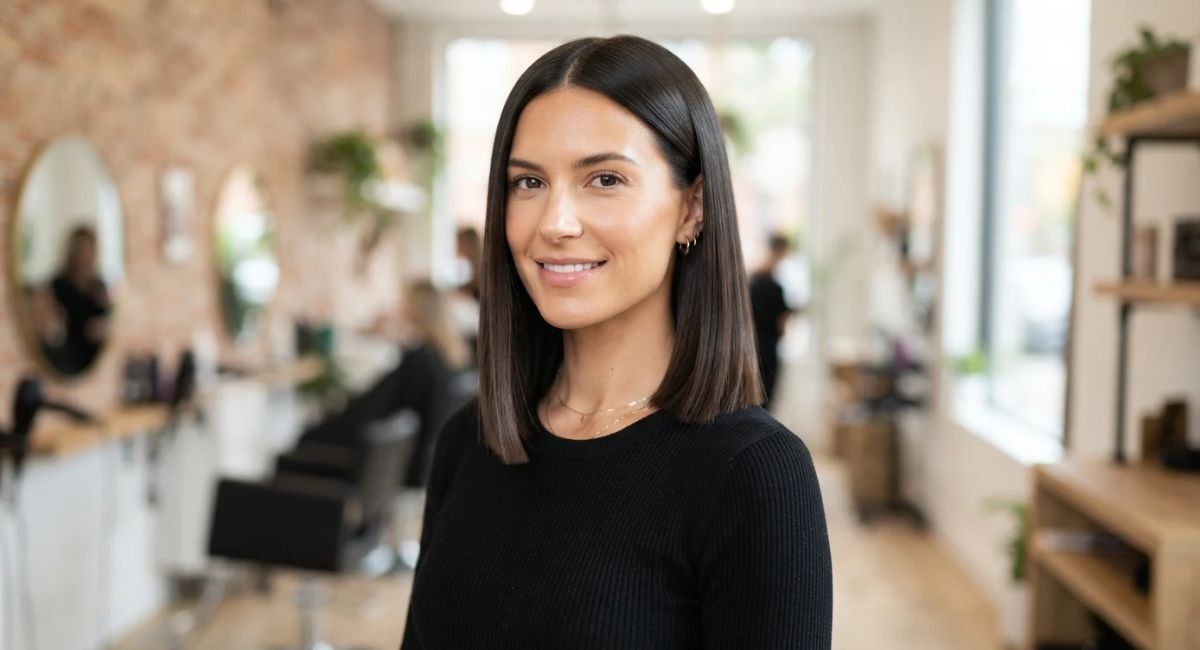
7. Collarbone-Length Blunt Lob
If you prefer clean lines rather than heavily layered hairstyles, consider a blunt lob that finishes around the collarbone.
The defining feature is its relatively solid bottom edge. This creates a neat silhouette and makes the haircut look polished without requiring complicated styling.
The extra length below the chin is useful if you want to avoid a traditional chin-length bob.
You can wear it with a centre part for a symmetrical appearance or introduce a subtle side part for additional movement.
This style is also practical because it offers enough length for small ponytails and half-up hairstyles.
For finer hair, the blunt outline can help the ends look visually fuller.
Best for: Fine to medium-density straight or slightly wavy hair.
Styling tip: Use a flat iron for a sleek finish, or create a few loose bends for a softer appearance.
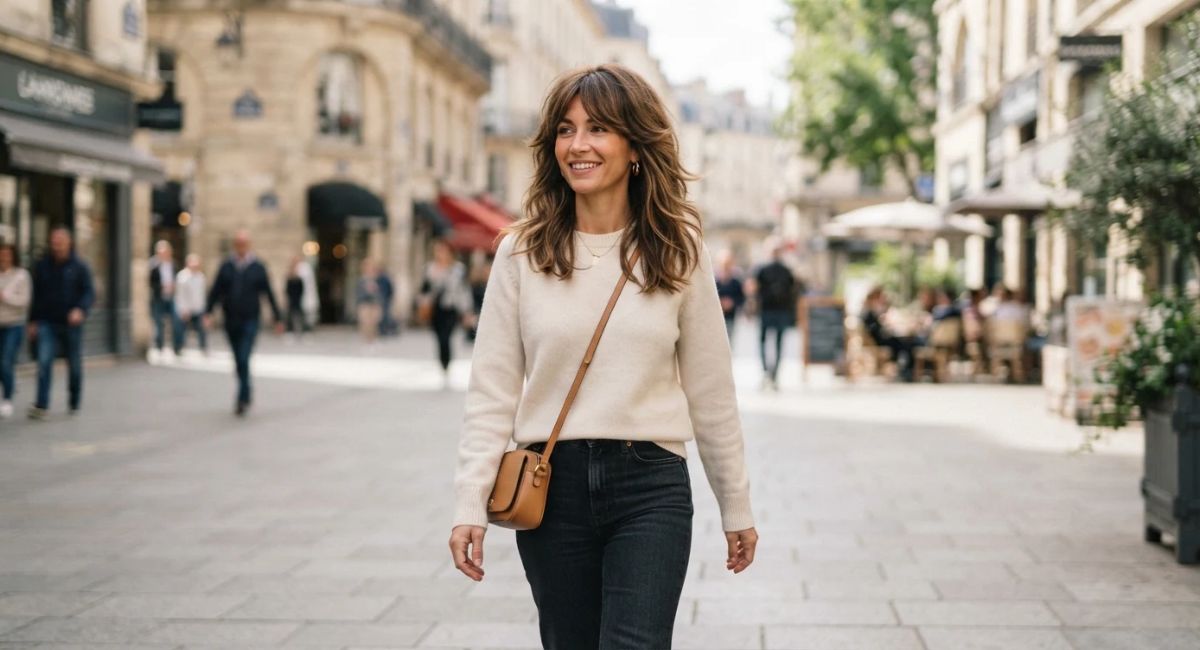
8. Feathered Mid-Length Haircut
Feathered layers create a softer, flowing hairstyle without the heavily disconnected appearance of a traditional shag.
The haircut features carefully shaped sections that move away from the face and blend into the remaining length.
This technique is especially attractive when you want movement around the front without losing too much hair length.
The feathering can begin around the chin or lower, depending on your facial features and preferred finish.
One advantage is that this style works with different styling preferences. You can create a polished blowout, wear it naturally wavy, or tuck the front sections behind your ears.
Best for: Medium-length straight and wavy hair.
Styling tip: Use a medium round brush to create soft movement at the ends.

9. Long Waves with a Deep Side Part
Sometimes you do not need a dramatic haircut to refresh your appearance.
Long waves with a deep side part combine two simple styling choices that create a noticeably different silhouette.
The side part introduces asymmetry, while the waves provide movement through the lengths. Together, they create a hairstyle that feels elegant without looking overly formal.
You can keep the waves loose and relaxed or create more defined bends for an evening look.
For naturally thick hair, long layers can help distribute the weight and prevent the hairstyle from appearing too heavy.
If your hair is fine, keep the layers relatively subtle to maintain fullness.
Best for: Long hair with straight, wavy, or loosely curly texture.
Styling tip: Alternate the direction of your curls to create a more natural finish.
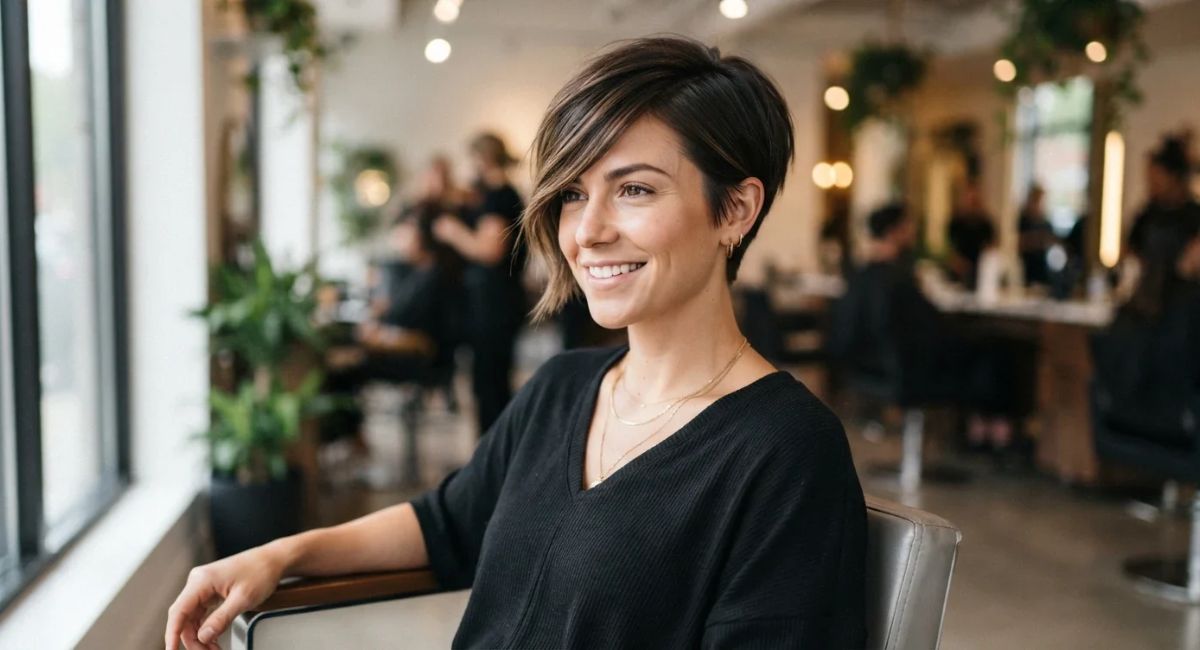
10. Modern Pixie with a Longer Side Fringe
Short hair can look incredibly stylish on a round face. A modern pixie is a good example of how the right proportions can create a distinctive shape.
This version features shorter sections around the back and sides, with slightly longer hair across the top and front.
The longer fringe can be swept diagonally across the forehead, adding movement and breaking up the haircut’s otherwise compact shape.
Unlike an extremely short, uniform pixie, this variation offers more flexibility when styling the front.
It is particularly appealing if you enjoy low-length hairstyles and want a noticeable transformation.
However, a pixie requires thoughtful shaping. Discuss the amount of length you want to retain around the temples and sideburns before your stylist begins cutting.
Best for: Straight, wavy, and fine-to-medium hair.
Styling tip: Work a small amount of lightweight styling paste through the crown and fringe.
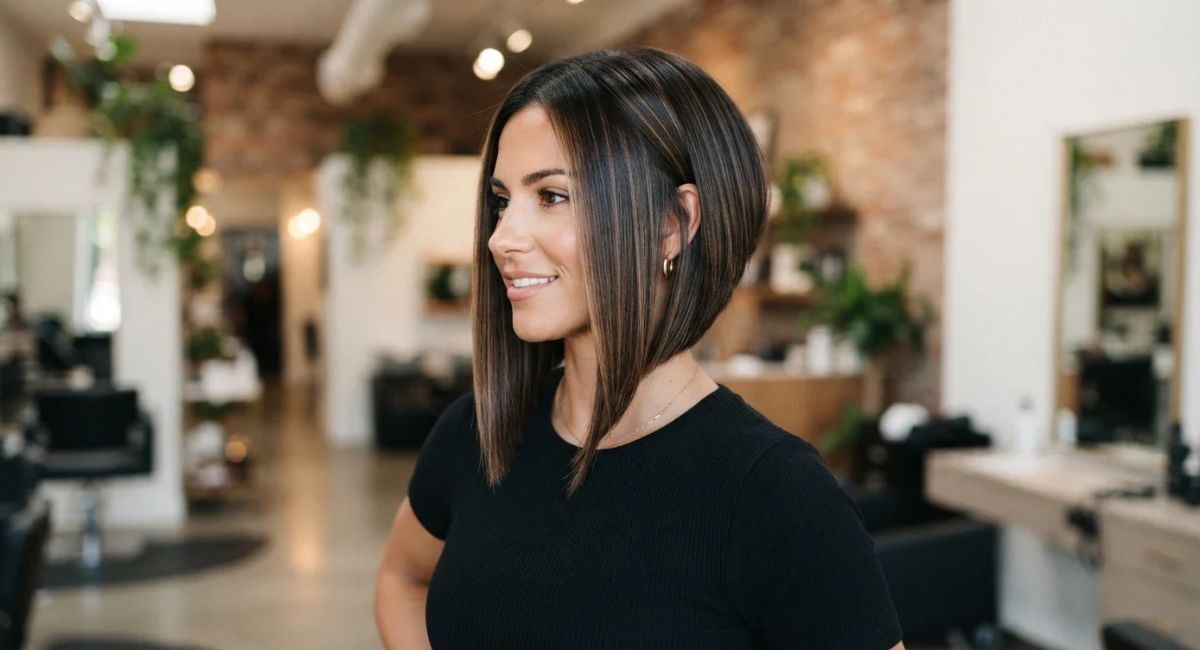
11. Angled Bob with Longer Front Sections
An angled bob offers a more sculpted alternative to a conventional rounded bob.
The back is shorter, while the front gradually becomes longer towards the jawline or collarbone.
This creates a diagonal silhouette that adds visual interest and makes the haircut look structured.
You can choose a gentle angle for a softer appearance or a more pronounced difference between the front and back for a dramatic finish.
The shape works particularly well with straight hair because the angled outline remains clearly visible.
For naturally wavy hair, a slightly softer version can create an attractive combination of movement and structure.
Best for: Straight and moderately wavy hair.
Styling tip: Blow-dry the front sections downward and slightly inward to emphasize their shape.

12. Medium-Length Hair with Wispy Bangs
Wispy bangs are a lighter alternative to thick, full fringe.
They feature separated strands that allow some of the forehead to remain visible. This creates a softer appearance and avoids the heavy horizontal line associated with traditional blunt bangs.
When combined with medium-length hair, wispy bangs can create a delicate frame that feels youthful and relaxed.
The remaining hair can be kept relatively simple, with subtle layers or a clean shoulder-length outline.
This is a useful option if you want to experiment with bangs without committing to a particularly dense fringe.
Best for: Fine, straight, and slightly wavy hair.
Styling tip: Use a small amount of lightweight styling product to separate the fringe without making it stiff.
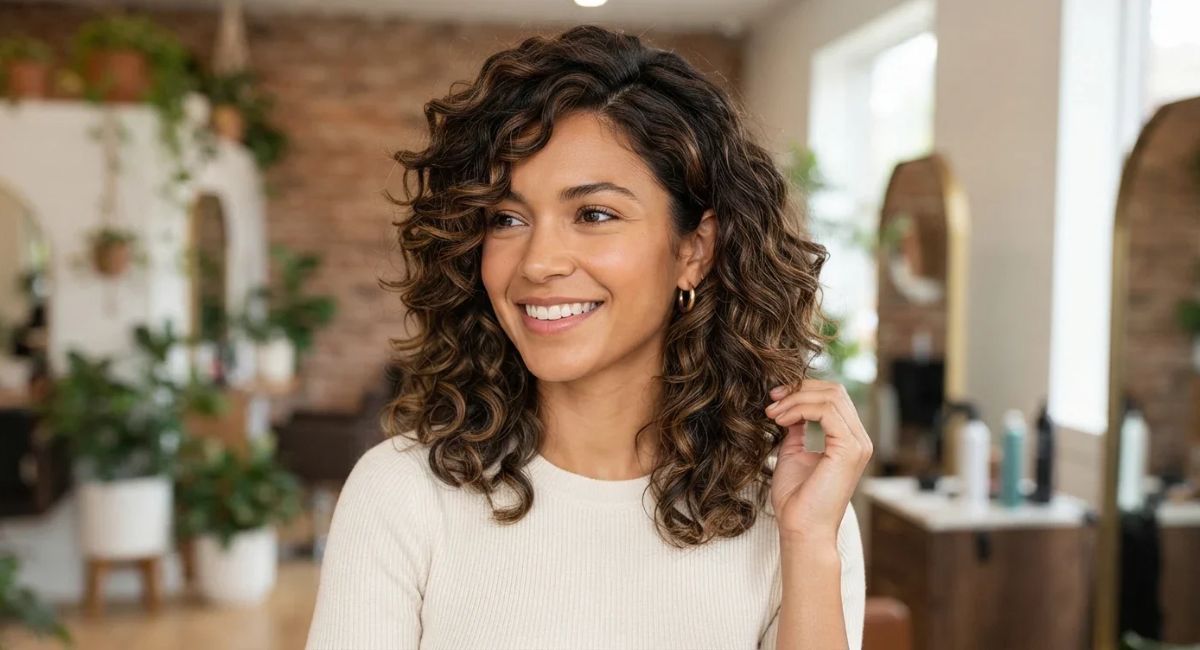
13. Curly Layered Lob
Naturally curly hair deserves a haircut that works with its texture rather than trying to control every curl.
A curly layered lob combines a shoulder-length silhouette with carefully placed layers that help the curls form a balanced shape.
The stylist should consider how much the hair shrinks as it dries. A cut that looks shoulder-length when wet may sit considerably higher once the curls return to their natural pattern.
For round faces, the goal is not to remove all fullness. Instead, the layers should distribute volume so that the hairstyle has movement without becoming overly wide at the sides.
This cut can look particularly beautiful when the curls are allowed to form naturally.
Best for: Naturally curly and textured hair.
Styling tip: Apply curl cream to soaking-wet or damp hair and diffuse gently if additional volume is desired.
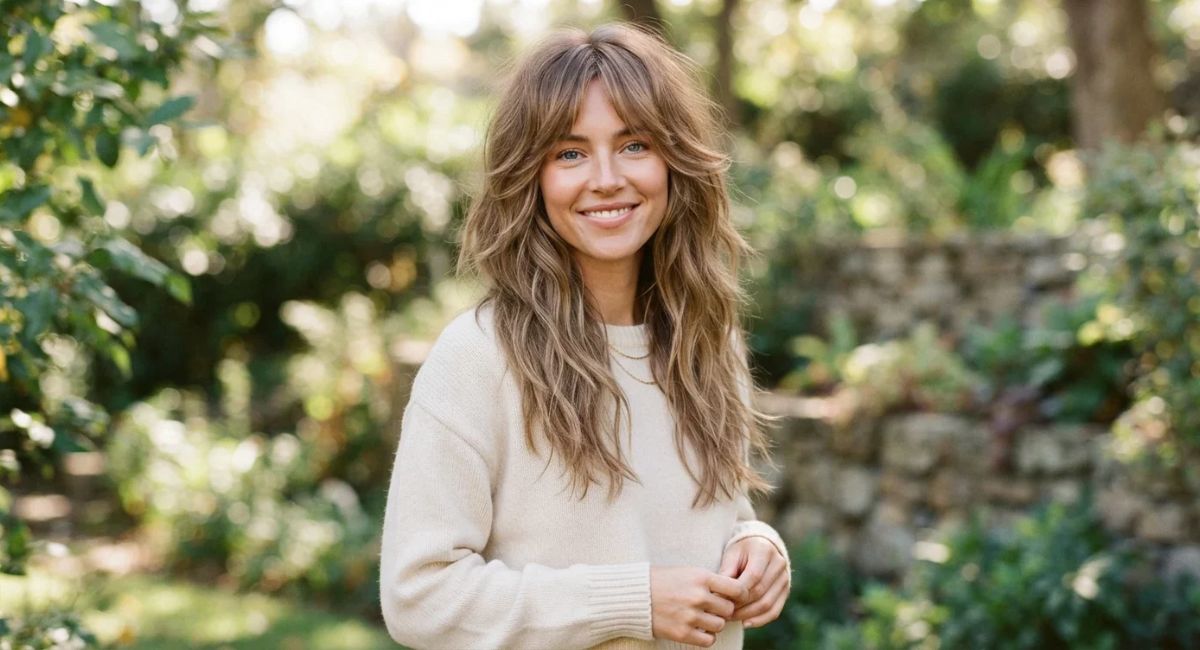
14. Long Shag with Soft Face-Framing Layers
A long shag is a fantastic option if you want texture without giving up your length.
Unlike a conventional layered haircut, the shag includes more noticeable differences between the shorter crown sections and longer lower layers.
For a round face, the most important consideration is where the shortest pieces begin. Longer face-framing layers that start below the cheekbones can create a more balanced silhouette.
This hairstyle works especially well for people who enjoy a slightly undone appearance.
Wavy hair can often display the layers naturally, while straight hair may require a little styling to bring out the texture.
If you want to compare different shag variations, read our detailed guide to long shag haircuts.
Best for: Medium-to-long hair, particularly wavy textures.
Styling tip: Use a lightweight texturizing spray through the mid-lengths and ends.
15. Side-Parted Textured Bob
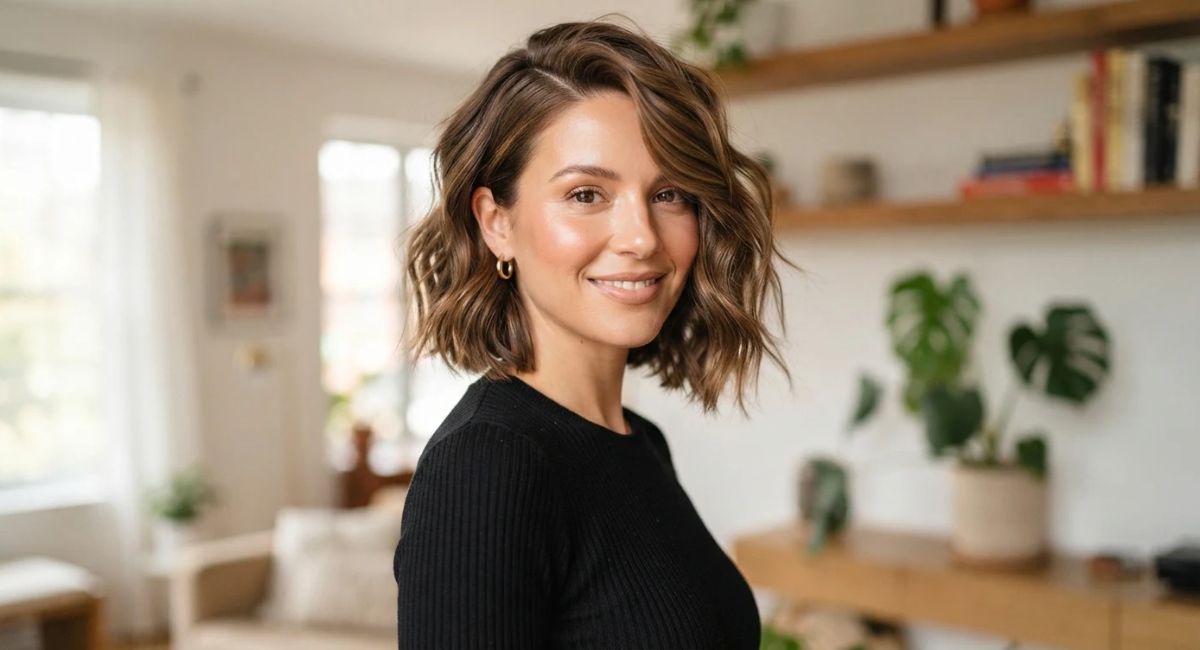
A side-parted textured bob offers a relaxed alternative to a perfectly symmetrical short haircut.
The parting shifts the hair towards one side, creating a slightly uneven distribution around the forehead. Subtle layers then introduce movement through the sides and ends.
The final length can sit below the chin or extend towards the shoulders.
This makes the haircut adaptable to different preferences. You can choose a sleek finish for a polished look or a tousled texture for something more casual.
For fine hair, avoid excessive thinning because the haircut needs enough density to maintain its shape.
Best for: Fine-to-medium straight or wavy hair.
Styling tip: Apply a small amount of volumizing mousse near the roots before blow-drying.
16. Long Hair with Curtain Bangs
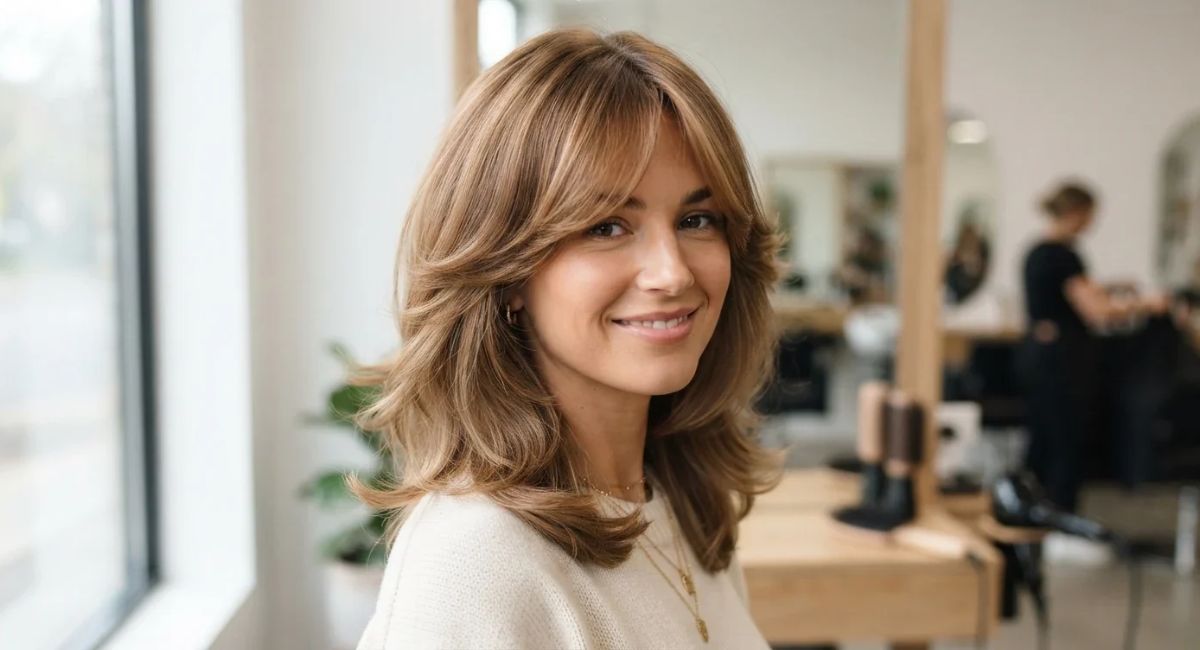
Curtain bangs are one of the most versatile ways to introduce face-framing detail without changing the entire haircut.
They are usually parted near the centre and gradually become longer towards the sides.
When paired with long hair, the fringe creates a soft transition between the forehead and the remaining length.
The style can be customized according to how much coverage you prefer. Shorter curtain bangs create a more noticeable frame, while longer versions blend into the surrounding layers.
For a round face, discuss a shape that does not create excessive fullness around the widest part of the cheeks.
Best for: Medium-to-long straight and wavy hair.
Styling tip: Blow-dry each side of the fringe away from the centre to create its characteristic curved shape.
17. Tapered Bixie Haircut
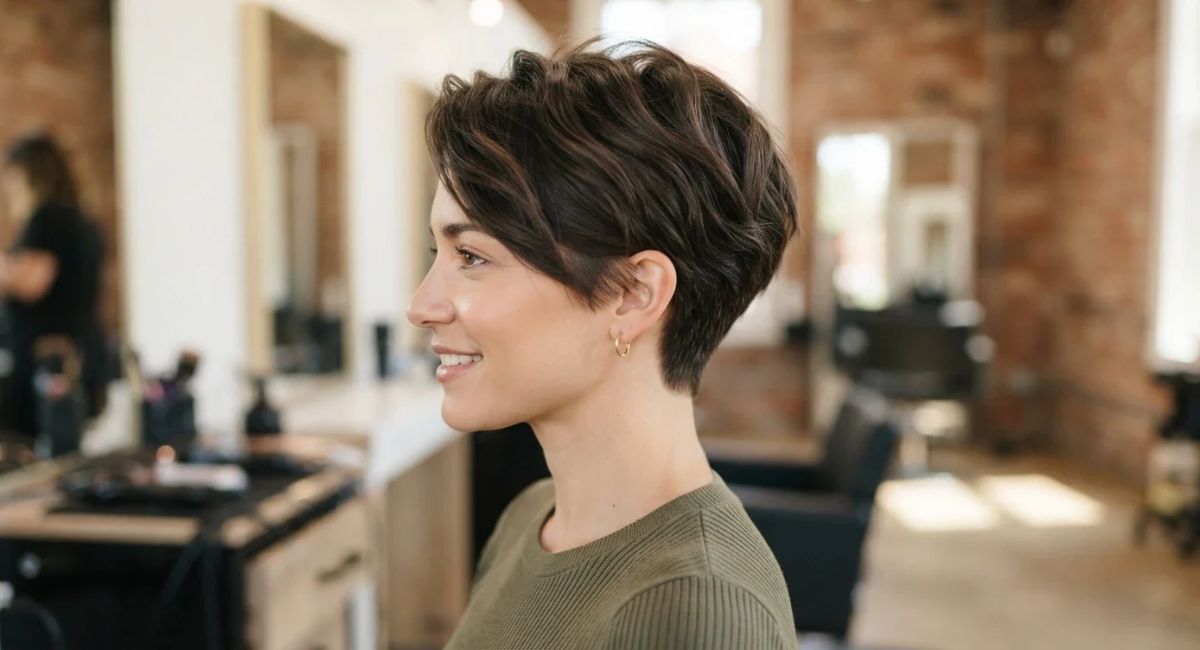
The bixie combines the compact length of a pixie with some of the softness and movement of a bob.
It generally has shorter sections around the back and crown, while retaining more length around the ears and front.
This makes it a useful choice if you want to experiment with short hair but do not want an extremely cropped appearance.
For round faces, leaving slightly longer pieces around the temples and fringe can create additional styling flexibility.
The haircut can look polished with a smooth finish or more relaxed when styled with a little texture.
One consideration is maintenance. Because the shape relies on carefully balanced lengths, regular salon visits help keep the silhouette defined.
Best for: Straight, fine, and slightly wavy hair.
Styling tip: Use a lightweight texturizing cream to separate the shorter sections.
18. Medium-Length Butterfly Layers with Side Fringe
This version combines the movement of butterfly layers with the asymmetry of a side fringe.
The upper layers frame the forehead and cheek area, while the longer sections maintain the overall length.
It is a particularly useful variation if you like the appearance of a butterfly haircut but prefer something less dramatic than the traditional long version.
The side fringe also offers a different finish from centre-parted curtain bangs.
For thick hair, internal layers can reduce unnecessary weight. For fine hair, fewer and more carefully blended layers may produce a better result.
Best for: Medium-to-thick hair.
Styling tip: Use a round brush to direct the fringe diagonally and give the front layers a soft outward curve.
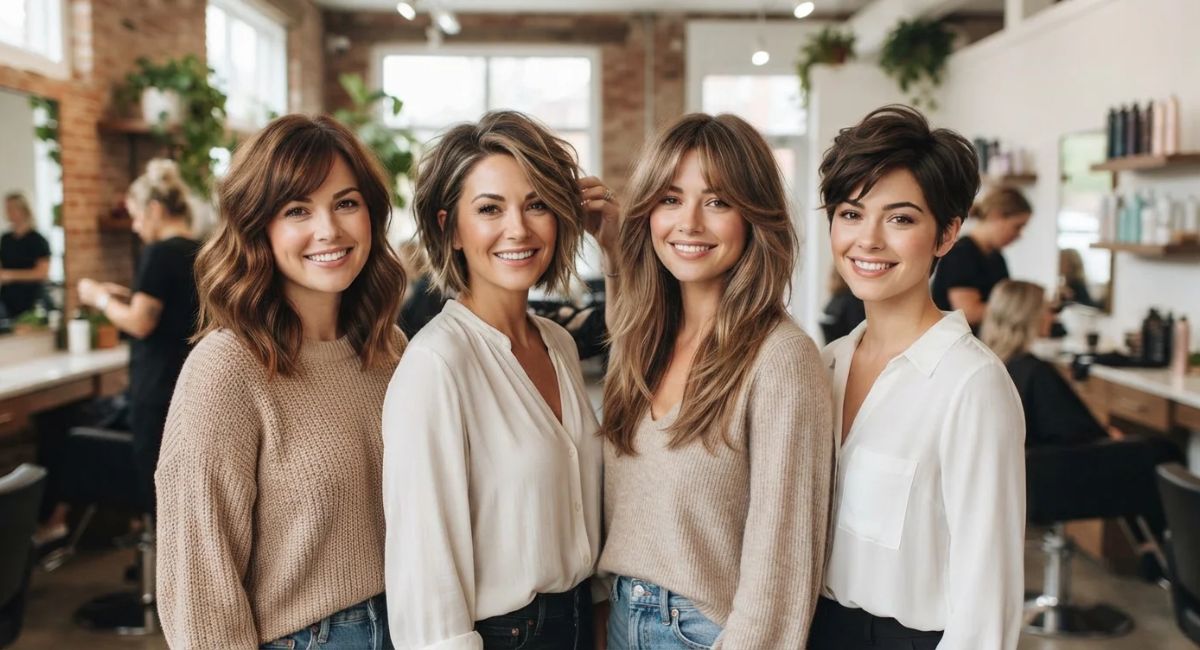
19. Short Textured Crop with Crown Volume
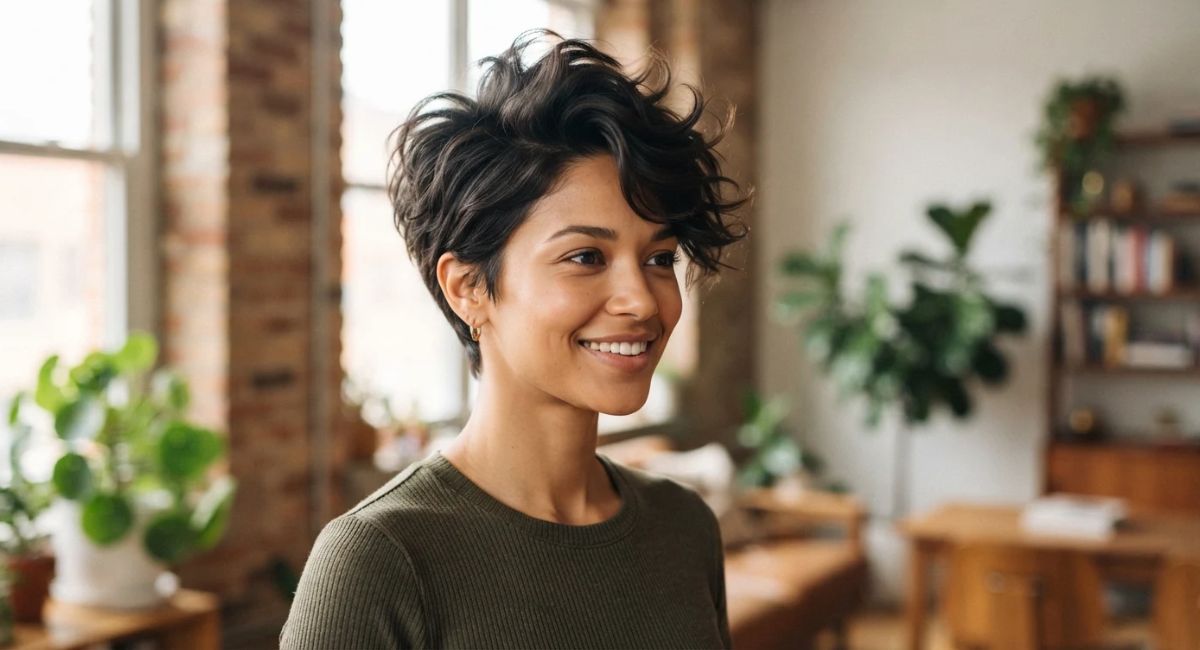
A textured crop is a practical choice for anyone who wants a short haircut with a little personality.
It keeps the sides relatively close while introducing texture through the crown and front.
Rather than relying on length around the jawline, this style uses the upper silhouette to create visual interest.
You can choose a soft, feminine interpretation with blended edges or a more defined version with choppy texture.
The amount of volume should be customized to your hair density. Fine hair may need a little root-lifting product, while thicker hair may require more controlled shaping.
Best for: Short straight and wavy hair.
Styling tip: Work a small amount of matte styling cream through the crown using your fingertips.
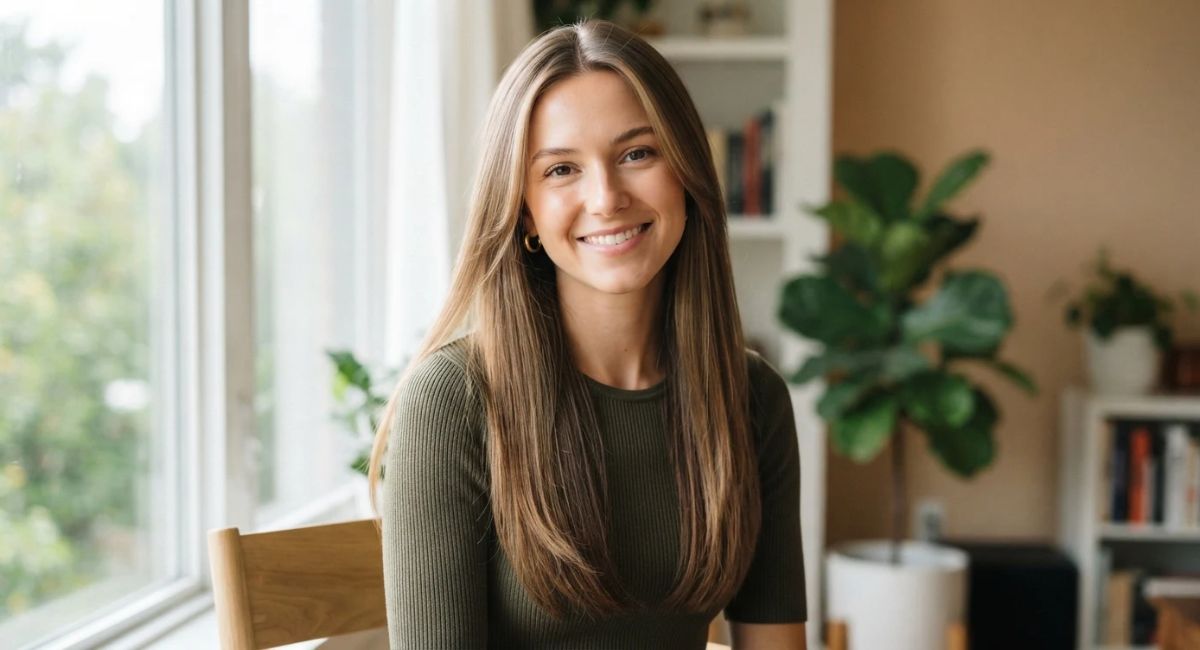
20. Long Straight Hair with Minimal Face-Framing Layers
Not everyone enjoys heavily layered or textured hairstyles. If you prefer a sleek appearance, long straight hair with subtle face-framing pieces is worth considering.
The overall length remains relatively uniform, while a few carefully blended sections around the front prevent the hairstyle from looking completely flat.
This is a particularly attractive choice if you want to preserve your length and prefer a more understated finish.
The face-framing sections can begin below the chin and blend into the lower lengths.
A clean, healthy-looking finish is the main feature of this hairstyle. You do not need excessive volume or elaborate styling to make it look polished.
Best for: Straight, fine, and medium-density hair.
Styling tip: Apply heat protectant before straightening and finish with a small amount of smoothing serum through the ends.
How to Choose the Best Haircut for Your Round Face
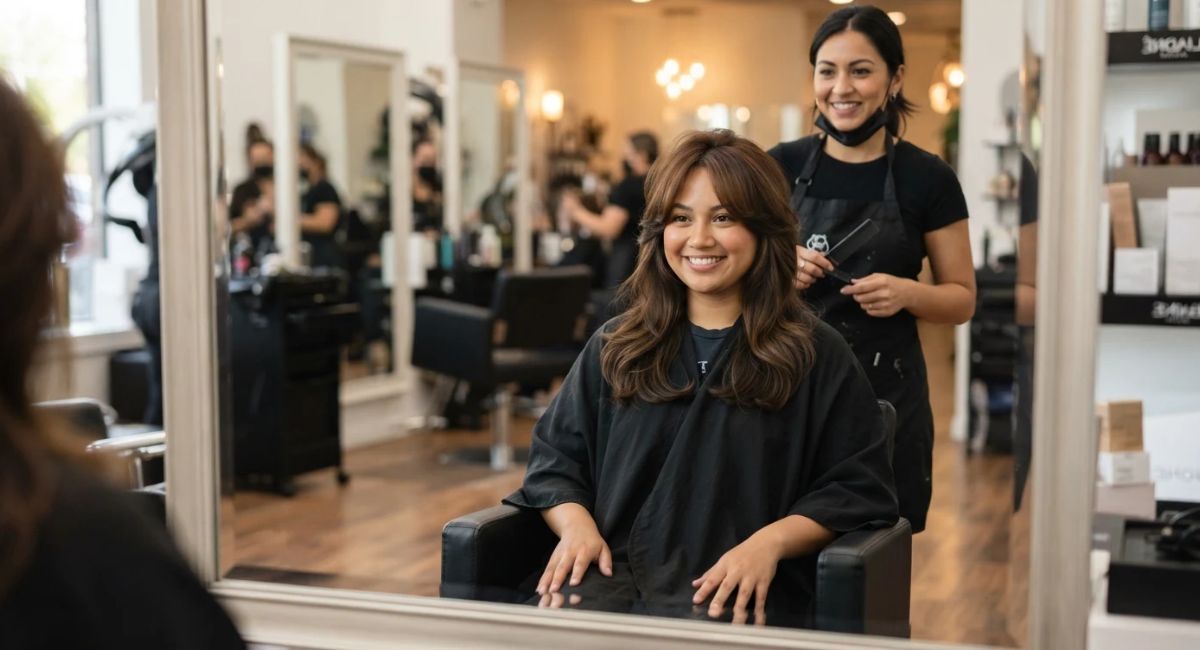
Looking at hairstyle inspiration is useful, but choosing the right haircut requires considering more than facial proportions.
The following factors can help you narrow down your options.
Consider Your Natural Hair Texture
Your hair texture determines how a haircut behaves after washing and drying.
Straight hair displays the outline of a haircut clearly. This makes precise bobs, long straight layers, and angled styles particularly appealing.
Wavy hair naturally introduces movement, making textured lobs, shags, and feathered layers attractive options.
Curly hair requires careful consideration of shrinkage and curl placement. A stylist who understands your curl pattern can create layers that work with the natural shape of your hair.
Do not choose a haircut solely because it looks beautiful on someone with a completely different texture.
Think About Your Hair Density
Fine hair and thin hair are not the same thing.
Fine hair describes the diameter of individual strands, while thin hair generally refers to lower overall density.
If your hair is fine and relatively sparse, preserving fullness through the ends may be important. A heavily layered haircut could make the lower sections appear less dense.
Thicker hair can usually support more internal layering, particularly when the goal is to reduce excess bulk.
Discuss your hair density before requesting a heavily layered style.
Decide How Much Length You Want to Keep
Your preferred length should influence the haircut you choose.
Short hair offers a noticeable change and can be convenient for everyday styling, although some precise cuts need regular trims.
Medium-length hair provides flexibility without requiring the maintenance associated with very long hairstyles.
Long hair gives you more options for ponytails, braids, waves, and layered styling. However, longer hair may require additional time for washing, drying, and maintaining the ends.
Choose a length that fits your lifestyle rather than selecting one simply because it is currently fashionable.
Consider Your Everyday Styling Routine
A haircut that requires a professional blowout every morning may not be practical if you prefer a simple routine.
Before making a decision, consider:
- How much time you have for styling.
- Whether you regularly use heat tools.
- Whether your hair naturally holds waves.
- How frequently you want to visit the salon.
- Whether you prefer air-drying or blow-drying.
If you want something relatively easy to maintain, a soft lob, natural-texture bob, or long layered haircut may be worth discussing with your stylist.
Haircuts and Styling Mistakes Worth Avoiding
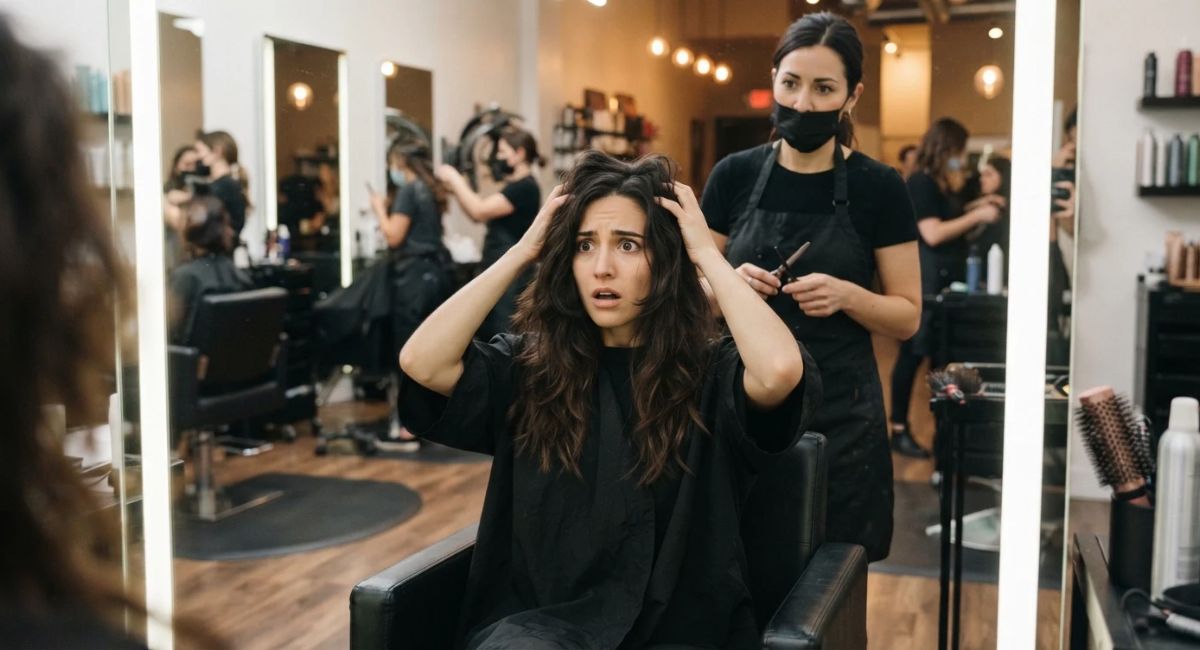
There are no hairstyles that everyone with a round face must avoid. However, certain cutting decisions may produce a different result from what you originally expected.
Choosing layers without discussing their placement: Short layers that finish directly around the fullest part of the cheeks may create additional width. Ask your stylist to explain where the layers will sit.
Requesting a haircut that does not suit your hair density: Extremely layered hairstyles may not provide the fullness you want if your hair is naturally sparse.
Choosing bangs without considering maintenance: Some fringes require regular trimming and daily styling. Think about whether you are comfortable with that commitment.
Ignoring natural curl shrinkage: Curly hair can become much shorter once dry. Always discuss how the finished length will look in its natural state.
Expecting a reference photo to look identical: The model’s hair density, texture, styling technique, and facial proportions may be different from yours. Use inspiration photos to communicate the overall shape rather than expecting an exact copy.
How to Explain Your Desired Haircut to a Hairstylist
Good communication can make a major difference to your salon experience.
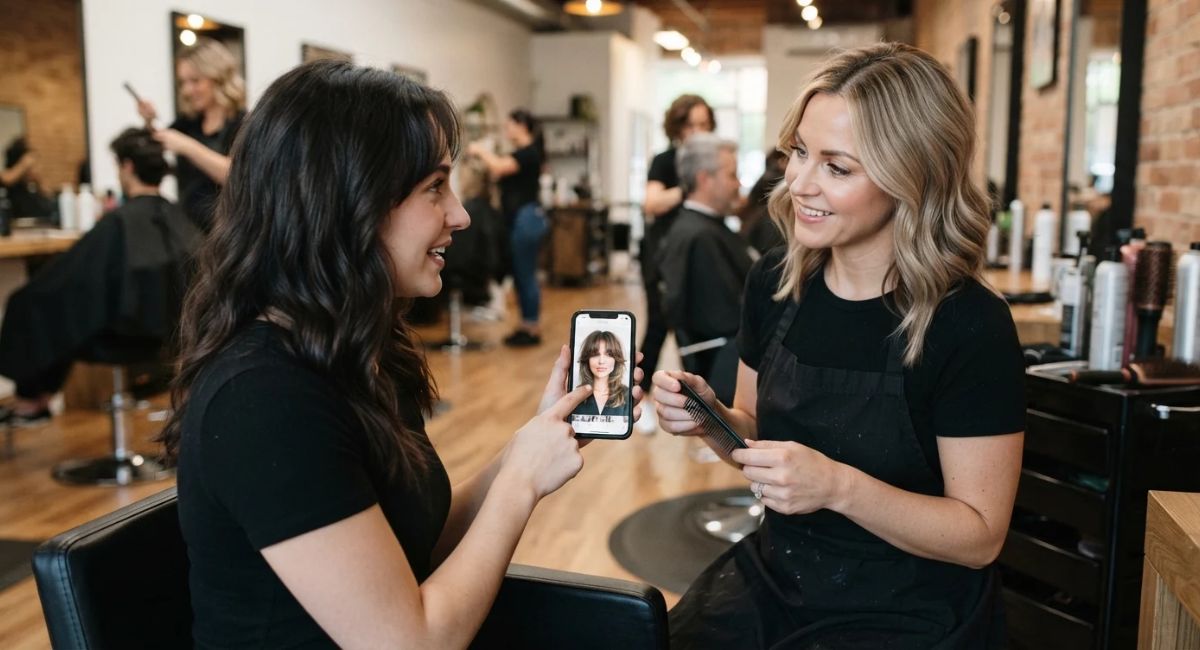
Instead of simply asking for a haircut that suits a round face, explain what you like about a particular style.
You might say:
- I want to keep most of my current length.
- I would like face-framing layers that begin below my cheekbones.
- Please keep enough fullness through the ends.
- I prefer a soft fringe rather than thick, straight bangs.
- I want movement without excessive volume around my cheeks.
- I need a haircut that works with my natural texture.
Bring two or three reference photographs showing different angles of the hairstyle.
It is also helpful to show your stylist how you normally wear your hair. A haircut should work with your everyday routine, not just look attractive immediately after leaving the salon.
Ask whether the recommended style requires heat styling, special products, or frequent maintenance.
Frequently Asked Questions
1. What is the most flattering haircut for a round face?
Long layers, textured lobs, side-swept bangs, and carefully shaped bobs are popular options. The best choice depends on your hair texture, density, preferred length, and the facial features you want to highlight.
2. Are short haircuts good for round faces?
Yes. Pixies, bixies, textured crops, and asymmetrical bobs can all work beautifully. Consider a shape with movement through the top and a fringe or side section that can be styled according to your preferences.
3. Do layers look good on round faces?
Layers can create movement and introduce a more defined silhouette. Longer face-framing layers are often a useful starting point, especially when they are positioned below the fullest part of the cheeks.
4. Should women with round faces have bangs?
Absolutely. Side-swept bangs, curtain bangs, and wispy fringe are all worth considering. The most suitable option depends on your forehead, hairline, texture, and preferred styling routine.
5. Is a bob suitable for a round face?
Yes. A textured bob, angled bob, or longer bob can be a beautiful choice. The length and outline should be customized rather than assuming every bob will create the same result.
6. Is long or short hair better for round faces?
Neither is automatically better. Long hair offers vertical movement and more styling options, while short hair can create structure through its shape and crown. Choose according to your preferences and hair characteristics.
7. What haircut makes a round face look more defined?
Styles with carefully placed layers, asymmetrical details, diagonal fringe, or controlled crown volume can create a more defined appearance. A professional stylist can customize these features to suit your proportions.
8. Can curly hair look good on a round face?
Definitely. Curly lobs, long layered curls, and customized shags can all look beautiful. The important consideration is shaping the curls according to their natural shrinkage and volume.
Final Thoughts
Finding the right haircut is less about following strict face-shape rules and more about understanding which styles complement your natural features and personal preferences.
From long butterfly layers and soft shags to modern pixies and angled bobs, there are plenty of stylish haircuts for round faces worth exploring in 2026.
Before choosing your next look, consider your hair texture, density, desired length, and the amount of styling you are comfortable doing. A haircut that works with these factors will generally be easier to maintain and more enjoyable to wear.
Save a few inspiration photographs, discuss the details with your hairstylist, and choose a shape that makes you feel comfortable and confident. The most successful haircut is ultimately one that feels like your own.