Skincare ingredients you should never mix can turn a good routine into a skin disaster overnight. You layer on your favorite serum, add a new acid, and by morning your face is red, tight, and peeling. If that sounds familiar, you’re not alone. Most breakouts and irritation flare ups don’t come from bad products. They come from good products fighting each other on your skin.
I learned this the hard way years ago when I combined a vitamin C serum with a niacinamide moisturizer, thinking I was doubling up on brightening power. Instead, my cheeks turned blotchy and stayed that way for two days. That mistake sent me down a rabbit hole of dermatology research, and what I found surprised me. A huge number of people are unknowingly sabotaging their skin every single day by pairing ingredients that were never meant to meet.
This guide breaks down exactly which skincare ingredients clash, why it happens on a chemical level, and what you should do instead. No jargon overload, just clear answers you can actually use tonight.
Why Mixing Skincare Ingredients Can Backfire
Your skin has a natural pH balance, somewhere between 4.5 and 5.5. Many active ingredients only work properly within a specific pH range. When you stack two actives with different pH requirements, one usually cancels the other out or, worse, both become more aggressive at once.
There are three common problems that happen when incompatible ingredients meet:
- Irritation and redness, because the skin barrier gets overwhelmed
- Reduced effectiveness, where one ingredient neutralizes the other
- Increased sensitivity to sun damage, especially with exfoliating acids and retinoids
Dermatologists often compare this to construction work. Some ingredients build the skin barrier up. Others break old cells down so new ones can surface. Doing both jobs in the same session is like renovating a house while someone else is demolishing it. Nothing gets finished properly, and you end up with a mess.
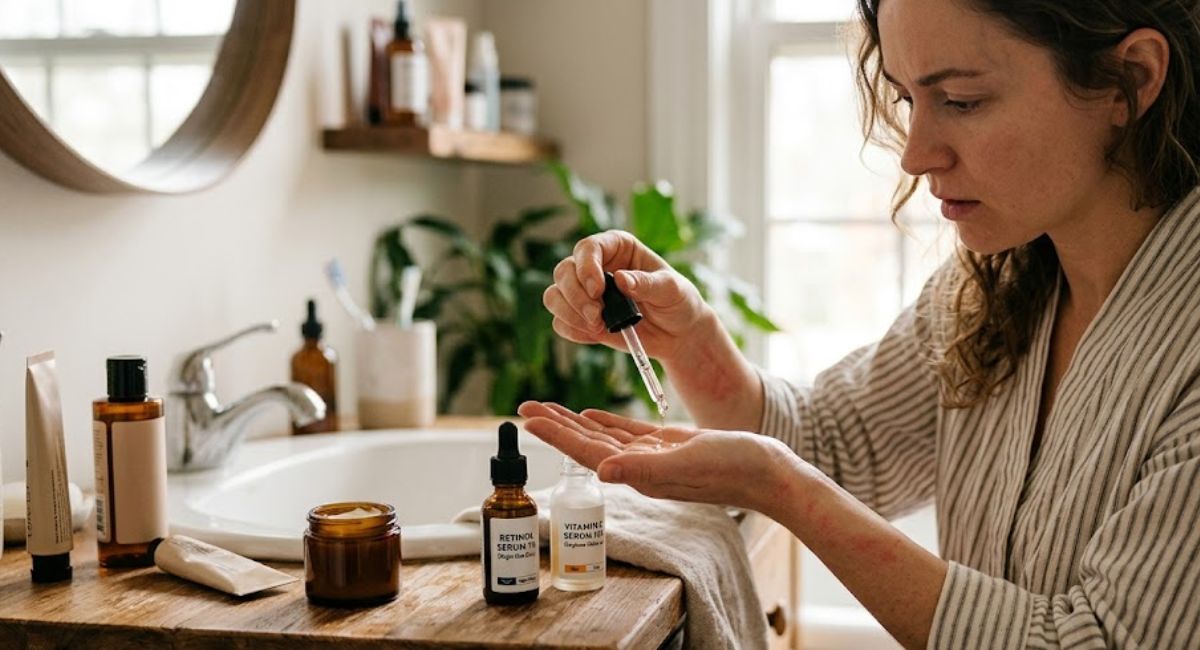
Retinol and Vitamin C: A Common Mistake
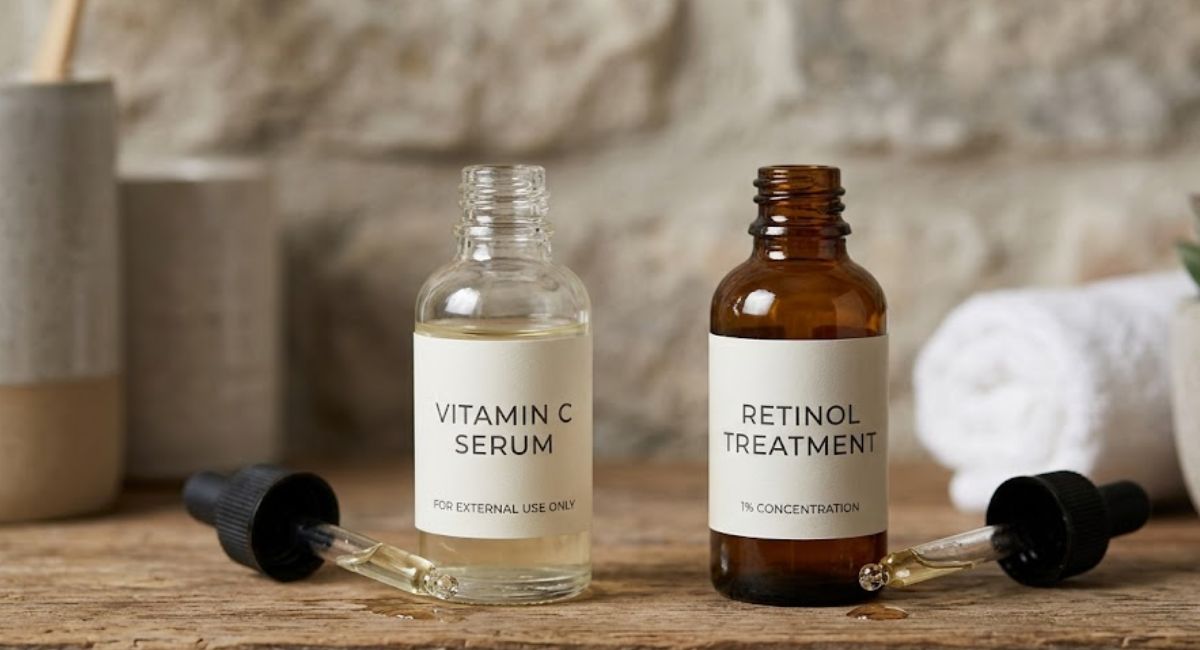
This is probably the most googled skincare pairing question, and for good reason. Both retinol and vitamin C are powerhouse ingredients on their own. Retinol speeds up cell turnover and fights fine lines. Vitamin C brightens skin and fights free radical damage.
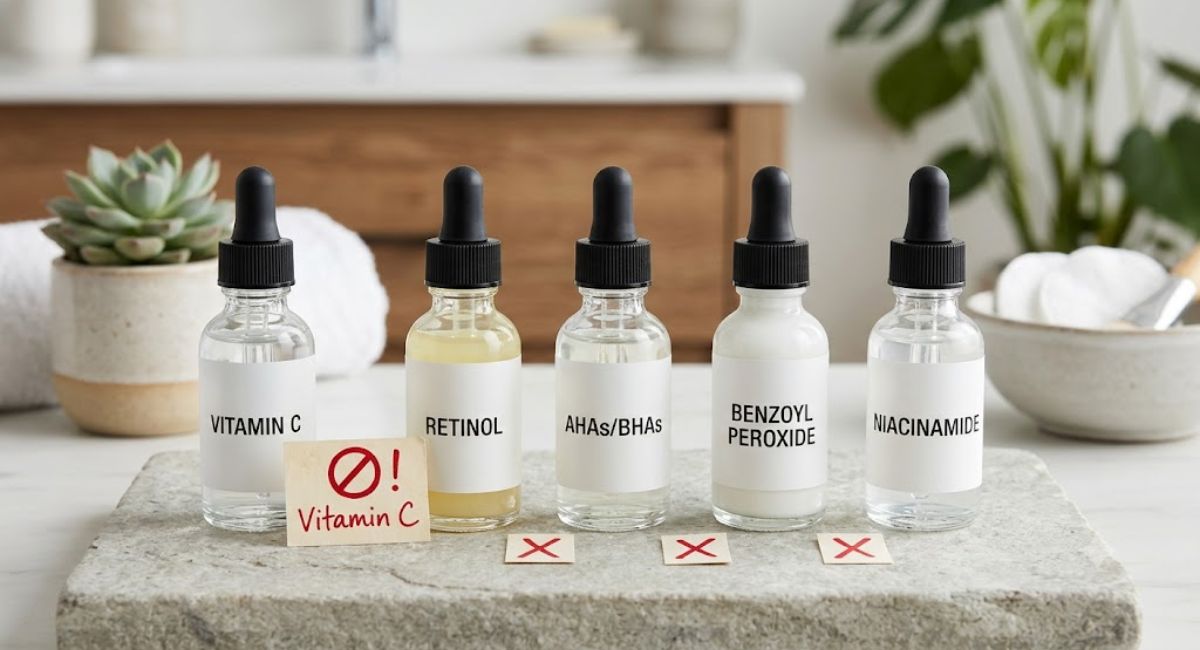
The problem is timing and pH. Vitamin C, specifically L ascorbic acid, needs a low pH to stay stable and effective. Retinol works best in a more neutral environment. When you apply them together, the vitamin C can degrade faster and retinol can become irritating on skin that’s already been exposed to an acidic serum.
What to do instead: Use vitamin C in the morning under sunscreen, since it also helps protect against environmental damage during the day. Save retinol for nighttime, when your skin is in repair mode and doesn’t need UV protection.
Retinol and AHA or BHA Acids
Alpha hydroxy acids like glycolic acid and lactic acid, along with beta hydroxy acid salicylic acid, are exfoliants. Retinol is technically not an exfoliant in the traditional sense, but it does accelerate cell turnover in a similar way.
Combine the two and you’re essentially exfoliating your skin twice through different mechanisms at the same time. The result is often a compromised skin barrier, flaking, stinging, and sometimes a burning sensation that lasts for days.
I’ve had readers tell me they assumed using both would give them faster results. In reality, damaged skin heals slower than skin treated gently, so this shortcut usually backfires and delays progress instead of speeding it up.
What to do instead: Alternate nights. Use your acid exfoliant one evening, then use retinol the next. This gives your skin a full 24 hours to recover between treatments, and you’ll still see results from both ingredients over time.
Retinol and Benzoyl Peroxide
If you deal with acne, you’ve probably been tempted to combine these two. Retinol treats acne long term by keeping pores clear, and benzoyl peroxide kills acne causing bacteria fast. It seems logical to use them together for a one two punch.
Unfortunately, benzoyl peroxide can actually oxidize retinol, making it less stable and less effective. On top of that, both ingredients are drying on their own, so combining them often leads to peeling skin, redness, and sometimes a rebound in oil production as your skin tries to compensate for the dryness.
What to do instead: Use benzoyl peroxide in the morning as a spot treatment or in your cleanser, and apply retinol at night. This keeps their strengths intact without the clash.
Niacinamide and Acidic Ingredients
Niacinamide has become one of the most popular skincare ingredients in the last few years, and for good reason. It calms redness, minimizes pores, and strengthens the skin barrier. But there’s a persistent myth that niacinamide cancels out when paired with vitamin C or acids.
The real story is more nuanced. Older formulations of niacinamide could react with acidic ingredients and cause temporary flushing, a harmless but uncomfortable reddening of the skin. Most modern formulas are stable enough that this reaction is rare, but sensitive skin types can still experience it.
What to do instead: If your skin tends to flush easily, apply your acid or vitamin C serum first, wait about 15 to 20 minutes, then layer niacinamide on top. This gives the first ingredient time to absorb and settle before the second one goes on.
Hydroquinone and Benzoyl Peroxide
This pairing doesn’t get talked about as much, but it’s important, especially if you’re treating dark spots or melasma. Hydroquinone lightens hyperpigmentation, while benzoyl peroxide fights acne. When mixed, the combination can cause a temporary but alarming brown or orange stain on the skin.
What to do instead: Use these on separate days, or apply hydroquinone at night and benzoyl peroxide in a completely separate part of your routine, ideally hours apart.
Physical Exfoliants and Chemical Exfoliants
Scrubs with beads or granules feel satisfying, especially if you like that squeaky clean sensation afterward. But combining a physical scrub with a chemical exfoliant like glycolic acid or salicylic acid is a fast track to a damaged moisture barrier.
Physical exfoliation creates tiny abrasions on the skin’s surface, even ones you can’t see. Adding a chemical acid on top of that means the acid penetrates deeper and faster than it should, often causing burning and long lasting sensitivity.
What to do instead: Pick one method of exfoliation and stick with it. If you love your chemical exfoliant, skip the scrub entirely, or use it no more than once a week on days when you’re not using acids.
Essential Oils and Active Ingredients
This one flies under the radar. Essential oils like lemon, orange, and lavender are often marketed as natural additions to skincare, but they can be highly reactive when combined with strong actives like retinol or acids. Citrus oils in particular are photosensitizing, meaning they increase your skin’s sensitivity to sunlight.
What to do instead: If you enjoy essential oils, use them in a separate, calming part of your routine, like a nighttime body oil, rather than mixing them into your active treatment steps.
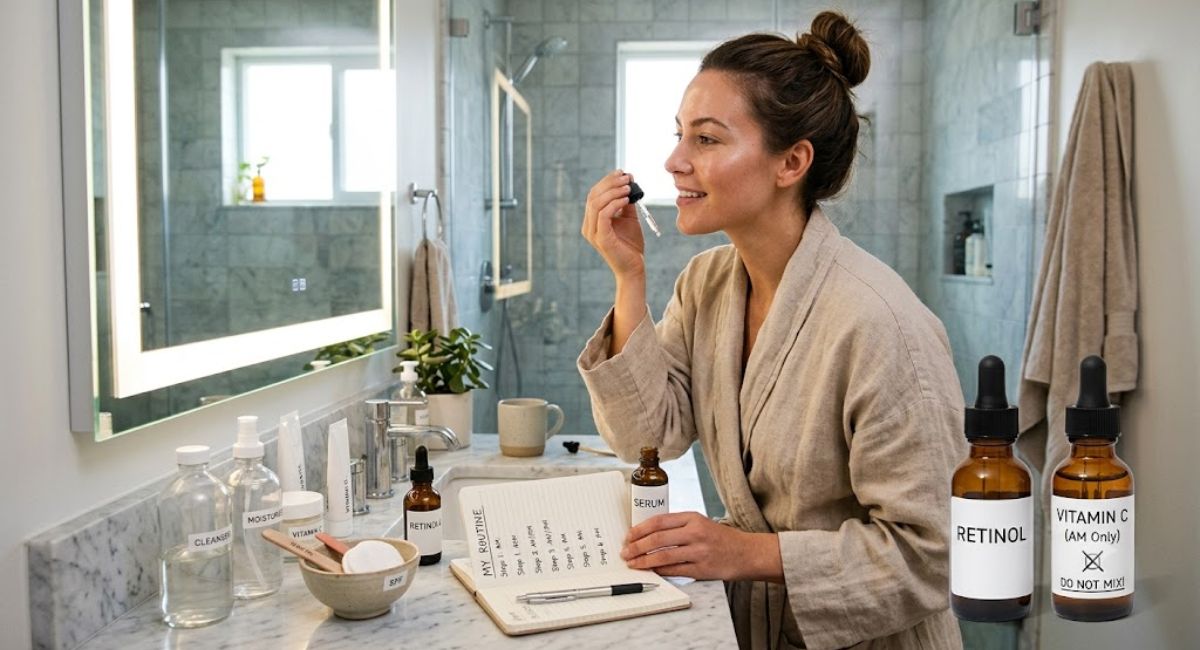
How to Build a Routine That Actually Works
Once you understand which ingredients clash, building a safe routine becomes much easier. Here’s a simple framework I recommend to almost everyone:
- Morning routine: cleanser, vitamin C serum, moisturizer, sunscreen
- Evening routine: cleanser, treatment (retinol or acid, not both), moisturizer
If you want to use multiple actives, rotate them across different nights instead of layering them all at once. Monday and Thursday for retinol, Tuesday and Friday for acids, and the rest of the week focused purely on hydration and repair. This kind of schedule gives your skin room to actually benefit from each ingredient instead of constantly fighting inflammation.
Apps like the INCI Decoder or even a simple ingredient list check on the back of your product packaging can help you figure out what’s actually in your routine. A lot of people don’t realize their moisturizer already contains niacinamide, or their sunscreen has a small percentage of vitamin C mixed in, which changes how you should be layering everything else.
Signs You’re Mixing the Wrong Ingredients
Your skin usually tells you when something’s wrong before you even realize it. Watch for these warning signs:
- Redness that shows up within minutes of applying a product
- A stinging or burning sensation that doesn’t fade quickly
- Unusual dryness or flaking within a day or two of trying a new combination
- Small bumps or breakouts in areas where you don’t normally get them
- A greasy or overly shiny appearance as your skin overcompensates for dryness
If you notice any of these, strip your routine back to just a gentle cleanser and moisturizer for a few days. Let your skin barrier recover before slowly reintroducing one active ingredient at a time.
Final Thoughts
Building an effective skincare routine isn’t about using every powerful ingredient you can find. It’s about understanding how those ingredients behave and giving each one the right moment to do its job. The dermatologists I’ve read consistently say the same thing: less really is more when it comes to actives, and timing matters just as much as the products themselves.
Start simple, introduce one new ingredient at a time, and pay attention to how your skin responds. Your face will thank you for it.
FAQs
1. Can I use retinol and vitamin C on the same day? Yes, but not at the same time. Use vitamin C in the morning and retinol at night to avoid irritation and keep both ingredients effective.
2. Is niacinamide safe to use with vitamin C? Most modern formulas are fine together, though sensitive skin may experience temporary flushing. Waiting 15 minutes between applications usually solves this.
3. Why does my skin sting after using two active ingredients together? Stinging often means your skin barrier is overwhelmed. This is common when combining exfoliating acids with retinol or benzoyl peroxide.
4. Can I mix salicylic acid and benzoyl peroxide? These can be used together occasionally, but frequent use often leads to excessive dryness. It’s safer to alternate them across different days.
5. How long should I wait between applying different active ingredients? A general rule is 15 to 30 minutes, enough time for the first product to absorb before applying the next one.
6. Do I need to avoid essential oils in my skincare routine? Not entirely, but keep them separate from active treatments, especially citrus based oils, which increase sun sensitivity.
7. What should I do if I already mixed the wrong ingredients? Stop using actives for a few days, focus on a gentle cleanser and moisturizer, and reintroduce one ingredient at a time once your skin calms down.
8. Are natural or organic ingredients safer to mix? Not necessarily. Natural ingredients can still be reactive, and some, like citrus oils, carry their own risks when paired with actives.