Skincare routine order is the one thing almost nobody gets right on the first try, and honestly, that includes me for the first two years I took skincare seriously. I used to slap on a rich moisturizer, then wonder why my expensive serum “wasn’t doing anything.” Turns out I had it backward the whole time. If you’re asking what goes first in a skincare routine, the short answer is cleanser, but the full answer involves a lot more nuance than most articles bother to explain.
This guide walks through the correct skincare routine order for both morning and night, explains the actual science behind why sequence matters, and covers the mistakes that quietly sabotage results for a lot of people, including past me.
Why Skincare Routine Order Actually Matters
Your skin doesn’t absorb everything at once. Products need to reach the skin in a specific sequence so each one can do its job without being blocked by something heavier sitting on top of it.
Think of it like painting a wall. You wouldn’t apply the top coat before the primer. Skincare works the same way. Apply things in the wrong order and you can end up with:
- Serums that just sit on top of moisturizer and never absorb
- Sunscreen that gets diluted and stops protecting properly
- Active ingredients that cancel each other out or irritate your skin
- Wasted money on products that never get the chance to work
Dermatologists generally agree on one core rule. Go from thinnest texture to thickest, and finish with the heaviest, most occlusive product last. That’s the backbone of any correct skincare routine order, morning or night.

The General Rule: Thin to Thick
Before getting into the exact steps, it helps to understand the logic. Watery, lightweight formulas like toners and essences go first because they need direct contact with skin to absorb well. Thicker creams and oils go later because they can form a barrier that blocks anything applied after them.
So the rough order looks like this:
- Cleanser
- Toner or essence
- Treatment (serums, spot treatments, actives)
- Eye cream
- Moisturizer
- Face oil (if used)
- Sunscreen (morning only)
Now let’s break each step down properly, because “just follow the list” only gets you halfway there.
Step 1: Cleansing Always Comes First
Cleansing is non negotiable, morning and night. In the morning, it clears away the oil and sweat your skin produced overnight. At night, it’s doing something even more important, removing sunscreen, makeup, pollution, and the day’s buildup before anything else touches your skin.
If you skip this step, every product you apply afterward is fighting through a layer of grime to reach your skin. That’s a losing battle.
A mistake I made for years was double cleansing every single day, morning and night, thinking more was better. It wasn’t. My skin got tight and reactive. Double cleansing (an oil cleanser followed by a water based one) is genuinely useful at night if you wear sunscreen or makeup, but most mornings just need one gentle cleanse. Overdoing it strips your skin barrier and creates more problems than it solves.
Quick tip: use lukewarm water, not hot. Hot water feels satisfying but it strips natural oils and can leave skin dry and irritated by midday.
Step 2: Toner or Essence
This step gets skipped a lot, and I get why. It feels optional. But a toner or essence does real work in your skincare routine order. It rebalances your skin’s pH after cleansing, adds a first layer of hydration, and preps your skin to absorb everything that follows.
Not every toner is the harsh, alcohol heavy stuff from the 2000s either. Modern toners are usually hydrating and gentle, closer to a lightweight hydrating mist than the drying kind that used to sting on contact.
If you use an exfoliating toner with glycolic or salicylic acid, this is where it goes too, right after cleansing, before anything else. Just don’t stack exfoliating acids with retinol on the same night unless your skin is already used to actives, because that combination is a fast track to irritation.
Step 3: Treatments and Serums
This is where the real active ingredients live, and it’s arguably the most important step in the whole routine. Vitamin C, niacinamide, hyaluronic acid, retinol, peptides, whatever your skin concern calls for, it goes here, applied to slightly damp skin so it absorbs more easily.
A few real world rules that competitor articles tend to skip:
- Vitamin C works best in the morning, layered under sunscreen, since it boosts your skin’s defense against UV and pollution damage.
- Retinol belongs at night only. Sunlight breaks it down and makes it less effective, plus it increases sun sensitivity.
- Don’t layer multiple strong actives at once. Vitamin C and retinol together, for example, can irritate skin rather than double the benefit. Alternate nights instead.
- Apply thinnest serums first if you’re using more than one. A watery hyaluronic acid serum goes before a thicker niacinamide serum, for instance.
I learned the vitamin C and retinol lesson the hard way. Used both the same night thinking I was maximizing results. Woke up with a red, flaky mess on my cheeks. Now I alternate and my skin actually looks better for it.
Step 4: Eye Cream
Eye cream is a small step people either obsess over or completely ignore. The skin around your eyes is thinner and more delicate than the rest of your face, so it deserves its own product rather than whatever moisturizer you’re using elsewhere.
Apply it with your ring finger, using a light tapping motion rather than rubbing. This step goes after your serums but before your moisturizer, since eye cream is generally lighter in texture.
If your budget is tight, this is the step you can skip without much consequence. Just make sure your regular moisturizer and sunscreen aren’t loaded with heavy fragrance near your eye area, since that’s often what causes irritation more than a missing eye cream ever would.
Step 5: Moisturizer
Moisturizer locks in everything you just applied and prevents water loss from your skin throughout the day or night. This step matters for every skin type, including oily skin. Skipping moisturizer because your skin is oily often backfires, since it can trigger your skin to produce even more oil to compensate for the dryness.
Pick your texture based on skin type and season. Gel moisturizers suit oily or combination skin, especially in humid weather. Cream based ones work better for dry skin or colder months. There’s no universal “best” moisturizer, only the one that fits your skin’s actual needs right now.
Step 6: Face Oil (Optional)
If you use a facial oil, it goes near the very end, after moisturizer, because oils are typically the heaviest, most occlusive product in a routine. Applying oil before your other products would block them from absorbing at all.
Not everyone needs this step. Dry or mature skin tends to benefit most from a few drops of facial oil sealing in hydration overnight. Oily or acne prone skin can usually skip it entirely, or use it sparingly if at all.
Step 7: Sunscreen (Morning Only, Non Negotiable)
Sunscreen is the final step of any morning skincare routine order, always applied last, always on top of everything else. This is one of the most common mistakes I see, people layering sunscreen under moisturizer or mixing it into their foundation, thinking it still works the same way. It doesn’t. Sunscreen needs to sit on top of your skin, forming an even, undiluted layer to actually protect you.
Use about a nickel sized amount for your face alone, and reapply every couple of hours if you’re outside for extended periods. No amount of expensive serum underneath makes up for skipped or under applied sunscreen. This single step does more for long term skin health than almost anything else in your routine, including preventing premature aging, dark spots, and the sun damage that undoes years of good skincare habits.
Morning vs Night Skincare Routine Order
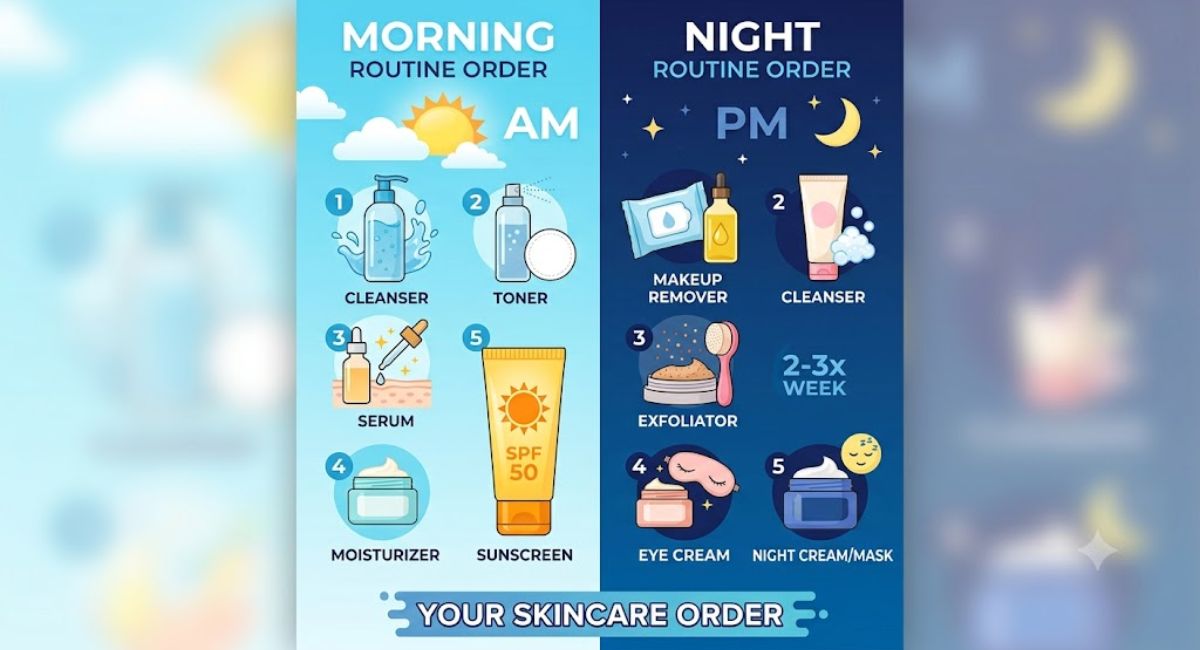
Since a lot of the confusion comes from mixing up AM and PM steps, here’s the difference laid out clearly.
Morning routine order: Cleanser, toner, vitamin C serum, eye cream, moisturizer, sunscreen.
Night routine order: Makeup remover or oil cleanser (if needed), water based cleanser, toner, treatment serum or retinol, eye cream, moisturizer, face oil (optional).
Notice sunscreen only appears in the morning, and retinol is reserved for night. That’s not a random rule, it comes down to how these ingredients interact with sunlight and your skin’s natural repair cycle, which happens mostly while you sleep.
Common Skincare Routine Order Mistakes
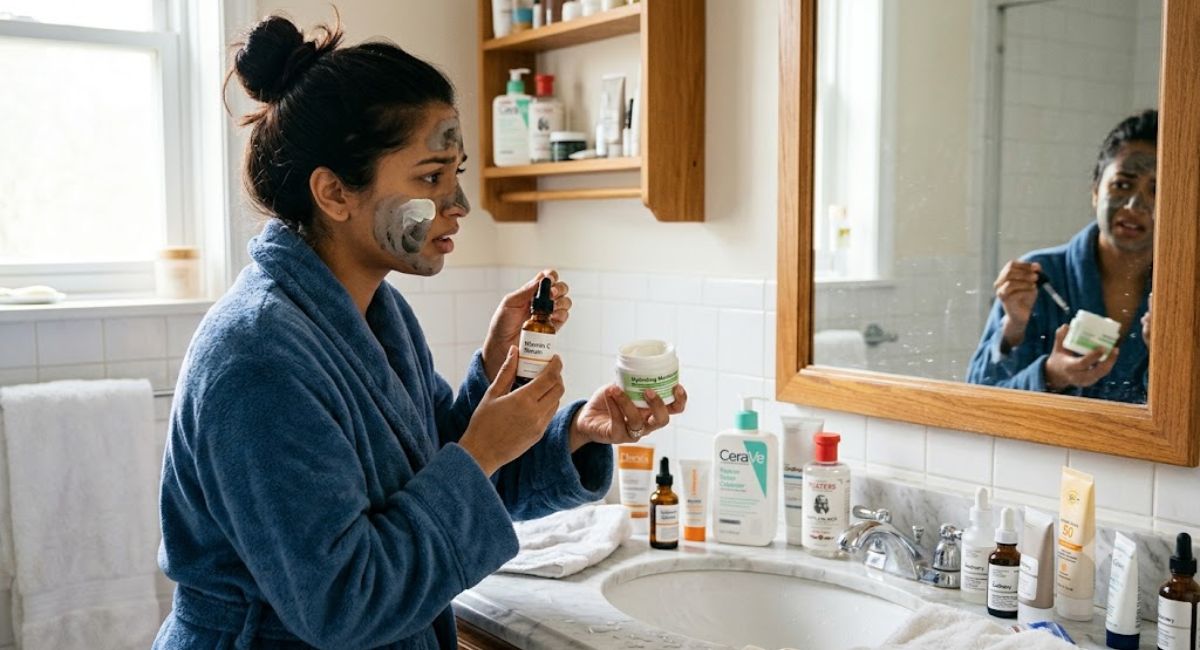
A few mistakes show up constantly, even among people who genuinely care about their skin:
- Applying sunscreen before moisturizer instead of after
- Using retinol and exfoliating acids on the same night
- Skipping moisturizer on oily skin
- Applying serum on top of moisturizer instead of underneath
- Not waiting for one product to absorb before layering the next
- Using too many active ingredients at once, overwhelming the skin barrier
If your skin has been reacting badly to a routine that “should” be working, checking the actual order and timing often solves the mystery before you need to change a single product.
How Many Steps Do You Actually Need?
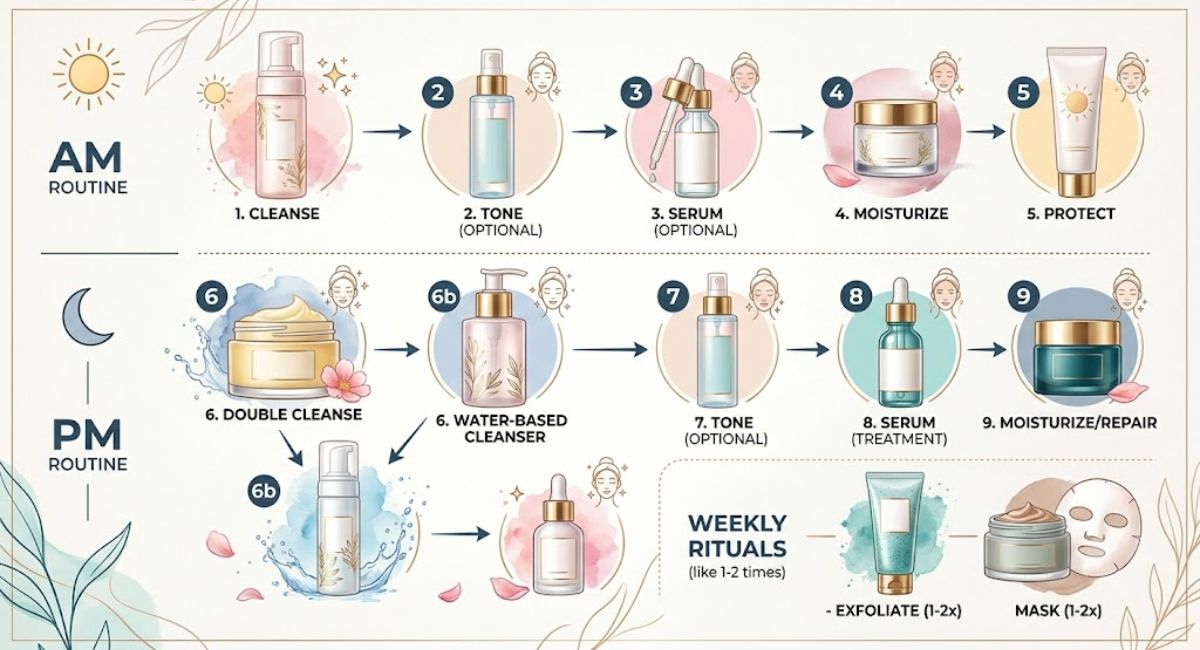
Not every skin needs a ten step routine, despite what social media suggests. A solid, effective skincare routine order can be as simple as:
Minimalist morning: cleanser, moisturizer, sunscreen. Minimalist night: cleanser, moisturizer.
Add serums, toners, eye cream, and exfoliants as your skin, budget, and patience allow. More steps isn’t automatically better. Consistency with a simple routine beats an elaborate one you abandon after two weeks, and that’s true no matter what any ten step routine trend claims.
Final Thoughts
Getting your skincare routine order right doesn’t require expensive products or a ten step regimen. It requires understanding the logic behind the sequence, thinnest to thickest, actives before moisturizer, sunscreen always last in the morning, and building consistency from there. Once the order clicks, you’ll likely notice your existing products working better than they ever did before, without spending an extra rupee or dollar on anything new.
FAQs
1. What is the correct order for a skincare routine? Cleanser, toner, serum, eye cream, moisturizer, and sunscreen in the morning. At night, skip sunscreen and add retinol or treatment products instead.
2. Does moisturizer go before or after sunscreen? Moisturizer always goes before sunscreen. Sunscreen is the final step of any morning routine, applied last so it forms a full, undiluted layer.
3. Should serum go before or after moisturizer? Serum goes before moisturizer. Thinner products need direct contact with skin to absorb properly, while moisturizer seals everything in afterward.
4. Can I use vitamin C and retinol together? It’s best to avoid using both in the same routine. Use vitamin C in the morning and retinol at night, or alternate nights between them.
5. Do I need a toner in my skincare routine? It’s not mandatory, but a toner or essence helps rebalance skin after cleansing and adds a light layer of hydration before your treatment step.
6. What order should skincare go for oily skin? The same general order applies, cleanser, toner, treatment, moisturizer, sunscreen, just choose lighter, gel based textures suited to oily skin.
7. Is it okay to skip moisturizer if I have oily skin? No. Skipping moisturizer can actually cause oily skin to overproduce oil to compensate for the lost hydration.
8. Where does face oil go in a skincare routine? Face oil goes last, after moisturizer, since it’s typically the heaviest product and can block anything applied on top of it.